
5 Reasons Why We Need to Define Bully Behavior and Stop Generalizing Events as “Bullying”


Bully behavior is an aggressive, intentional action that involves a real or perceived power imbalance and typically repeats over time, not every scuffle, one-time argument, or hurt feeling. Schools that dig into the specific behavior rather than labeling every incident "bullying" can develop individualized intervention plans and track whether they're actually working.


Back to the main Bully Prevention Guide.
As soon as an incident makes the media and the term "bully" is used, people get enraged. Rightly so, they have a reason to be upset. Feelings of past bullying situations from High School or Junior High start to populate people's minds. Anger and resentment start to set in. Then that anger is targeted towards the student's family and even school officials. Questions are automatically asked: "How could the parent or school let this happen?" I argue that, from a school's standpoint, the situation is broader than that, and we must dig deeper. We need to stop defining all situations as only "bullying." In order for us to reach a solution, we need to dig deeper into the behaviors the student who bullies exhibits. As a principal, my first question for parents who call in and say their student is being bullied is, "Tell me more, what is happening?"
What Actually Counts as Bully Behavior
As a school official, we need to know more about the behavior behind the incident. We need to know the specific behavior, or what we call the "bully behavior." When parents, students, school officials, or the media generalize a situation and label a student as a "bully," it already sets us back from finding a solution. We have to do a better job of teaching what bully behavior looks like in our schools. The definition of a bully from one of the most effective Bully Prevention programs, the Olweus Bullying Prevention Program, states,
"Bullying is aggressive behavior that is intentional and that involves an imbalance of power. Most often, it is repeated over time."
Federal guidance from StopBullying.gov and the CDC frames it this way: bullying involves unwanted aggressive behavior, a real or perceived power imbalance, and behavior that is repeated or has the potential or high likelihood to be repeated. That last part matters. A first incident can still qualify if repetition is highly likely, so I'm not looking for a pattern that's already happened before I take it seriously. What I am looking for is whether the behavior is intentional and involves a power imbalance, because a rough shove during recess or one heated argument doesn't automatically clear that bar, even though it can feel just as serious to the kids involved.
Here are five reasons educators, parents, students, and the media need to stop labeling all events with the generalized term, "Bully," and instead dig deeper and act on the behavior:
Dig Deeper Into the Specific Behavior
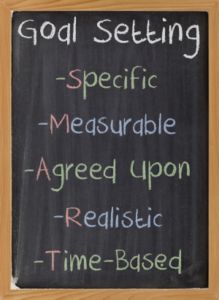
Many times when a "bully" situation is labeled as such, education officials are already working from a deficit of information. We have to take the time to teach what constitutes bully behavior and help determine whether this situation was truly "bully behavior." Too often, rough-and-tumble play, an argument, a one-time scuffle, or even a punch gets labeled as "bullying." We have to get past this initial labeling and dig deeper to identify the behaviors exhibited and learn more about the motive. Most behavior can be categorized as the student wanting to either "obtain" or "avoid" something. This can take the form of seeking out or avoiding another student, an adult, a task or activity, or even the intangible "attention." Very rarely do we have a hard time finding a motive, yet with a true mental illness, the motive may be undetermined. By digging deeper, we can set a plan for an individual student, a classroom, a grade level, or even for a whole school and community. We can create individual plans to address "bully behavior" and track their progress. With students who exhibit excessive bully behaviors, we can set up an action plan using SMART goals, commonly defined as: 1) specific, 2) measurable, 3) agreed upon (or attainable), 4) realistic (or relevant), and 5) time-based. Formulations vary by source. Click here to learn more about SMART goals. Some school districts even create Response to Intervention plans for specific behavior of these students. Click here to learn more about RtI Behavior Plans.
Be Proactive About Teaching What Bully Behavior Looks Like
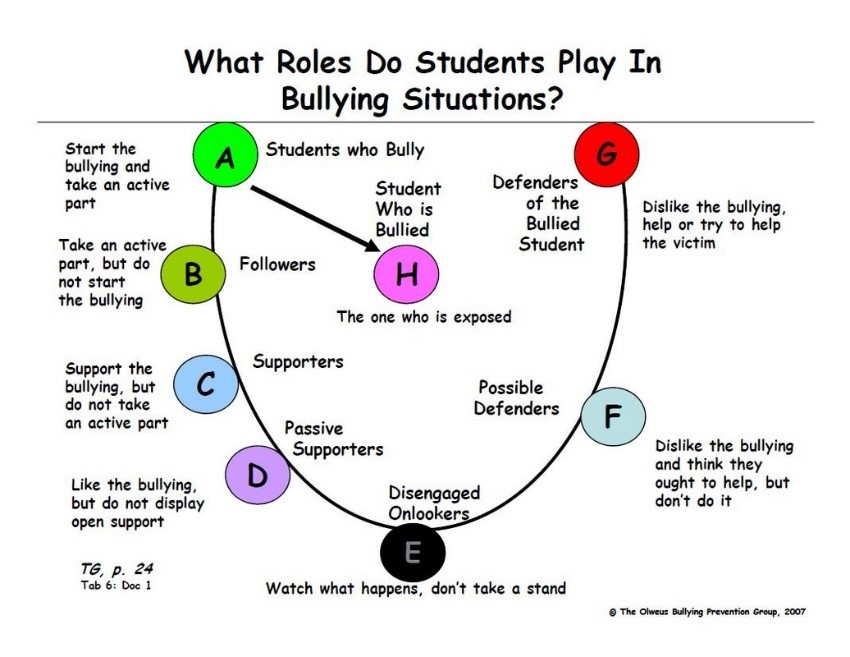
Teaching parents, students, and staff members what bully behavior looks like and sounds like is the first step in combating it! We must be proactive and keep the dialogue going. We must spend time working on the verbiage we use as a staff not only with students, but with each other. We work on the bully behaviors, define the specific behaviors exhibited, and we do not generalize the situation as "bullying." One great strategy for being proactive is to use scenarios during discussions with staff members and students. A staff meeting is a great place to bring up a scenario, find out how others would handle it, problem-solve together, and create consistent, effective procedures to address it. This is where common language and expectations are created. The staff then needs to hold each other accountable to these standards. When scenarios are discussed with students, they learn how to handle them as bystanders or as the person experiencing the bullying behavior. In addition, students learn what the staff will do to support school-wide positive behavior and to combat the bullying behaviors exhibited in the scenarios. Keeping these discussions going supports the staff being proactive and more efficient when dealing with these behaviors. The Olweus program provides many such lessons for staff members.
Make Bully Prevention a School-Wide Focus
Implementing a Bully Prevention Program is only one step in combating bully behavior. We must make bully prevention a school-wide focus and keep it at the forefront. If a school district believes that these behaviors will be stopped by implementing a program alone, they will not succeed. I argue that the school's culture plays a larger role in bullying prevention. We must examine how people treat each other: students to staff, staff to students, staff to parents, staff to community, and staff to staff. When we examine, set expectations, and hold each other accountable, the likelihood of a positive learning environment free of bullying behavior can increase. To learn more about how we can treat each other and the parents we have in our schools, read one of my past blogs by clicking here: "212 Degrees of Customer Service". Also, setting up a Power of Praise program can support a school-wide focus on a positive culture; to learn more about setting one up, click here: "8 Steps to Set Up a Power of Praise Program". To learn more about how culture is important to a successful school, click here: "9 Reasons Culture Trumps Strategy".

Break the Negative Media Cycle
In the popular TV Show, Designated Survivor, President Kirkman (played by Kiefer Sutherland) states, "Our country is only as strong as our journalists, and I expect you to keep us honest." This statement has power. In one sense, as educators, the media helps us realize bullying is an epidemic and that schools must focus on solution-based strategies to combat bullying behaviors. In another sense, the student who does the "bullying" gets the media hype, and everyone wants to learn more. Unfortunately, our society feeds on negative-based news such as this outrageous behavior. We need to focus on the solution. How many of these news reports talk about not only what's already in place in schools, but what changes are going to be made afterward? You didn't get to hear about that in the news! We need to break this negative media cycle by telling our story, being proactive, and letting the media and parents know how we are not only working on combating bullying behaviors, but also what we are doing to create a stronger school culture.

Build an Effective, Efficient Reporting System
An effective and efficient reporting system for students is one of the most important pieces in stopping bullying behaviors. As you know, educators cannot be everywhere on a school campus at all times. Many of us would like to think we do a great job supervising, but the sheer numbers and space make that almost impossible. Knowing that, we must set up a reporting system that works quickly, holds everyone accountable, and can be used to stop these behaviors. A student should be able to talk with any staff member at school and feel safe knowing the situation will be dealt with immediately. The downfall of most bullying behaviors is that students don't have a strong connection with staff and that a lack of timeliness makes the situation more difficult to solve. If a student cannot report to an adult right away, they can create a written log of the situation which includes the following: what bully behavior occurred, location of the behavior, students involved, other witnesses, time and date, and any other information that is pertinent to an adult solving the situation. This information will help the trusted school employee when implementing next steps: who to interview to get more information, adding more supervision, determining patterns of the same students, time of day, what behaviors can be targeted when re-teaching, and determining impending consequences. Following up with the student matters. Asking them if the bully behavior has stopped is vital. This is the piece that educators sometimes forget to do, but it is just as important as initially addressing the bullying behavior. If the behavior persists, a more elaborate plan may need to be implemented. If students are unable to tell a staff member, hopefully they can tell a parent at home. Encouraging parents to talk to the school right away supports the idea of getting the behavior stopped with some immediacy. Documentation of these behaviors is imperative when looking for patterns. The effectiveness of the school employee is usually determined by the time elapsed between the report and the incident.
If I were to create a program that combats bullying behaviors and creates a positive learning environment, it would include many factors (next blog!). As I said above, simply purchasing the bully prevention program for your school is only one step in getting started on the right path. I encourage educators to tackle school culture both inside and outside their walls within their community.

Frequently Asked Questions
What's the difference between bully behavior and a normal kid conflict?
Bully behavior is intentional, involves a real or perceived power imbalance, and tends to repeat over time. A single argument, a rough game that got out of hand, or a one-time punch thrown in anger doesn't automatically meet that bar, even though it can look and feel just as upsetting to everyone involved. That doesn't mean it goes unaddressed. It means it gets a different response than a documented pattern of bullying does.
What are the three criteria schools use to define bullying?
StopBullying.gov and the CDC frame it as unwanted aggressive behavior, a real or perceived power imbalance, and behavior that's repeated or has the potential or high likelihood to be repeated. Definitions and legal requirements vary by state and school policy, so check your own state's statute and your district's policy rather than assuming this federal formulation is the last word. A school that skips this checklist entirely and reacts to every incident the same way ends up treating rough play and genuine bullying identically, which helps neither student.
How should a school respond once bully behavior is confirmed?
Build an individual action plan with SMART goals, commonly defined as specific, measurable, agreed upon (or attainable), realistic (or relevant), and time-based, though formulations vary. Track it the way you would any Response to Intervention plan. Pair that with a fast, trusted reporting system so staff hears about incidents quickly enough to act on them.
Why does it matter if the media or a parent calls every incident "bullying"?
Generalizing every incident as bullying sets a school back before the conversation about solutions even starts. It short-circuits the harder, more useful question of what specific behavior actually happened, why it happened, and what intervention fits it. Schools that can name the behavior can build a plan. Schools stuck defending or denying a label can't.
What should I do if I think my child is experiencing bully behavior?
Talk to the school right away rather than waiting to see if it resolves on its own. Timeliness is one of the biggest factors in how effectively a school can intervene. If your child can't bring themselves to tell a staff member directly, help them write down what happened, where, who was involved, and when, so the school has something concrete to act on.
- Define the specific behavior, not just the label. Some disputes reported as "bullying" may turn out to be one-time conflicts once the circumstances are investigated.
- Use the three-part test. Intentionality, a power imbalance, and repetition - Olweus's definition, echoed by most Bully Prevention programs - is the checklist worth teaching to staff and students alike.
- Be proactive with staff, not just reactive to incidents. Scenario-based staff meetings build the shared language and consistent procedures that stop confusion in the moment.
- School culture outweighs any single program. A purchased Bully Prevention curriculum helps, but how staff, students, and parents treat each other day-to-day does more of the work.
- Prompt reporting can help schools investigate and respond sooner. The gap between when an incident happens and when a trusted adult hears about it shapes how quickly a school can act.
Handling bullying behavior well usually comes down as much to training as to instinct: classroom management, restorative practices, or a school counseling track. The certificate and degree programs listed on this page cover a range of entry points, from short professional development options to full graduate programs, for educators looking to further build their skill set.
MORE BULLYING PREVENTION GUIDE RELATED READINGS:
- 3 Types of Bullying in School + 1 Immense Social Challenge
- 5 Reasons Why Schools Have a Difficult Time Stopping Bully Behaviors
- 5 Reasons Why We Need to Define Bully Behavior and Stop Generalizing Events as "Bullying" (Currently here)
- 6+ Steps to Addressing Bullying When It Occurs
- 9 Strategies We Can Teach Students to Problem Solve
- 7 Ways How to Raise a Defender of Bully Prevention
- Provocative Victims and 7+ Practices for Victory
- One School Wide Philosophy: High-Trusting Relationships
- 13 Ideas to Combat Bullying at the Community Level
- 6 of the Most Hideous Cyber Bullying Tactics Used By Students
- 11 Communication Strategies to Combat Bullying
- 20 Ideas To Successfully Use Bully Data
- 5 Reasons Why Strong Instruction Affects Bully Prevention
- #1 Instructional Lesson for All Students on Bully Prevention
- Power of Buddy Classrooms: 19 Ideas
- 8 Ways to Teach Empathy
- 10 Ways to Empower Defenders
- 9 Reasons Culture Trumps Strategy
- One School Wide Strategy: Kindness Campaign
As a 5th grade teacher, in 2010 Jon won the Presidential Award for Elementary Math and Science Teaching (PAEMST). As a principal, his school won the 2012 Blue Ribbon Award. In 2018, he won the National Distinguished Principal Award (NDP). In 2019 he won the National No Kid Hungry Breakfast Hero Award.
Jon is the author of three guides published on teacher.org: An Educator's Guide to Combat Bullying & Bully Prevention; Teacher Evaluation: A Transition Guide to Exemplary Performance; and You are the Wild Card: Infusing Fun Back into Curriculum. He has authored a children's picture book that was released January 2019 titled Benjamin’s Visit to Principal Reads Office…again! (available at www.archwaypublishing.com)
- Learning How to Say No and Set Boundaries with Parents - November 21, 2022
- How to Implement a Check-In, Check-Out (CICO) Behavior System - September 26, 2022
- Teacher Core Values: 7 Strategies for Living Your Code - August 15, 2022