
About Teacher.org: Who We Are and Who Writes for Us
Teacher.org is a free information site for teachers, written by teachers. It covers certification requirements in all 50 states and Washington, D.C., career profiles with salary and job-outlook data, degree guides, lesson plans, and scholarships. Its contributors are practicing and former classroom teachers, principals, superintendents, and school administrators.
Why We Built This Site, and How It Has Evolved
There is no national teaching license in the United States. Every state, plus Washington, D.C., sets its own rules for who can lead a public school classroom: which degree counts, which exams to pass, how student teaching fits in, and whether a license earned somewhere else will transfer. For anyone trying to become a teacher, or to move as one, that patchwork is the first obstacle, and the answers are scattered across agency websites written for administrators rather than applicants.
Teacher.org was built to put those answers in one place, and to set them beside something certification guides usually leave out: the voices of people doing the job. Co-founder Salpy Baharian, M.Ed., helped seed our free lesson-plan library with plans of her own. Our Expert Interview series began in 2015, and since 2016 the blog has published first-person writing from classroom teachers, principals, and superintendents. Two of them have been recognized by the same national programs that define excellence in the profession.
The Honors That Define Teaching Excellence, and Where Teacher.org Fits In
The Blue Ribbon Schools Program begins
The U.S. Department of Education starts recognizing schools for overall academic excellence or for progress in closing achievement gaps.
The Presidential Awards for Excellence in Mathematics and Science Teaching are established
The highest honor the United States gives K-12 math and science teachers.
The National Board for Professional Teaching Standards is founded
National Board Certification becomes a voluntary, advanced credential that goes well beyond state licensure.
A future Teacher.org contributor receives the Presidential Award
Jon Konen, then a fifth-grade teacher in Great Falls, Montana, is honored for K-6 science teaching.
Teacher.org launches its Expert Interview series
District hiring leaders, school founders, and classroom teachers start answering the questions prospective teachers actually ask.
Jon Konen is named a National Distinguished Principal
By then he had been writing for Teacher.org for nearly two years, much of it from the principal's office.
170+ bylined articles and certification guides for all 50 states and D.C.
The people who write for Teacher.org are the biggest part of that story. Teachers who wrote about IEP meetings and parent conferences in the same weeks they were running them. Principals who wrote about evaluation season while conducting evaluations. District leaders who explained, plainly, what gets a candidate hired. Teacher.org exists because those people kept taking time out of a demanding job to help the next teacher in line.
Leadership Expertise: An Award-Winning Principal and Superintendent on What Makes Schools Work
The Blue Ribbon Schools Program honors a school. The Presidential Award honors a teacher. The National Distinguished Principals program honors a school leader. Few educators have a career that touches all three. The contributor who has written more of Teacher.org than anyone else has one.

Superintendent, Stevensville School District (Montana)
Jon has spent his career in Montana schools: as a classroom teacher, a K-12 principal in a rural district, principal of Lincoln Elementary in Great Falls, superintendent in Corvallis, principal of Columbia Falls High School, and now superintendent in Stevensville. As a fifth-grade teacher he received the 2010 Presidential Award for Excellence in Mathematics and Science Teaching. Lincoln Elementary was named a National Blue Ribbon School in 2012 while he led it, and in 2018 he was named a National Distinguished Principal. He has served as president of both the Montana Association of Elementary and Middle School Principals and School Administrators of Montana. He wrote Teacher.org's guides to bullying prevention and teacher evaluation, plus more than 100 articles on classroom management, school culture, and school leadership.
Classroom Experience: Teachers Writing About the Work They Do
Certification requirements tell you how to get into a classroom. They don't tell you what an IEP meeting feels like when a parent doesn't show up, how to win back a class that has stopped listening, or what to do on the day a student dies. Most of what you'll read on our blog was written by teachers in the middle of a school year, about the school year they were in.
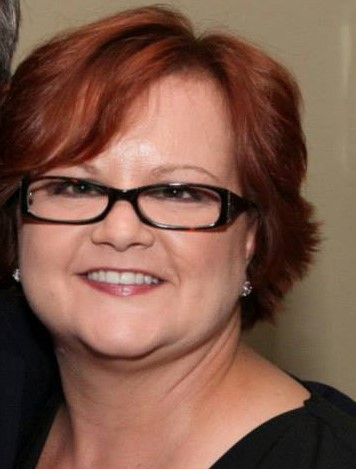
Mary McLaughlin
Special Education Teacher & Writer, Northeast Arkansas
Mary couldn't read until the right teacher came along with the right method, and she has spent her career finding that method for other kids. She taught second and third grade and served as a middle school administrator in Michigan, mostly in urban schools, before moving to Arkansas in 2015 to teach special education in a self-contained classroom for grades 2-4. She holds master's degrees in education and in TESOL. Her more than 30 articles on IEPs, behavior, paraprofessionals, and the daily realities of special education make her our second most prolific contributor.

Amy Konen
Veteran Elementary Teacher, Great Falls, Montana
Amy spent more than two decades in Montana public schools teaching grades 1-5 and literacy before moving into work as a behavior support specialist and coach, and she started the first Sensory Room in Great Falls Public Schools. While teaching literacy, math, and reading intervention at Mountain View Elementary in Great Falls, she was a 2011 finalist for Montana Teacher of the Year. She earned National Board Certification, received the 2000 Presidential Award for Excellence in Mathematics and Science Teaching for elementary math, and was named BNSF Teacher of the Year for Great Falls in 2014. She holds a master's degree in reading and literacy and has mentored National Board candidates across Montana.

Michelle Areaux, M.A.
Language Arts Teacher & Novelist, Kentucky
Michelle earned her Bachelor of Arts in Education at the University of Kentucky and her master's in literacy at Asbury University, and has taught middle school language arts at Edythe Jones Hayes Middle School in Lexington. Her articles cover the practical side of literacy instruction, from Harkness discussions and anchor texts to text coding for struggling readers. Her first novel, Wicked Cries, started a second career writing fiction for young adult and new adult readers.

Brian Miller
Former Secondary Principal & English Teacher, Montana
Brian is an educator and writer who served as principal of Fort Benton High School and Fort Benton Middle School in Montana, after more than a decade teaching English in grades 7-12. His essays look at the profession from the principal's office: whether a teaching degree pays off over a career, why schools are slow to change, and why teaching can be both a calling and a profession that deserves fair pay.
Expert Interviews: The People Who Hire, Train, and Lead Teachers
Our Expert Interview series puts the questions prospective teachers actually ask to the people best placed to answer them: district hiring leaders, school and company founders, and classroom teachers. What gets a candidate hired? How should you prepare for the interview? What does the work really demand? Several of these educators have moved on since we spoke with them, so each tile shows their current role where we've confirmed it.
Click through to read each full interview.

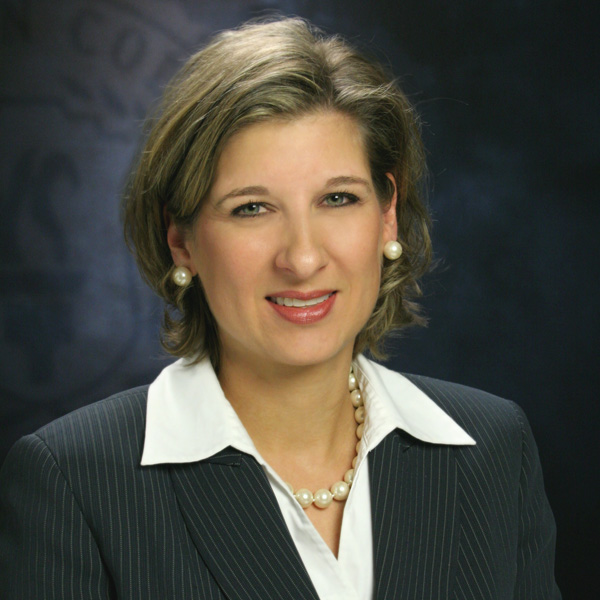






Teacher Preparation and Rural STEM: Guest Experts
Some of our most useful articles come from people who prepare and support teachers rather than lead a single classroom. Two guest experts from the University of West Alabama have written about what it takes to bring strong STEM teaching to rural schools.

Director, Black Belt STEM Institute, University of West Alabama
Dr. Nicklas leads the University of West Alabama's Black Belt STEM Institute, which provides professional development, coaching, and classroom resources to math and science teachers across rural Alabama. He holds a B.S. in Biology from the University of West Alabama, an M.Ed. and an Ed.S. in Educational Leadership from Mississippi State University, and an Ed.D. in Rural Education/Organizational Change from the University of West Alabama, where his dissertation examined unequal broadband access in rural schools.
Jerri Ward-Jackson, Ph.D.
Director, UWA-TEACH, University of West Alabama
Dr. Ward-Jackson directs UWA-TEACH, a University of West Alabama program that helps STEM majors earn teacher certification as part of Alabama's effort to address math and science teacher shortages. For Teacher.org she wrote about what makes classroom technology improve student outcomes, including how live distance-learning courses can extend advanced coursework to schools that couldn't otherwise offer it.
The University of West Alabama is among the schools that appear in labeled, sponsored placements on Teacher.org. Sponsorship has no effect on what we publish or on which contributors we feature. See our editorial standards.
The Writers Who Make It Possible
Behind the bylines above is a small editorial team of editors and researchers who keep our certification, degree, and career guides current. State requirements change often, so that work never really finishes. Those guides carry the Teacher.org Editorial Staff byline because they're researched, updated, and reviewed as a team.

Scott Wilson
Scott is an author and IT consultant based in the Pacific Northwest. He holds a BA in English from the University of Washington and has spent more than 20 years in information technology, which has given him a sharp eye for clear, precise writing.
Teacher.org has also published work by Kylie Hall, Blain Hockridge, Tricia Koechig, Catherine Dorian, Maury Cook, Mary Hardin, Lisa Vento Nielsen, and Cailyn Dougherty, along with the K-12 teachers whose work fills our free lesson-plan library.
What You'll Find Here
Teacher.org publishes in six areas, plus our interview series:
Our Editorial Standards
We go to the source. Certification and licensing requirements are checked against the state departments of education and educator licensing offices that actually issue the credential. Program approval is checked against state-approved educator preparation programs and CAEP and AAQEP accreditation. School and workforce data come from the National Center for Education Statistics.
Wage and employment figures come from the U.S. Bureau of Labor Statistics, and job-growth projections come from Projections Central. We don't use salary-aggregator sites, because their figures are self-reported and can't be traced back to a survey method.
We use AI tools to help draft and update articles, because keeping requirements and salary data current across every state is a big job. AI never has the final say: every article and every update is reviewed and fact-checked by a person on our editorial team before it's published. Some schools pay to appear in labeled, sponsored placements, and that never affects which programs we include or what we say about them.
Everything we publish follows our editorial standards: where our facts come from, how we use AI, and how each article is fact-checked by a person before it's published.
How to Contact Us
For corrections, updates, partnership questions, or anything else, email [email protected]. If you've spotted a certification requirement that's changed or a figure that looks wrong, that's the address to use, and we'd rather hear it than not.
Our Privacy Policy explains what we collect and what we do with it. The contact page has a form if you'd prefer it to email.
Frequently Asked Questions
Does Teacher.org certify teachers or issue teaching licenses?
No. Teaching licenses are issued only by the educator-licensing or credentialing agency in each state, and nothing on this site can grant, verify, or substitute for one. We explain what each state requires so you know what to expect before you apply, but the application itself always goes to your state's agency.
Is Teacher.org the same as TEACH.org?
No. They're separate organizations with similar names. TEACH.org is a nonprofit that partners with state education agencies on teacher recruitment. Teacher.org is an independent information site. If you were looking for one and found the other, that's an easy mix-up to make.
Who writes the content on Teacher.org?
Practicing and former teachers, principals, superintendents, and school administrators, writing under their own bylines, along with our editorial staff, who research and update our certification, degree, and career guides. You can see a contributor's background and their other articles on their author page, linked from their name. Every article is reviewed and fact-checked by a person before it's published.
Where does Teacher.org get its salary and job-growth figures?
Wage and employment figures come from the U.S. Bureau of Labor Statistics. Job-growth projections come from Projections Central. We don't use salary-aggregator sites because their figures are self-reported and can't be traced back to a survey method.
Is Teacher.org free to use?
Yes. There's no account to create, no paywall, and no charge for any article, lesson plan, or state guide on the site.
- Written by educators: Our articles come from practicing and former teachers, principals, superintendents, and administrators, with certification and career guides maintained by our editorial staff.
- All 50 states plus D.C.: Certification requirements are covered state by state, because the rules differ enough that a national summary would mislead you.
- Sourced figures: Wage data comes from the Bureau of Labor Statistics and job-growth projections from Projections Central, never from salary-aggregator sites.
- Not a licensing body: Teacher.org explains what your state requires, but only your state's educator-licensing agency can issue a credential.
Compare Teaching Degree Programs