
Can a Kindness Campaign Truly Change Your School?
5/30/2016


Back to the main Bully Prevention Guide.
PU#151 - Kindness Campaign
After trying many things to lessen discipline referrals in our school, we had to step out and think "inside the box." What do you focus on, the discipline of a few naughty students or the kindness of the majority of students? That question alone changed the culture in our school. Instead of finding new ways to re-teach, consequent, and develop behavior plans for the few students, we decided to put most of our energy into promoting qualities that the majority of our students possess! We started with "Kindness."
In years past we spent hours sifting through discipline referrals and analyzing the data. What type of behavior was occurring the most? Where was this discipline happening? What time of day are most referrals written? Who were the students receiving the most referrals? Then, we had to decide what to do with this data. We would create behavior intervention plans for our top referral-getting students, we would move staff to cover high referrals areas, as well as more staff during specific referral times of the day. We would create procedures and rules for specific playground equipment, entering and exiting school, and even how we sit in the lunchroom. Think about how much time was spent on doing all this? We do understand that many of these things are needed in order to help run a more efficient and effective school, but we still felt like we were spending too much time on the "negative."
A change to the "positive" was needed! We started a "Kindness Campaign." This strategy decreased our discipline referrals this year by over 50% (though we can't contribute all the success to this strategy). The idea behind this strategy is to have students and staff point out specific acts of kindness they see in our school.
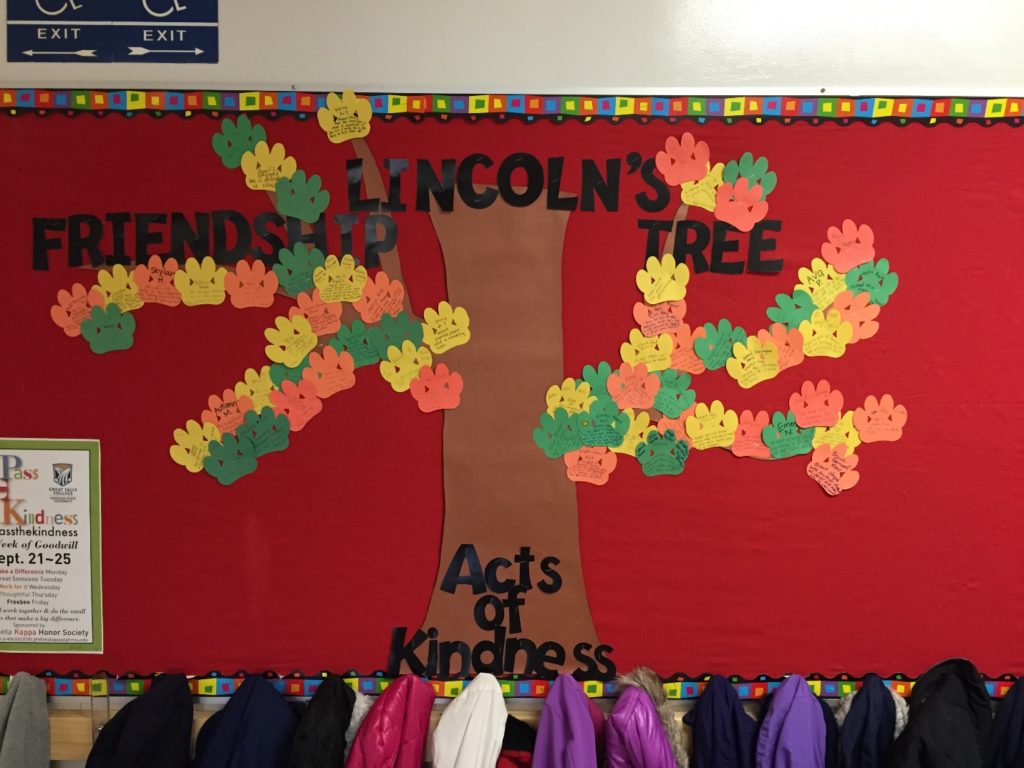
We started a Kindness Tree….a bare brown tree on a bulletin board that was visible for all students (See article featured image above). When a student or staff member saw an "Act of Kindness," they wrote it down with specific information: person to celebrate, kindness act they saw, and who wrote the act of kindness. Here is a picture of our kindness tree at the beginning of school in September, 2015 after our initial kickoff.
Each morning I would read the latest "Acts of Kindness" over the PA system. Kids loved hearing their name, they also loved to acknowledge other students. Giving students the power to acknowledge others made them look for specific acts all throughout the day in classrooms, hallways, recess, and even at special events.

Some variations we made on this Act of Kindness program was to have kids find other character traits that we know are powerful in building a positive culture: respect, empathy, friendship, change, growth, differences, and even heroes. Our school uses the Olweus anti-bully program and we have chosen to teach activities in the classroom each month that connect with the following topics: September/October - Kindness, November- Change, December - Be a DEFENDer, January - Making a Positive Change, February - Be a Friend, March- Make a Difference, April- Making Positive GROWTH, and May- Hidden Heroes.
Currently, in the month of May, students and adults have been finding Hidden Heroes in our school. They are taught about the definition of a hero. We then connected it to the concept of hidden heroes, and we asked them to go out and find hidden heroes amongst us in the school (adult or student). I would then read those examples on the PA in the morning. Some of these hidden hero stories brought tears to many staff member's eyes!
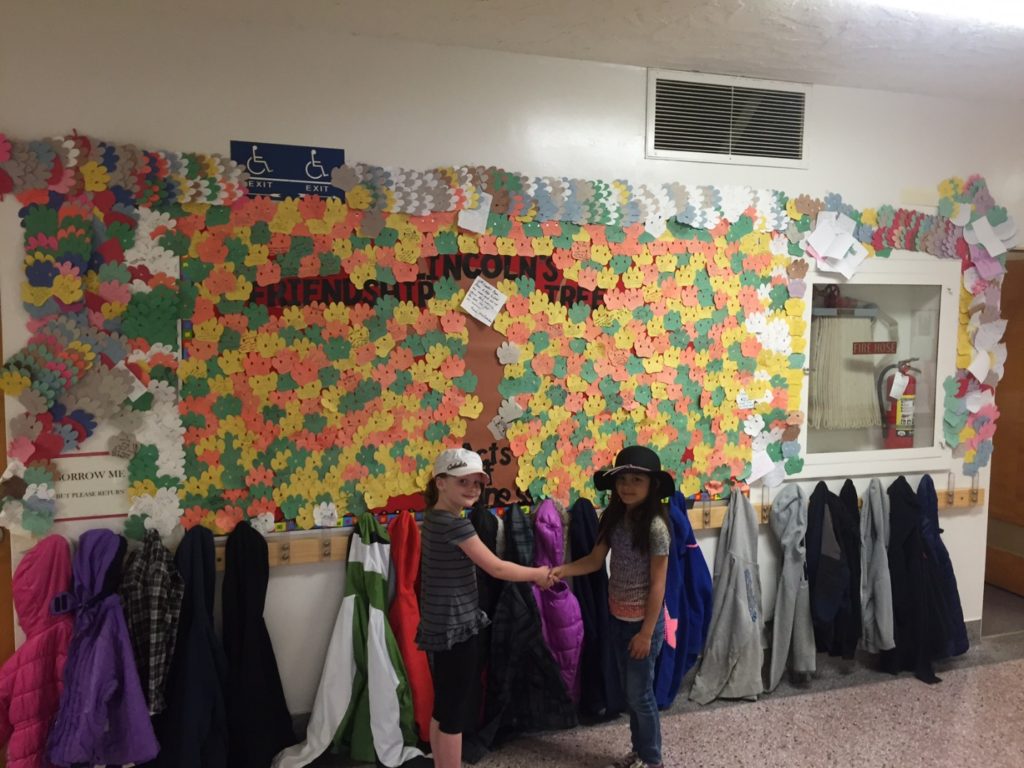
Actual data from our school states that at the end of April, 2015, we had 418 discipline referrals school-wide. At the end of April, 2016, our school had 192 discipline referrals. For a school of 420 students, this was quite a change. This is less than 2 referrals per day! Time to celebrate! Here is our Kindness Tree as of May 13, 2016.
MORE BULLYING PREVENTION GUIDE RELATED READINGS:
- 3 Types of Bullying in School + 1 Immense Social Challenge
- 5 Reasons Why Schools Have a Difficult Time Stopping Bully Behaviors
- 5 Reasons Why We Need to Define Bully Behavior and Stop Generalizing Events as "Bullying"
- 6+ Steps to Addressing Bullying When It Occurs
- 9 Strategies We Can Teach Students to Problem Solve
- 7 Ways How to Raise a Defender of Bully Prevention
- Provocative Victims and 7+ Practices for Victory
- One School Wide Philosophy: High-Trusting Relationships
- 13 Ideas to Combat Bullying at the Community Level
- 6 of the Most Hideous Cyber Bullying Tactics Used By Students
- 11 Communication Strategies to Combat Bullying
- 20 Ideas To Successfully Use Bully Data
- 5 Reasons Why Strong Instruction Affects Bully Prevention
- #1 Instructional Lesson for All Students on Bully Prevention
- Power of Buddy Classrooms: 19 Ideas
- 8 Ways to Teach Empathy
- 10 Ways to Empower Defenders
- 9 Reasons Culture Trumps Strategy
- One School Wide Strategy: Kindness Campaign (Currently here)

As a 5th grade teacher, in 2010 Jon won the Presidential Award for Elementary Math and Science Teaching (PAEMST). As a principal, his school won the 2012 Blue Ribbon Award. In 2018, he won the National Distinguished Principal Award (NDP). In 2019 he won the National No Kid Hungry Breakfast Hero Award.
Jon is the author of three guides published on teacher.org: An Educator's Guide to Combat Bullying & Bully Prevention; Teacher Evaluation: A Transition Guide to Exemplary Performance; and You are the Wild Card: Infusing Fun Back into Curriculum. He has authored a children's picture book that was released January 2019 titled Benjamin’s Visit to Principal Reads Office…again! (available at www.archwaypublishing.com)
- Learning How to Say No and Set Boundaries with Parents - November 21, 2022
- If You Had Only One Behavior Strategy to Use in Your Classroom, What Would It Be? - September 26, 2022
- Live Your Code: 7 Strategies That Will Help You Be the Most Effective Educator You Can Be - August 15, 2022