
Buddy Classroom Activities: 19 Ideas for Cross-Grade Pairs

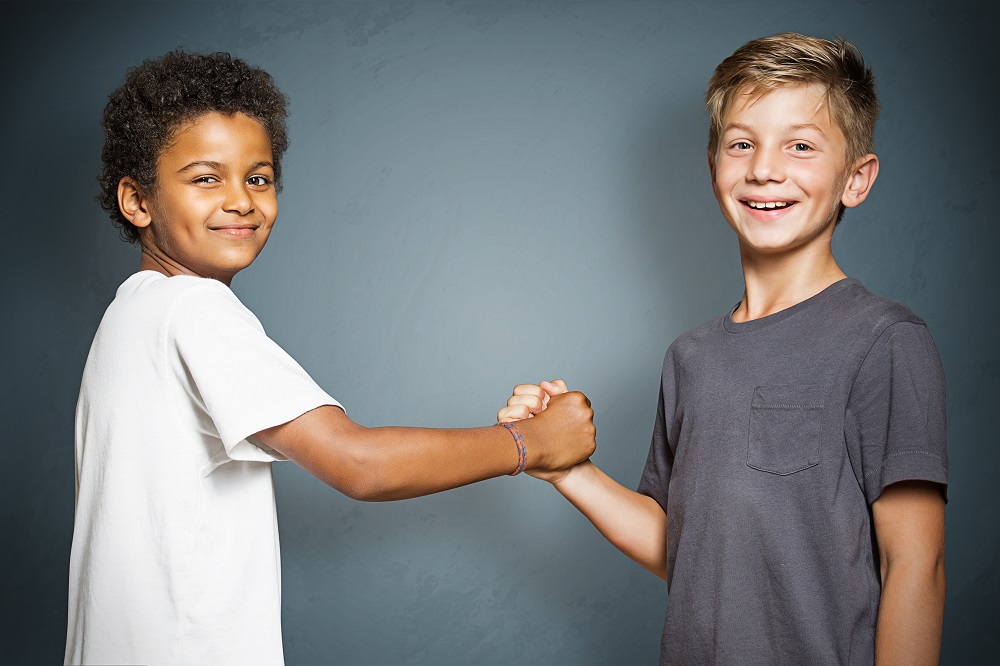
Buddy classroom activities pair an older class with a younger one for regular sessions built around a shared task: reading, art, science, or school routines. The 19 ideas below run from no-prep partner reading to school-wide fundraising. Most work best when the same two classes meet on a fixed schedule.


Back to the main Bully Prevention Guide.
PU#113 - Use Buddy Classes
Read to me, draw with me…let's create something together!
Creating a community of learners in a school can be done in many ways by students and staff. One way to quickly build relationships between students and staff is to create Buddy Classrooms. These are classrooms from different grade levels that meet routinely. The goal of the Buddy Classrooms is to create bonds between older students and younger students. The older students become role models for these younger students.
How Buddy Classrooms Pair Up
One option is to pair classes several grade levels apart, such as fifth with first or fourth with kindergarten. Schools running these programs often weigh how wide to make the gap: enough distance for the older student to take the role-model position, not so much that the younger student can't follow the task.
A possible starting schedule is about 30 minutes every two weeks. Regular meetings can help students become familiar with their buddies. Set the schedule before the year starts, because it's the first thing to get squeezed out once testing season arrives.
Why Buddy Classrooms Work
Older students behave differently when someone younger is watching. A fourth grader who argues about lining up will model the procedure correctly for a kindergartner without being asked, because the role has changed from student to example. That shift is the whole mechanism, and it's why several of the ideas below put the older student in charge of a routine rather than a craft.
For the younger students, the gain is a familiar face outside their own classroom: someone to find at recess, in the lunch line, at an assembly. In a school working on bully prevention, that widened circle is the point.
19 Buddy Classroom Activities
There are many powerful ways these classroom connections can become even more powerful for your school. Here is a list of 19 ideas for use of buddy classrooms:
1) Reading Buddies: younger students can read to older students and vice versa, create book commercials together, book chats, and more.
2) Art Projects: create art projects together. If there are more intricate processes to the art project, save them for the older buddy partner.
3) Science Experiment Teammates: create a science experiment that buddies can do by collecting data, building, and then experimenting. Share out the findings together. Activities must be age-appropriate and conducted under normal teacher supervision and school or lab safety procedures, particularly when younger students are involved.
4) Reset Space Partners: if permitted by school policy, a partner classroom may provide a supervised reset space as part of an established behavior-support procedure.
5) Sharing Good News: When a student does something to celebrate, they go to their buddy room and receive praise, a cheer, or even earn time with the buddy classroom.
6) Field Day: At the end or start of the year, older students could set up track and field events or an obstacle course for the younger students, then support the younger students as they participate, or they can participate with them.
7) Technology Projects: Introducing younger students to technology can be made easier with older buddy class partners. Students can complete a project together while learning new software or hardware. Teams can then share out their project.
8) Writing Stories: Students can write a story together, then share out together. Older students could type while younger students can help develop the story.
9) Modeling School Procedures: Older students can support younger students by modeling what it looks like and sounds like to walk down hallways, exit or enter school, ask for help, etc...
10) Assembly Partners: During assemblies, older students can sit with their younger buddy partners. Modeling is key here.
11) Creating Buddy Class Logo, Team Name, and Saying: Creating a team atmosphere by each buddy classroom team creating a logo and having an inspirational saying associated with the team.
12) Playground Assistants: Under staff supervision, older buddies can model games and appropriate playground-equipment use. They should not replace required adult playground supervision or be responsible for younger students' safety. If your school has the Peaceful Playground games, older students can model and teach the younger students.
13) Cleaning Crew: Buddy partners can pick up litter or collect recyclable materials around the school together, limited to safe, staff-approved materials and with appropriate precautions. Make it into a contest by weighing each team's collected recyclables.
14) Partner Walking: For students whose approved behavior-support plan includes a supervised movement break, staff may incorporate an appropriate walking routine consistent with that plan.
15) Fundraising Teams: Buddy classrooms can raise money for a cause, with school or district approval and according to applicable fundraising policies. Classrooms can compete against each other throughout the school, or buddy classrooms can set up and organize a team or even a school-wide fundraiser.
16) Breakfast Buddies/Lunch Buddies: Buddy partners can eat with each other for breakfast or lunch. This may be used as an incentive or for modeling opportunities.
17) Dismissal Partners: Older buddies can accompany younger students within designated, staff-supervised areas of the school at arrival or dismissal. Adults remain responsible for all traffic and crosswalk supervision.
18) Reward Incentives: A classroom can earn points to spend more time with their buddy classroom. Another variation is when both classrooms attain a certain specified goal, then they get to do something fun together.
19) History Partners: Buddies can partner up to learn history. Older students can help research historical people, places, or events. Students can create a project together, or partner to create a wax museum and share out their historical figure.
Matching Buddy Classroom Activities to the Time of Year
Not every idea suits every week. Routine-setting ideas pay off most in September, low-prep pairings carry the ordinary weeks, and the project-heavy ones need the longer blocks that open up once state testing is finished.
| When in the year | Ideas that fit | Why these |
|---|---|---|
| Start of year | 9) Modeling School Procedures, 11) Buddy Class Logo, 17) Dismissal Partners | Routines and team identity set in the first weeks carry through the year. Dismissal partnering runs only in designated, staff-supervised areas and under school policy, with adults responsible for traffic supervision. |
| Ordinary weeks | 1) Reading Buddies, 2) Art Projects, 8) Writing Stories, 16) Breakfast/Lunch Buddies | Little or no prep, and they repeat without getting stale. |
| Behavior support, any time | 4) Reset Space Partners, 5) Sharing Good News, 14) Partner Walking, 18) Reward Incentives | These run off the buddy relationship rather than a scheduled session. The behavior-support items depend on school policy and on any approved individual plan. |
| Whole-school pushes | 10) Assembly Partners, 13) Cleaning Crew, 15) Fundraising Teams | Scale past two classrooms and give the pairing a visible purpose. Litter collection and fundraising both need school or district approval first. |
| End of year | 3) Science Experiment Teammates, 6) Field Day, 7) Technology Projects, 12) Playground Assistants, 19) History Partners | Project-based and time-hungry, which is exactly what the post-testing calendar has room for. |
RELATED - Free Teacher Lesson Plans
Frequently Asked Questions
What are buddy classroom activities?
They're shared tasks done by two classes from different grade levels that meet on a regular schedule. The older class takes the role-model position, and the younger class gets a familiar face outside its own room. The task itself can be academic, like partner reading, or procedural, like walking a kindergartner to dismissal.
How often should buddy classes meet?
A possible starting schedule is about 30 minutes every two weeks. Regular meetings can help students become familiar with their buddies. Put the dates on the calendar before the school year starts.
Which grade levels should be paired?
One option is to pair classes several grade levels apart, such as fifth with first or fourth with kindergarten. Some schools pair high school classes with elementary ones, which can work when the task is clearly defined. What matters is that the older student is clearly the more capable partner for the task.
What are good end-of-year buddy class activities?
The project-based ones. Field day, a science experiment carried through to shared findings, a technology project, or a wax museum of researched historical figures all need more time than an ordinary session allows, and the weeks after state testing are usually where that time exists.
Do buddy classrooms help with bullying?
Buddy programs can help build cross-grade relationships and school connectedness, but they should be treated as one possible component of a broader bullying-prevention approach. That is how the rest of this guide treats it.
MORE BULLYING PREVENTION GUIDE RELATED READINGS:
- 3 Types of Bullying in School + 1 Immense Social Challenge
- 5 Reasons Why Schools Have a Difficult Time Stopping Bully Behaviors
- 5 Reasons Why We Need to Define Bully Behavior and Stop Generalizing Events as "Bullying"
- 6+ Steps to Addressing Bullying When It Occurs
- 9 Strategies We Can Teach Students to Problem Solve
- 7 Ways How to Raise a Defender of Bully Prevention
- Provocative Victims and 7+ Practices for Victory
- One School Wide Philosophy: High-Trusting Relationships
- 13 Ideas to Combat Bullying at the Community Level
- 6 of the Most Hideous Cyber Bullying Tactics Used By Students
- 11 Communication Strategies to Combat Bullying
- 20 Ideas To Successfully Use Bully Data
- 5 Reasons Why Strong Instruction Affects Bully Prevention
- #1 Instructional Lesson for All Students on Bully Prevention
- Power of Buddy Classrooms: 19 Ideas (Currently here)
- 8 Ways to Teach Empathy
- 10 Ways to Empower Defenders
- 9 Reasons Culture Trumps Strategy
- One School-Wide Strategy: Kindness Campaign
- Pairing several grades apart is one option - Fifth with first or fourth with kindergarten is a practical example, with the gap wide enough for the older student to take the role-model position.
- Try a regular short session - About 30 minutes every two weeks is a possible starting schedule, and regular meetings can help students become familiar with their buddies.
- Routines need little prep - Modeling hallway procedures and staff-supervised dismissal partnering cost almost nothing to set up and carry over outside buddy time.
- Match the idea to the calendar - Reading and art suit ordinary weeks, while field day and wax-museum projects need an end-of-year block.
Teachers interested in school-wide leadership may consider graduate study in educational leadership, curriculum, or related fields. Available credentials and requirements vary by state. The programs listed on this page include options built for teachers who are already in the classroom.
As a 5th grade teacher, in 2010 Jon won the Presidential Award for Elementary Math and Science Teaching (PAEMST). As a principal, his school won the 2012 Blue Ribbon Award. In 2018, he won the National Distinguished Principal Award (NDP). In 2019 he won the National No Kid Hungry Breakfast Hero Award.
Jon is the author of three guides published on teacher.org: An Educator's Guide to Combat Bullying & Bully Prevention; Teacher Evaluation: A Transition Guide to Exemplary Performance; and You are the Wild Card: Infusing Fun Back into Curriculum. He has authored a children's picture book that was released January 2019 titled Benjamin’s Visit to Principal Reads Office…again! (available at www.archwaypublishing.com)
- Learning How to Say No and Set Boundaries with Parents - November 21, 2022
- How to Implement a Check-In, Check-Out (CICO) Behavior System - September 26, 2022
- Teacher Core Values: 7 Strategies for Living Your Code - August 15, 2022