

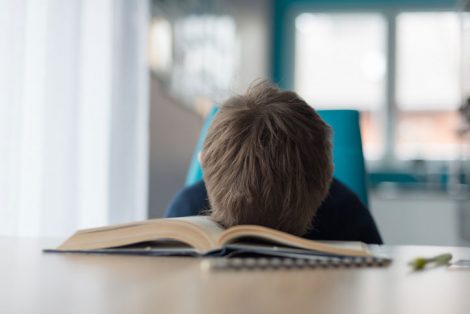
How to Keep Kids Off Their Phones While Homeschooling
By: Scott Wilson | Sep 2, 2026
The most reliable way to keep kids off their phones while homeschooling is to agree on a spot where the phone goes during schoolwork, out of reach and out of sight. Set a clear return point, keep the work surface phone-free, and switch off notifications before the session starts.
Featured Programs: Sponsored School(s) Liberty University Featured Program: Bachelor of Science in Special Education – Interdisciplinary Studies, Master of Arts ...When a New Student Joins Your Special Education Classroom
By: Mary McLaughlin | Aug 22, 2017
When a new student in a special education classroom arrives after the year has started, begin with the paperwork and the people: read the IEP, meet with your special education director, and brief your paraprofessional. Then build the relationship. Federal law also obligates the district to provide comparable services right ...
20 Picture Books About Bullying for Teachers
By: Kylie Hall | Aug 16, 2017

The best picture books about bullying give kids language for what they're seeing: the child being targeted, the child doing the targeting, and the bystanders who could step in. This list of 20 covers all three roles, with a suggested read-aloud band for each so you can match a title ...
Flexible Seating Classroom: Daily 5’s 4-Reason Fit
By: Amy Konen | Aug 6, 2017
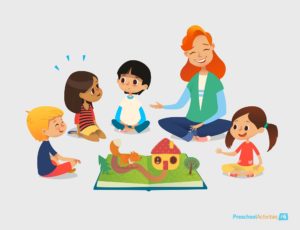
A flexible seating classroom swaps assigned desks for a mix of seating types: floor pillows, stools, standing desks, and rockers that students choose based on the work they're doing. Paired with Daily 5's gathering-space model, it may help reduce off-task behavior and support engagement, while giving students a real say ...
Eight Ways to Teach Empathy in Your School
By: Jon Konen | Aug 1, 2017

The practical answer to how to teach empathy is structural: build it into what students do every day instead of teaching it once. An SEL curriculum, a supervised playground, kindness recognition, service projects, and restorative discipline can help develop empathy and prosocial behavior by giving students regular chances to practice ...
Relational Trust in Schools: One School-Wide Philosophy
By: Jon Konen | Jul 31, 2017

Relational trust in schools is the confidence that colleagues, leaders, students and families will do their jobs and follow through on what they say. Bryk and Schneider identified four parts: respect, personal regard for others, competence, and integrity. In their study of Chicago elementary schools, higher-trust schools were more likely ...
4 Behavioral Terms Teachers Hear and What They Actually Mean
By: Blain Hockridge | Jul 26, 2017

Four behavioral terms cause the most confusion in school meetings: positive reinforcement, negative reinforcement, function, and extinction. A reward isn’t automatically positive reinforcement; negative reinforcement removes something aversive rather than punishing; function is the consequence maintaining a behavior; and extinction is the procedure of discontinuing that reinforcement.
Featured Programs:
Sponsored School(s)
Liberty University
Featured ...
13 Community Bullying Prevention Ideas for Schools
By: Jon Konen | Jul 24, 2017

Community bullying prevention works when the school stops carrying the effort alone. Local businesses, police, service clubs, faith groups, and parents each take a visible role, so students hear the same message everywhere they go. The 13 ideas below are ones we have actually run in our own district.
Featured Programs:
Sponsored ...
Types of Cyberbullying: 6 Tactics Students Use and What to Do
By: Jon Konen | Jul 13, 2017
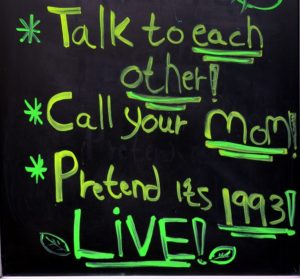
The main types of cyberbullying are outing, harassment and name-calling, catfishing with fake accounts, sharing explicit or humiliating images, forwarding hurtful posts, and threats or intimidation. Repetition and a power imbalance are central to how bullying is defined, though conduct like threats, stalking, or non-consensual image sharing can require a ...
3 Types of Bullying in Schools + 1 Immense Social Challenge
By: Jon Konen | Jul 13, 2017
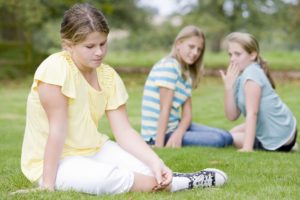
The types of bullying in schools fall into three behavior categories (verbal, physical, and psychological) plus cyberbullying, which cuts across all three. All four share the same markers: unwanted aggression, a power imbalance, and repetition or a high likelihood of it. Which type you're looking at shapes how you document ...
How to Regain Control of a Classroom: 10 Strategies That Work
By: Amy Konen | Jul 13, 2017
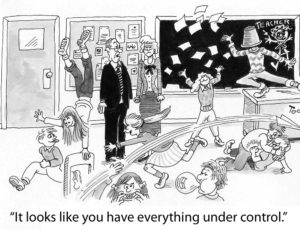
To regain control of a classroom, stop escalating consequences and start changing conditions. Repeated behavior may reflect dysregulation, unmet needs, skill deficits, environmental factors, or other causes worth assessing first. Calming spaces, scheduled breaks, flexible seating, and alternative ways to show work can give students more control over their day.
Featured ...