
How to Regain Control of a Classroom: 10 Strategies That Work

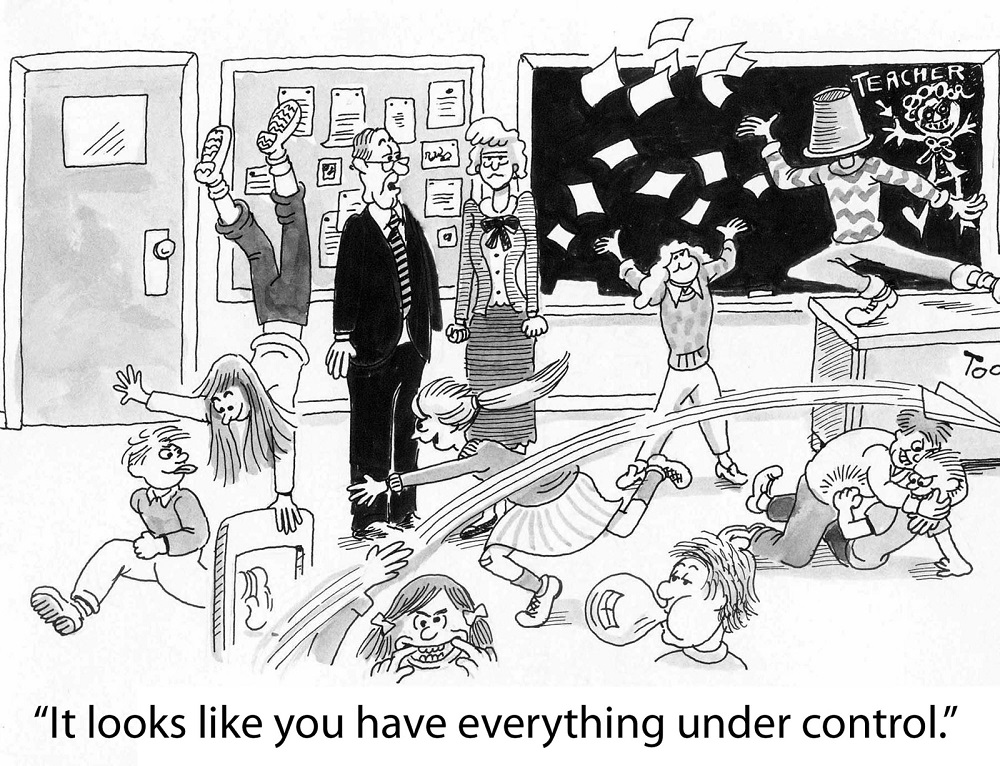
To regain control of a classroom, stop escalating consequences and start changing conditions. Repeated behavior may reflect dysregulation, unmet needs, skill deficits, environmental factors, or other causes worth assessing first. Calming spaces, scheduled breaks, flexible seating, and alternative ways to show work can give students more control over their day.


There you are in your classroom, following your guidelines you have explicitly taught to kids since the first day of school, and, inevitably, you have a student intent on pushing those guidelines and, as a result, has gotten himself into trouble and assigned consequences. The pattern emerging here, however, is that this same student is getting in trouble more and more frequently. Upon reflection, you surmise that the classroom plan is not working. You find yourself in more power struggles and begin watching intently for every little thing that goes wrong because that student always seems to be in the middle of it. You realize that this is not working. It feels very choice-based because he "knows better" or he did not use to act this way. That feels very personal and very upsetting. The reaction is to do what you know. We must follow through because that consistency is important for kids. We feel like we better do what we said we were going to do. We assign detention, follow a plan, kick a student out of class, give a failing grade, or we may simply ignore a student not engaging. We are stuck. Yes, we imposed consequences, but we know no behavior change will come of it and the student will do the same thing the next time. We are damaging our ability to work positively with this student and, thus, may end up pushing him farther away from buy-in and engagement.
All students fall back on what they know, and students with trauma especially do what they know in the moment. Picture the brain as levels in a house. That is a simplified metaphor popularized by child psychiatrist Dan Siegel in The Whole-Brain Child, not a description of two separate brain systems a student physically moves between. In the metaphor, the upstairs room uses logical thinking and problem solving to make decisions. This is where we are most productive. The downstairs room uses emotional reactions to make decisions. This can be an unpredictable state and can happen especially when students experience a lot of anxiety or trauma. This is due to remaining in a heightened state of stress. As shorthand, a student is working from the downstairs room when reacting emotionally to a situation that could be confrontational, frustrating, or threatening. If they are scared or angry or upset or embarrassed, the reaction will not be a logical one.
When we engage in these power struggles with kids, we become unregulated as well, and that makes it difficult to see other options, so we revert to old patterns. It is up to us to help kids see other choices in that emotional moment. This flexible, growth mindset is difficult because it feels like we are letting a student get away with something. Being flexible does not mean we want them to get away with something; instead, it means we need to analyze our approaches to find one that hooks our struggling students and allows them to see more effective options. Remember that definition of insanity? If one keeps trying the same approach over and over and gets inappropriate or ineffective responses from students, then to keep doing it the same way makes us feel like we are not doing our jobs well. We need to discover a different method that will give us some control back, give some regulation back to our students, and get our classroom back on the learning track. Here are ten ideas to try when you need another way to connect with your students.
1. Create a Calming Corner
A calming corner is simply a safe place for students to move to within your classroom when they become unregulated. This place is a spot for a break, a spot to just take a few minutes to pause and reset without the intensity of everyone watching or the teacher hovering over them. An unregulated student is thinking with his downstairs brain, which means emotions will trump problem-solving and logical thinking. When a student is in an acute state of anxiety, his ability to reason and problem-solve drops sharply, so imagine how difficult it will be to think through the situation in front of him. In the calming corner, tools can help students distract their brain, which in turn helps them get back to that upstairs brain where they can make better decisions. Tools I have regularly included in my calming corner are bean bag chairs or pillows, blankets of varying textures and weights, the sequin pillows, drawing paper, colored pencils, markers, crayons, moon sand, silly putty, and puzzles. Sensory and weighted items are not a default for every student. Use them where they suit the individual student and where they are consistent with any IEP or Section 504 plan, professional recommendations, and your school or district safety policies. I explicitly teach what it looks like in my calming corner for kids so they know what they need to do when they are there. We spend about 8 minutes calming and getting our brains ready to return to the task. There are timers in the corner, and the kids are taught how to set them and clean up and return to work immediately when it goes off. I do not have students take advantage of this because of the way I set it up in the beginning. This is critical. Kids want control. They especially want control over their big behaviors because they are scary and it does not feel good to go through one of these events. If you explicitly teach the purpose and uses in the calming corner, kids will respect it and use it appropriately. I usually stay away while they are working through the corner. This lets them do what they need to do without eyes watching every move. If a student is struggling to calm in the corner, I will check in and provide prompts as needed to get them focused.
2. Teach Specific Strategies to Self-Calm
When I explicitly teach procedures in the calming area, I will include specific instruction on strategies to use when they are in the space. I teach two or three breathing techniques such as the Figure 8 and the Six Sides of Breathing Strategy. With the Figure 8 Strategy, I make cards with an 8 on them and teach kids to breathe in while tracing the top half of the 8. When they come to the middle, they breathe out while they trace the bottom half of the 8. They keep repeating this slowly until they start to feel calmer. For a brain to go back to regulation, it helps to perform a repeated behavior over time to help soothe the brain's stress response. The Six Sides of Breathing technique is the same concept but with an extra step. The student traces a side while breathing in, then she traces the next side and holds her breath. On the third side, the student traces and breathes out. The cycle then repeats itself. Because it adds a breath-holding step, it asks more of a student and will not fit everyone.
| Technique | How the student traces it | Notes |
|---|---|---|
| Figure 8 | Breathe in tracing the top half of the 8, breathe out tracing the bottom half, then repeat slowly. | One example of a short, simple pattern with no breath-holding step. |
| Six Sides of Breathing | Trace one side breathing in, the next side holding the breath, the third side breathing out, then repeat the cycle. | Includes a breath-holding step, which is not appropriate for every student. Introduce it only where it suits the individual. |
These are examples of what has worked in my room rather than prescribed interventions. Breathing techniques affect students differently, and any pattern that involves holding the breath should be introduced only where it suits the individual student.
3. Take a Break to Refocus
 The student may not need the calming corner but may need to take a few minutes to just pause and reset. I myself still need to do this. I will be working on a project and will randomly get up and do something else for a couple of minutes. I then can return to the task and keep going. Kids are no different. Explicitly teach the expectation for this, and you will have more productive students who can do sustained work for longer periods of time. Teach what you can live with for choices. Can they walk around the room? Can they do an alternative activity for a few minutes? Get a drink? Use the bathroom? I have purchased sand timers that are about two minutes (I found mine at Oriental Trading). Every student has one, and if they need a break, they take out their timer, place it on their workspace so when I look around, and I see a timer, I know a break is in progress. I have Sudoku pages, word search pages, and blank drawing paper available if the student wants to choose a task like that for a break. I also allow (after teaching what it looks like and sounds like) students to walk around the outer edge of my classroom without disturbing their classmates, or they can choose push-ups or yoga moves that I have modeled next to their desk area. Some kids simply put their heads down for a few minutes. When the sand timer runs out, they put it back in their tub and return to the task they were working on before they started the break. This gives them the power that they are in control of their learning. I try to touch base with them at a transition time to debrief how the break went, what worked, and what supports they still needed.
4. Give the Student a Job
Sometimes a student just needs something else to help them feel productive or important. When the academic task is difficult or frustrating, it can profoundly affect a fragile learner, leading to shutdowns, distractions that affect everyone, and possibly a big behavior event. Building up a student's confidence helps him feel more confident to take a risk and keep working through the new learning. I have jobs ready to go ahead of time so that if a student needs something like that, I am already prepared for it. They may be my paper passers, my collectors, my set-up-for-an-activity kids, or my filing, sorting, and delivering messages kids. A simple job, especially one where a student can positively interact with another adult in the building, is a great help in boosting his or her confidence.
5. Give Alternative Testing Methods
If test-taking is setting your student off, consider a different way to assess what he or she knows. Can they produce the answers orally, dictate their responses to you or another scribe, draw or create their responses, or produce answers digitally? Two limits matter here. A different format cannot simply be substituted when it would change what the assessment is measuring, so a reading assessment read aloud stops measuring reading. And for a student with an IEP or a Section 504 plan, required assessment accommodations have to follow that plan rather than a teacher's judgment in the moment. Standardized and state assessments carry their own rules about which accommodations are permitted. On ordinary classroom assessments, you have far more room to work. When we take some of the anxiety off their plates, their capacity to reason stays where they can optimally give you everything they know, and this will in turn help them stay regulated to avoid the behaviors that can potentially set off others in the room as well.
6. Try Flexible Seating
Flexible seating may help some students with comfort, engagement, or self-regulation, because it gives them some control over their situation. It does not feel like something is being done to them. Rather, they are a part of their own learning. Flexible seating lets them choose the optimal learning space for themselves. This works best when you explicitly teach the expectations of choosing seats, and what it looks like and sounds like in those seats. Try starting small, where you replace a few chairs with other choices. In my room, I have sitting, kneeling, floor, and standing spaces. We go over procedures of how to choose spaces, the appropriate way to use the seating in those spaces, and then we always debrief after to see what went well and where we still need support. I have exercise balls, stools, low camp chairs, texture seats, rocking chairs, weighted chairs, bean bags, and pillows. Kids get A LOT of practice using all choices to see what they prefer. We go over the looks like sounds like expectations every day. I can usually turn it over to them after a month of practicing, but we still revisit after long vacations or weekends and as needed.
7. Listen to Music
 This can be on an individual or a whole class basis. I love using Pandora's Classical Music for Studying station. It is calming and soothing and helps the kids stay regulated as they work through academics that are frustrating. Sometimes I just give kids who need more support a pair of headphones and let them listen while they are working on their own. Whether music or headphones are permitted during an assessment is a separate question that depends on the assessment, your school's rules, and any accommodations in a student's IEP or Section 504 plan, so check before you offer it. Music can be very soothing to those experiencing trauma and anxiety.
8. Give a Break before a Non-Preferred Activity
Every teacher can look at their class and know which students hate writing and which students will give them trouble in math or when it comes time to take a test. Just the idea that a particular task or subject is coming next can trigger a student to become unregulated and off task to avoid the activity. Instead of engaging in a power struggle with this student, remind yourself that you should help them see a different way to attack the situation. Fighting with them will get you nowhere. Instead, try a break before the activity even begins. The student can move to the calming corner, do a job for you, or just use his sand timer to break quietly in his space before he starts. The idea is to regulate before jumping into the task. Many times, I give a break before a non-preferred task and then give frequent breaks throughout the task as well. This is not to allow a student to get out of doing the task, but rather, to help the student stay in the regulated mindset to actually get more work out of the student.
9. Provide Predictability
Unregulated students tend to have stronger reactions to events they cannot control. They are especially susceptible to changes. This can have a devastating effect on their behaviors. Try a visual schedule. I see many teachers have their schedule listed on the board, and that is a great start. With a vulnerable student, that schedule will feel too removed for them, and it will not have the desired effect. Producing a visual schedule that the student can keep and interact with will help them know exactly what is coming in their day. I have fifth graders and still use picture icons to represent the schedule. For some students, the icons make routines and transitions more predictable, and that predictability is the benefit worth chasing rather than any claim that pictures are universally easier to process under stress. I have boxes next to the pictures to check off or score points for his or her efforts. I know how good it feels when I can check something off my sticky note list, and this acts as the same concept for kids.
10. Be Flexible to Set Up Alternative Ways to Produce Work
When a student cannot just sit down and get something done, or even start for that matter, it sets us off, and we tend to become unregulated as we struggle to get work out of a student. If we can be flexible and try alternative incentives to get work out of a student, we will hopefully be more successful. When a small child will not eat his baby peas, we try the airplane, or make funny faces, or zoom the spoon all around to get him to take a bite, and then we celebrate like crazy when he does. This is the same idea. I have used the colored dot stickers that we use to show prices at garage sales. I start with a one-to-one ratio to get the incentive started. If the student completes a problem, he gets a dot from me and may cover another problem that he now does not have to do. When he completes another, I give another dot. As the student builds up his stamina to complete more problems without becoming frustrated, I lengthen the number of problems he must complete to earn a dot. Students find it very empowering to cover up what they feel will be the most difficult problems to tackle. One caution: covering problems reduces the work a student actually completes, so use it where that reduction still fits the learning objective and where it is consistent with any IEP, Section 504 plan, or behavior intervention plan the student has. This is one classroom strategy, not a general intervention.
By being flexible and thinking outside the box to help our students maintain their self-regulation in class, the more success we are going to have in the overall culture of our room. It is critical for us to stay regulated and keep ourselves from becoming stuck and power struggle with our students. If we can help them to see they can do well with a little creative support, they will respect us for our efforts, and we will enjoy our classrooms even more.
RELATED CONTENT:
Frequently Asked Questions
Why did I lose control of my classroom in the first place?
Usually because small things went unaddressed until they stopped feeling like rules. Long stretches with a substitute, a class formed after the year started, or a teacher returning from extended leave all produce the same result, because the expectations were never taught or were taught by someone else. None of that means the plan was wrong. It means the plan needs re-teaching rather than harder enforcement, and it helps to be honest that you can't control every factor behind problem behavior even when you can manage how the room responds to it.
How do you regain control of a classroom mid-year?
You reset rather than start over. Bring the class into it: revisit the expectations together, ask students to say out loud what each one looks like during the activity they are about to do, and then hold to the revised version consistently. Doing this in February works. Waiting for September wastes five months of instruction.
Do these strategies work for a whole class or only one student?
Both, and the distinction matters. Calming corners, break timers, and flexible seating are built as classroom-wide systems that any student can use, which is exactly why they do not single anyone out. Individualized supports, such as a personal visual schedule or a dot-sticker ladder, layer on top for the students who need more. A teacher-created support is not the same thing as a legal accommodation, which is a term that belongs to what is required through an IEP, a Section 504 plan, or another applicable plan.
Is a calming corner the same thing as a time-out?
No, and treating them as the same defeats the purpose. A time-out is assigned by the teacher as a consequence. A calming corner is chosen by the student before things escalate, and the point is regulation rather than punishment. If students experience the corner as somewhere they get sent, they will stop going there on their own.
- Escalation is the trap - Repeated rule-breaking may reflect dysregulation, unmet needs, skill deficits, environmental factors, or other causes, so assess what is driving it before reaching for tougher consequences.
- Give back some control - Flexible seating, break timers, and alternative ways to produce work may help some students by handing back a measure of control, which takes the fuel out of a power struggle.
- Teach the tool before you need it - A calming corner works because the purpose, the materials, and the routine for using it were taught explicitly in advance rather than improvised mid-meltdown. How long a student needs varies.
- Regulate adults first - Teachers get dysregulated in power struggles too, and a teacher stuck in old patterns cannot show a student a different option.
Most teacher preparation programs devote very little time to de-escalation, self-regulation, or trauma-informed practice, which is why so much of this ends up learned the hard way in your own classroom. The programs on this page include MEd degrees and added coursework in special education and behavior support, several designed for teachers already carrying a full course load. Endorsement names and requirements vary by state, and behavior support does not exist as a separate educator endorsement everywhere, so verify that a program meets your own state's educator certification and licensure requirements.

- 11 Strategies to Encourage Students to Own Their Learning - January 19, 2018
- Student Behavior During the Holidays: 5 Potential Stressors - December 21, 2017
- 10 First-Year Teacher Struggles That Catch Veterans Too - November 27, 2017