

Teacher Talk

How to Keep Kids Off Their Phones While Homeschooling
By: Scott Wilson | Sep 2, 2026
The most reliable way to keep kids off their phones while homeschooling is to agree on a spot where the phone goes during schoolwork, out of reach and out of sight. Set a clear return point, keep the work surface phone-free, and switch off notifications before the session starts.
Teachers have been working on this problem for a long time. Now it's your kitchen table.
Eyes down ...
Building Relationships with Students: The Wild Card, Part 1
By: Jon Konen | Aug 26, 2019

Building positive relationships with students is an important part of effective classroom management, alongside clear rules, routines, and consistent expectations. Research from the Australian Education Research Organization shows that trust between teacher and student supports calmer, more productive classrooms and makes behavioral expectations easier to hold. Part 1 of 5. Follow ...
Group Work for Students With Disabilities: What They Can Do
By: Mary McLaughlin | Aug 5, 2019
Group work for students with disabilities works, but it has to be taught before it's expected. Front-load the routine and define each center's objective. Group strategically based on the lesson objective and students' instructional needs, while providing the accommodations, modifications, and supports required by each student's IEP. Structure is what ...
5 Classroom Behavior Management Strategies to Add to Your Toolbox
By: Jon Konen | Aug 1, 2019

Classroom behavior management strategies work best when you pair a few well-practiced go-to moves with the flexibility to switch tactics for students who don't respond to your usual approach. Five practical options here- brain fuzzing, check-in/check-out, High Trust language, Love and Logic's SEL banking, and restorative practices- cover students at ...
IEP Progress Monitoring: How Much Progress Is Enough?
By: Mary McLaughlin | Jul 30, 2019
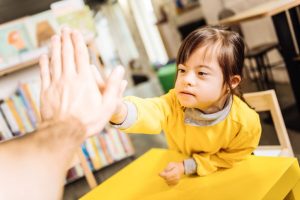
IEP progress monitoring is the regular collection of data showing whether a student is moving toward their IEP goals. Since Endrew F. v. Douglas County (2017), an IEP must be reasonably calculated for progress appropriate to that child’s circumstances. Monitoring gives the team data to evaluate that progress and whether ...
What Can You Do With a Special Education Degree?
By: Mary McLaughlin | Jul 11, 2019

A special education degree qualifies you to teach students with disabilities once you hold your state's license or endorsement. District roles like IEP case management, transition coordination, and instructional coaching often build on it, though requirements vary. Clinical work such as speech-language pathology or behavior analysis needs separate credentialing. Most articles ...
Helpful, Watchful Eyes Keep Us All In Check: An IEP Annual Review Checklist
By: Mary McLaughlin | Apr 4, 2019

A solid IEP annual review checklist covers three phases: gather current data and update the PLAAFP before the meeting, walk through goals and services with the team during it, and confirm signatures and next steps after. A second reviewer catching gaps in that paperwork before the meeting can help head ...
Don’t Leave, We Need You: 8 Reasons We Need More Teachers
By: Jon Konen | Mar 27, 2019

We need more teachers because openings keep appearing without the profession expanding. Projections Central expects elementary teaching employment to dip about 2% through 2034 alongside roughly 91,000 annual openings, which largely reflect replacement needs as workers transfer to other occupations or leave the labor force. This essay argues the real ...
Teacher Fears: What Teachers Say They’re Really Afraid Of
By: Mary McLaughlin | Mar 20, 2019

Teacher fears run well past first-day nerves. In one teacher’s informal social-media thread, respondents named job loss, contract non-renewal, abuse from students and parents, medical episodes without breaks, and a retirement they can’t afford. Those replies are an unrepresentative sample, not a survey. This is her account of them. This piece ...
4 Strategies to Reframe Negative Language in the Classroom
By: Jon Konen | Mar 12, 2019

Reframing negative language in the classroom means swapping phrases like "I can't do it" or "I don't want to" for growth-oriented ones like "I can't do it yet" or "I get to." The shift works with students and with parents in tough conferences. Four strategies do most of the work: ...
Leadership: 7 Unintentional Lessons I Learned from Failure
By: Jon Konen | Feb 4, 2019

Failure can teach leaders lessons that success doesn't, especially when they reflect on what happened. After losing a superintendent bid, I came away with seven lessons: flip your perspective, find the win, model failure for students, learn about yourself, set up your future, have hard conversations, and pay it forward. Failure ...