

Blog

How to Keep Kids Off Their Phones While Homeschooling
By: Scott Wilson | Sep 2, 2026
The most reliable way to keep kids off their phones while homeschooling is to agree on a spot where the phone goes during schoolwork, out of reach and out of sight. Set a clear return point, keep the work surface phone-free, and switch off notifications before the session starts.
Teachers have been working on this problem for a long time. Now it's your kitchen table.
Eyes down ...
5 Reasons Schools Have a Hard Time Stopping Bullying
By: Jon Konen | Mar 3, 2017

Here's why schools have a hard time stopping bullying: many reports turn out, on investigation, to be arguments, rough play, or an overused label rather than the aggressive, repeated, power-imbalanced behavior most bullying frameworks describe. Legal definitions vary by state, and FERPA limits what a school can say publicly, which ...
How to Raise a Defender: 7 Ways to Build an Upstander Against Bullying
By: Jon Konen | Mar 3, 2017

Back to the main Bully Prevention Guide. One important defense against bullying is helping children learn to act as upstanders rather than passive bystanders, while also giving them safe ways to involve adults and protect themselves and others. Parents and educators can support that by modeling giving, service, responsibility, real-world reflection, ...
10 Ways to Empower Bully Prevention Defenders in Your School
By: Jon Konen | Mar 3, 2017

Bully prevention defenders are students who step in or tell a trusted adult to keep a classmate safe, not to get anyone in trouble. Building that culture starts with explicitly teaching the difference between tattling and reporting, then backing it up with consistent recognition, clear reporting routes, and staff modeling. Back ...
Teaching Bullying Prevention: 5 Reasons Instruction Matters
By: Jon Konen | Feb 11, 2017

Teaching bullying prevention effectively matters to the success of any program a school adopts. Relatable content, active student participation, deliberate lesson design, real-world application, and honest assessment all shape whether a curriculum reaches students. Requirements for prevention policies, staff training, and curricula vary by state and district, so follow applicable ...
How to Deal With Bullying as a Teacher: 6+ Steps
By: Jon Konen | Jan 28, 2017

Dealing with bullying as a teacher starts with a one-on-one conversation with the student who reported it, not with immediate consequences for the student accused. Gather the full picture, bring it to a school team, address the behavior directly, set a written plan for what happens next, then follow up. Back ...
5 Reasons Why We Need to Define Bully Behavior and Stop Generalizing Events as “Bullying”
By: Jon Konen | Jan 28, 2017

Bully behavior is an aggressive, intentional action that involves a real or perceived power imbalance and typically repeats over time, not every scuffle, one-time argument, or hurt feeling. Schools that dig into the specific behavior rather than labeling every incident "bullying" can develop individualized intervention plans and track whether they're ...
What Is the Daily 5? 5 Reasons It’s the Best Reading Structure
By: Jon Konen | Dec 3, 2016

The Daily 5 is a literacy framework built around five independent components: read to self, read to someone, listen to reading, word work, and work on writing. Developed by Gail Boushey and Joan Moser, it teaches students to work independently while the teacher provides small-group and one-on-one instruction, rather than ...
ISS vs. OSS: What Each One Means for Students
By: Jon Konen | Dec 3, 2016

The difference between ISS and OSS is location. In-school suspension keeps a student on campus in a supervised room, still doing assigned work. Out-of-school suspension sends them home for a set number of days. Students usually consider OSS the lighter consequence. The research on behavior outcomes does not support that. After ...
8 Reflection Questions for Teachers and School Leaders
By: Jon Konen | Nov 19, 2016

These eight reflection questions for teachers move from your hardest recent decisions to your most successful ones, then to what you can actually control. The author works through them weekly, and the value is in the pattern that emerges across sessions. That's what shifts you from reacting to what hits ...
Teaching Manners in the Classroom: 13 My Mom Taught Me
By: Jon Konen | Nov 19, 2016
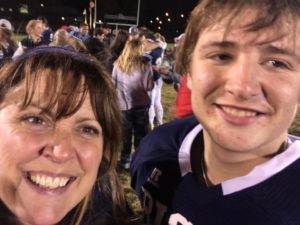
Teaching manners in the classroom works best as direct instruction, not assumption. Name the manner, model it, practice it, then recognize students who use it. One principal's 13 manners, from kindness and eye contact to telling the truth and taking turns, grew into a schoolwide program of 19 rules taught ...