
Teaching Manners in the Classroom: 13 My Mom Taught Me

Teaching manners in the classroom works best as direct instruction, not assumption. Name the manner, model it, practice it, then recognize students who use it. One principal's 13 manners, from kindness and eye contact to telling the truth and taking turns, grew into a schoolwide program of 19 rules taught one per day.


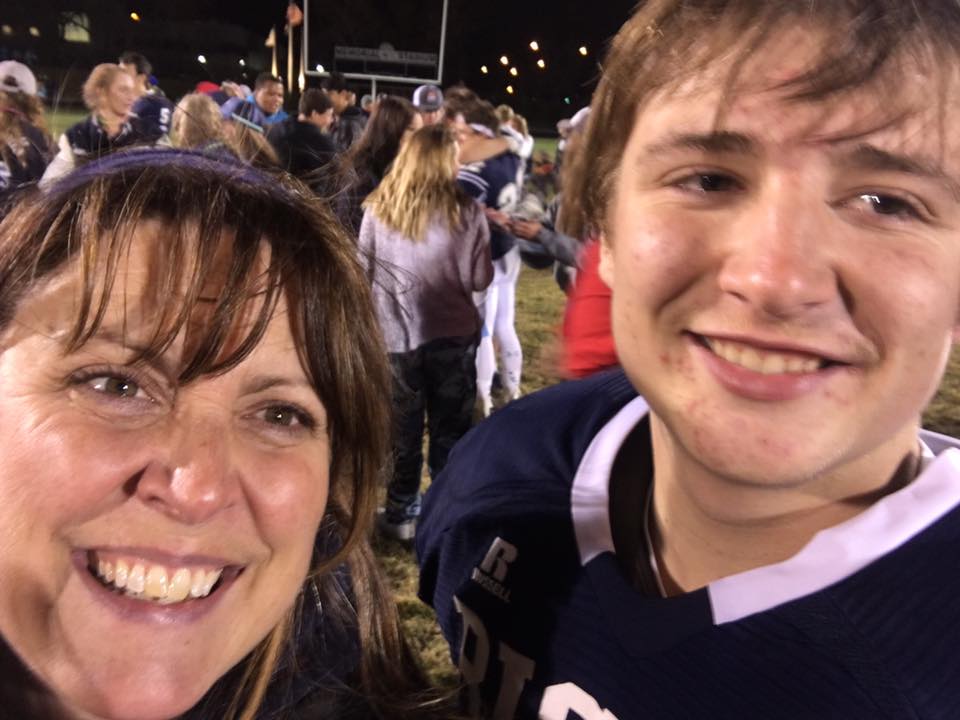
My mom, Pat Konen, helped me to understand that manners are essential. Being a classroom teacher for over 30 years (Kindergarten, second grade, fourth grade, and a traveling science teacher), she understood that weaving manners into her instruction supported her classroom management and, even more importantly, she understood it was a proactive way to get students to behave better. In talking with many of her former students, who are mostly older than me, they remember the fun activities and ultimately the structure she provided for those activities in their kindergarten classroom. Within the first five seconds of proclaiming my mom was their teacher, I always get a smile first, and many admit that she metaphorically “whipped them into shape!” It is so true that what you learn in kindergarten stays with you a lifetime.
Mom understood that education and learning experiences should be hands-on and fun for learning to stick. She added in hands-on science experiments, crafty art projects, and so much more with glue and glitter! Many teachers would steer away from daily hands-on learning because of the management of students and supplies; not my mom. She knew that having procedures, routines, and manners made her instruction easier. When she had classes where the student achievement was lackluster, she changed her game plan. She told me that many of those classes just needed to work on getting along with each other…this had to be done before she could ever worry about curriculum and content. I believe she was ahead of her time in so many areas.
Two sources are worth putting side by side here. An Education World article on teaching manners pulls together expert advice and school-tested programs, from reading time built around manners books to schoolwide recognition for students who show them. Separately, a kindergarten research study in the American Journal of Public Health, by Jones, Greenberg, and Crowley, followed kindergarten teachers’ ratings of children’s prosocial skills and found significant associations with education, employment, and mental health outcomes 13 to 19 years later. That study did not test a manners program, so take it as a reason this work matters rather than proof that any one approach raises scores. The philosophy is similar to the high energy, high expectations of Ron Clark! If you have not seen the Ron Clark Academy, I recommend reading, researching, or even visiting his school in Atlanta, GA. In Mr. Clark’s book, Essential 55: An Award-Winning Educator's Rules for Discovering the Successful Student in Every Child, he describes the 55 lessons he built for a fifth-grade class in rural North Carolina, and reports that students who had been reading well below grade level moved past it.
Here are 13 manners that my mom taught me that I am teaching my students. These manners definitely have an effect on our school’s culture and student achievement:
1: Be Kind
The number one thing my mom taught was to be nice to others and show kindness. I was lucky enough to watch her with her students. When students were unkind, she would take this on with students…one-on-one. She would then use the whole class to support these students with kindness. I was taught to be kind to all students, no matter their families’ income, where they were from, or if they were mean to me.
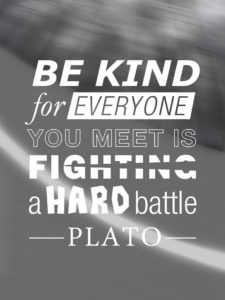
2: If You Don’t Have Something Nice to Say, Don’t Say Anything At All
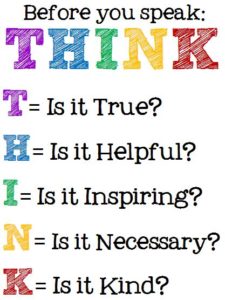
Many times we blurt out something without thinking of its implications. It seems we don’t listen very well anymore, but we listen to be heard. Sometimes listening means not responding immediately…especially if it isn’t going to help! Last year I put a poster up outside my office with a great acronym: THINK!
3: Show Someone You Are Listening
Letting someone know you are listening is a manner worth teaching. Eye contact is one way to do it, and in a lot of settings it reads as attention. It is not the only way, and it is not a universal rule. Eye-contact norms differ across cultures and families, and for some autistic, neurodivergent, or disabled students, sustained eye contact is uncomfortable or simply not available. A student looking at the floor may be listening harder than the one looking at you. So teach the range rather than the single behavior…turn your body toward the speaker, settle your hands, nod, or answer in a way that shows you took in what was said. Nodding doesn’t necessarily mean you agree, but that you are listening and understanding what they are saying. What we are after is that the speaker can tell they were heard, not that every student signals it the same way.
Two habits of my own, offered as what works for me rather than as instruction: I keep my eyebrows up when I answer a student, which helps me stay even-tempered on a long day, and I try to end a redirect on a lift instead of a drop, so “You may walk down the hall!” comes out as a statement rather than a scolding. Your own delivery may land differently, and that is fine.

4: Use Please and Thank You
Probably the manner that is taught and reinforced the most by parents and teachers is the ability to say “please” when you offer something, and saying “thank you” when something is received. Some think this is a lost art in manners, but I see it is an opportunity to teach. If students don’t use these “magic” words, then we must teach them how, when, and where they should be using these words! We need to model it from all adults in our building, then expect it, and finally, hold students accountable for using it.
5: Responding to Adults
Depending on your culture, dialect, and where you are from, responding to adults is an important sign of respect. Whether you say, “Yes, ma’am,” and “Yes, sir,” or simply use the person’s last name, “No, Mrs. Smith,” or “No, Mr. Konen,” these show respect to the person you are talking with, as well as letting them know you are listening. This, of course, needs to be modeled and taught.
6: Be The Best You Can Be At All Times
My mom used to say, “Even when no one is looking, be the best you can be.” I tended to get in a lot of trouble in many different places, so Mom had to say this a lot to me. I sometimes think I am in my position at school because of Karma at times…a principal dealing with student behaviors! This is a powerful saying with students, and if you are in education, you know we can’t be everywhere with every child on our campus. We have to believe students are born to be the best they can be, and if we model and teach this, we can pass it on to our students.
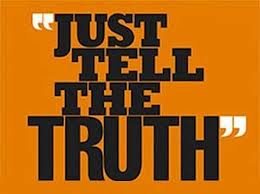
7: Tell the Truth
Telling the truth for me as a kid was difficult. I quickly found out that lying about something took the heat off me, but when my mom learned that I had lied, I was in twice as much trouble. Likewise, in school, being honest is sometimes hard for students. What we need to teach is that who we are as a person and what makes up our character is the ability to always tell the truth. The basic building block for all relationships is trust. Building trust means you tell the truth over time, and that you follow through with what you say you are going to do. These actions make telling the truth vital to students learning how to trust other students and adults.
8: Learn From Your Mistakes
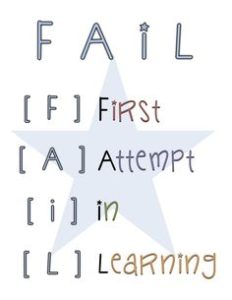
You may wonder how this can be a manner, yet continuing to keep making mistakes and not learning from them is considered bad manners. Who you are over time shows your manners to others. If after being continually reminded to do something, you choose not to do it again, you are illustrating not being able to learn from your mistakes. I am pretty sure my mom had enough of me not picking up after myself, cleaning up my messes, or continually tormenting my teachers. I had a hard time learning from my mistakes. We can model and teach students that failure is just where the new learning goes. Failure should not be something we shy away from expecting, nor should it be something we withhold from our students. Students must understand failing is part of learning. I love this acronym for “FAIL.”
9: Greet People When You Meet Them
Knowing how to greet someone is a manner that carries a long way. A handshake is one form of it, and in some rooms it is the expected form, but it is one option and not the standard every student has to meet. Whether a person shakes hands can come down to culture, religious practice, disability, health, or their own sense of personal space, and a student who does not offer a hand is not showing bad manners. What is worth teaching is the greeting itself: acknowledge the person, say your name, use theirs if you have it, and offer whatever fits the setting, whether that is a handshake, a wave, a nod, or a spoken hello. Practice more than one so students have a choice, and teach them how to decline a handshake without the moment turning awkward. That is the version of this skill that travels. My son greets his football coaches after every game, and after almost every practice. His appreciation for the coaches and the opportunity to play varsity football is something he doesn’t take for granted.
10: Appreciate the People Who Feed You
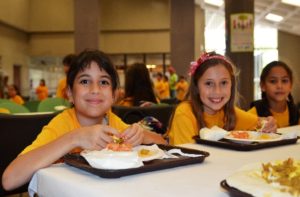
The mantra that is probably the most hilarious that my mom taught was, “If you don’t eat it, you will be wearing it.” This was said when I didn’t like a specific food item my mom had made for me. I remember joking with her about where I would wear certain food items. I believed Brussels sprouts looked better on my shirt! That was a house rule in one family kitchen, and it does not belong in a school cafeteria. Whether a student eats or tries a food is not a manners question. Allergies, feeding and sensory needs, religious and cultural practice, medical direction, and whatever a family has told their child all come first, and a student who leaves something on the tray is not being rude.
What does carry over is the appreciation. Someone planned that meal, ordered it, cooked it, and served it, often for hundreds of students before the first bell of anyone else’s day. Students can learn to greet and thank the people serving them, to decline a food politely instead of loudly, and to clear a table without leaving the mess for someone else. That is the manner, and every student can do it regardless of what they eat.
11: Take Turns
Whether it was with a toy, going down a slide, or getting water from the fountain, I had to learn how to take turns. I admit, I was not into sharing my toys very much as a kid, but my mom instilled in me patience and turn-taking. This is a mega way to teach students, as most squabbles occur because someone gets to do something first: first in line, first to the pencil sharpener, first to the door, first to the ball, and so on. What if students said, “You may go ahead of me, I will wait.” Wouldn’t your head turn and say, “What was that?” We can teach and model this with students, and when you see it…praise the heck out of it!
12: Respecting Others and Objects
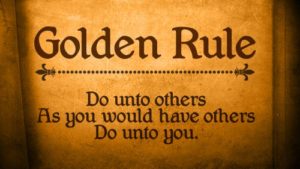
Showing respect to my dad’s pickup truck may not have been a priority as a recently licensed driver. But this is another mega manner…respecting people and objects is something we start teaching when kids are quite young. We learn that how we treat people should be how we want to be treated: the Golden Rule. Likewise, how we treat people’s objects is how we would like our own objects to be treated. My mom ran a daycare while my sister and I grew up, and I know this was one of her main objectives as a provider. Parents knew that their child was learning this valuable manner each and every day in attendance.
13: Be Organized
You may ask, how is being unorganized “bad manners?” When being unorganized affects others, it is definitely bad manners. When someone has to clean up after you, or you are late for an appointment, or you can’t find something that someone else needs because of your lack of organization skills, you are exhibiting bad manners. Being organized says you are being respectful to others: organization is a sign of respect. Respecting people’s time, effort, and efficiency relies on you being organized. This is difficult sometimes for students to understand, but teaching cause and effect can be quite powerful when learning this manner. My mom makes tons of lists, carries tape wherever she goes, and has many supplies in her purse, which makes her one of the most organized and successful people I know. She modeled for me that being prepared is the ultimate manner for success: time up front gives you more time in the end!
Turning 13 Manners Into a Schoolwide Program
Recently in my school, we took Ron Clark’s 55 rules and created our own Lion’s 19. These are 19 rules that we adopted from the Essential 55. We have taken these rules and taught one each day at the beginning of the school year. In addition, we have asked all staff members and students to recognize others in our school who are exemplifying these 19 rules. We then have students write down a student’s name on a gold slip that illustrates one of the 19 Rules, the number on the Lion’s 19 list, and a short description of what they did. Then, we read these every morning on the PA to the whole school. Lastly, we post them on a bulletin board for all to see and read. To help promote these 19 rules, we are giving away one local high school football jersey each Friday to a student on one of the slips. There is much pride among the young Lions, even though the jerseys are old, ripped, but washed well! This has created a powerful connection to what we are learning at the elementary level with our high school down the street! What essential manners will you teach your students?
How to Teach Each Manner, Not Just Name It
The 13 above come out of a K-4 classroom and an elementary principal's office, and that is where they land most naturally. Middle and high school students need the same manners framed as professional skills rather than rules. The pattern can be adapted across grade levels, and it is the same one Pat Konen used: name the manner, model it in front of students, give them a low-stakes chance to practice, then catch them doing it right out loud.
| Manner | How to teach it | How to reinforce it |
|---|---|---|
| Be kind | Define kindness with student-generated examples, then role-play one unkind exchange and one kind repair | Name the specific act out loud when you see it, not a general “good job” |
| Say nothing unkind | Post the THINK acronym and walk through one scenario against each letter | Ask “did that pass THINK?” instead of correcting the student directly |
| Show you are listening | Teach several signals: turning toward the speaker, settling, nodding, answering what was actually said | Accept any signal that shows attention rather than requiring eye contact from every student |
| Please and thank you | Teach the where and when, not just the words: to peers, in the office, in the lunch line | Every adult in the building uses both words with students first |
| Responding to adults | Offer more than one acceptable form so the manner fits the student's home culture | Acknowledge the response so students see it registered |
| Be your best unwatched | Discuss what integrity looks like in hallways, bathrooms, and the bus line | Recognize students reported by other students, not only by staff |
| Tell the truth | Talk through why trust depends on honesty and what it costs when it breaks | Respond consistently, within your school or district discipline procedures and any applicable IEP, Section 504 plan, or behavior plan |
| Learn from mistakes | Teach failure as the location of new learning using the FAIL acronym | Talk about your own mistake and what changed because of it |
| Greet people well | Practice greetings that fit the setting: handshake, wave, nod, or a spoken hello, plus how to decline one politely | Greet students at the door in a way each of them can return |
| Appreciate the people who feed you | Name the people who prepared the meal and what their day looks like | Have students greet and thank kitchen staff, and decline a food politely |
| Take turns | Teach the words for yielding: “you go ahead, I will wait” | Praise the student who yielded, loudly, in front of the line |
| Respect people and objects | Connect the Golden Rule to shared property: desks, devices, library books | Where school or district policy and any applicable student plan allow, pair the apology with putting things right |
| Be organized | Show cause and effect: whose time gets lost when a student is unprepared | Build one visible routine, like a two-minute end-of-day reset |
None of this survives September on its own. What makes it stick is a system with a name, a public recognition loop, and adults who use it in front of each other. That is what the Lion’s 19 does at our school, and it is the part worth copying.
Frequently Asked Questions
Where should I start with teaching manners in the classroom?
Start with one manner, not thirteen. Pick the one causing the most friction in your room, define it with student input so they own the standard, model it for a week, and recognize it out loud when you see it. Add the next one after the first has stuck.
Does this work with older students?
Yes, with different framing. Elementary students respond to rules and recognition. Middle and high school students respond to the same manners named as professional skills: greeting someone in a way that fits the room, following through on what you said you would do, showing up prepared. The behavior is identical, and the reason you give for it changes.
How much instructional time does this take?
Less than losing the time to conflict. Teaching one manner takes a few minutes at the start of a day, and the schoolwide version at our building runs on one rule per day during the opening weeks plus a two-minute PA readout each morning. The trade is front-loaded time against the class time that squabbles and redirects eat all year.
What about students who get no reinforcement at home?
That is the argument for teaching manners explicitly instead of assuming them. If a student has never been taught to greet someone in an unfamiliar room or thank the person who served their lunch, treating it as a character problem gets you nowhere. Treat it as unlearned content, teach it the way you would teach anything else, and expect it to take repetition.
Is there evidence that any of this affects achievement?
The honest answer is that the research supports the connection between early social-emotional skills and later outcomes rather than proving that any single manners program raises test scores. What teachers report, and what Pat Konen found across 30 years, is that a class that can get along with each other is a class you can actually teach.
- Manners are content, not character - teach them explicitly, and treat a different cultural, religious, or communication norm as a difference rather than as bad manners
- Name, model, practice, recognize - the four-step pattern can be adapted across grade levels, and skipping the recognition step is where most efforts stall
- One at a time beats a list of thirteen - pick the manner causing the most friction, run it until it holds, then add the next
- A system needs a name and a public loop - the Lion's 19 works because of the gold slips, the morning PA readout, and the bulletin board, not because 19 is the right number
- Adults go first - every manner on this list has to be visible in how staff speak to students and to each other before students will carry it
Classroom management is the part of this job most preparation programs cover in a single course and most teachers spend a career refining. The sponsored programs on this page include education and curriculum-and-instruction degrees where behavior systems, school culture, and social-emotional learning are the coursework rather than a footnote.
As a 5th grade teacher, in 2010 Jon won the Presidential Award for Elementary Math and Science Teaching (PAEMST). As a principal, his school won the 2012 Blue Ribbon Award. In 2018, he won the National Distinguished Principal Award (NDP). In 2019 he won the National No Kid Hungry Breakfast Hero Award.
Jon is the author of three guides published on teacher.org: An Educator's Guide to Combat Bullying & Bully Prevention; Teacher Evaluation: A Transition Guide to Exemplary Performance; and You are the Wild Card: Infusing Fun Back into Curriculum. He has authored a children's picture book that was released January 2019 titled Benjamin’s Visit to Principal Reads Office…again! (available at www.archwaypublishing.com)
- Learning How to Say No and Set Boundaries with Parents - November 21, 2022
- How to Implement a Check-In, Check-Out (CICO) Behavior System - September 26, 2022
- Teacher Core Values: 7 Strategies for Living Your Code - August 15, 2022