

Blog

How to Keep Kids Off Their Phones While Homeschooling
By: Scott Wilson | Sep 2, 2026
The most reliable way to keep kids off their phones while homeschooling is to agree on a spot where the phone goes during schoolwork, out of reach and out of sight. Set a clear return point, keep the work surface phone-free, and switch off notifications before the session starts.
Teachers have been working on this problem for a long time. Now it's your kitchen table.
Eyes down ...
Parent Participation in IEP Meetings: What IDEA Requires
By: Mary McLaughlin | Oct 18, 2017

IDEA includes one or both parents as required members of the IEP team, and 34 CFR §300.322 places responsibility on the public agency to take steps to ensure parents are present or have an opportunity to participate. That means adequate notice, a mutually agreed-on time and place, and conference calls ...
Danielson 1f: Designing Student Assessments Explained
By: Jon Konen | Oct 10, 2017

Designing student assessments is Component 1f of the Danielson Framework, inside Domain 1: Planning and Preparation. It covers four elements: congruence with instructional outcomes, criteria and standards, design of formative assessments, and use for planning. In the Danielson Framework, 1f focuses primarily on assessment planning and design; how it is ...
Designing Coherent Instruction: 7 Questions for Danielson 1e
By: Jon Konen | Oct 2, 2017

Designing coherent instruction is Danielson component 1e: building lessons and units that connect to real outcomes, use the right materials, group students on purpose, and follow a logical sequence. The Danielson Group renamed it Planning Coherent Instruction in the 2022 framework, but the four elements it measures haven't changed. Is the ...
Demonstrating Knowledge of Resources: Danielson Component 1d
By: Jon Konen | Sep 18, 2017

Demonstrating knowledge of resources is Component 1d of the Danielson Framework, inside Domain 1. It asks what you know about materials for your classroom, for your own professional growth, and for your students. The framework's standard scale runs Unsatisfactory, Basic, Proficient, and Distinguished, though districts adapt it, so check your ...
Setting Instructional Outcomes: Danielson Component 1c Explained
By: Jon Konen | Sep 10, 2017

Setting Instructional Outcomes is Domain 1, Component 1c of Charlotte Danielson's Framework for Teaching, and it asks whether your learning goals are rigorous, sequenced, and matched to the students in front of you. Evaluators look for outcomes that build on prior learning, cross subject areas, and stay flexible enough to ...
Demonstrating Knowledge of Students: Danielson 1b Explained
By: Jon Konen | Sep 10, 2017

Demonstrating knowledge of students is Component 1b of the Danielson Framework, called "Knowing and Valuing Students" in the framework's current edition. It comes down to how well you know your students' development, learning needs, interests, and cultural backgrounds, and how that knowledge shapes what you teach. These nine questions are ...
Fidget Tools for the Classroom: 10 That Work Better Than a Spinner
By: Amy Konen | Sep 8, 2017
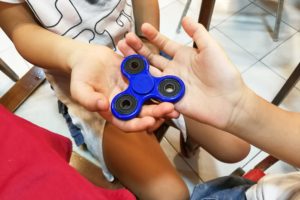
Fidget tools for the classroom may be more useful when selected based on an individual student's needs and response. Tangles, stress balls, putty, kinetic sand, and rocking chairs each give a different kind of input, and many are quieter and less visually demanding than a spinner. Teach the rules first. Now ...
Demonstrating Knowledge of Content and Pedagogy: 10 Questions
By: Jon Konen | Sep 6, 2017

Demonstrating Knowledge of Content and Pedagogy is Component 1a of Danielson's Framework for Teaching. It covers three things: how well you know your subject, how well you understand which concepts depend on which, and how well you match teaching strategies to that content. Possible evidence includes lesson plans, coursework, and ...
Engaging Special Education Students: What Actually Works
By: Mary McLaughlin | Sep 6, 2017

Engaging special education students starts by treating disengagement as information, not defiance. Give students more than one way to take content in, more than one way to show what they know, and a say in their own goals. Hands, eyes, movement, and choice do more than a worksheet ever will. Horrified. ...
When a New Student Joins Your Special Education Classroom
By: Mary McLaughlin | Aug 22, 2017

When a new student in a special education classroom arrives after the year has started, begin with the paperwork and the people: read the IEP, meet with your special education director, and brief your paraprofessional. Then build the relationship. Federal law also obligates the district to provide comparable services right ...