
Demonstrating Knowledge of Content and Pedagogy: 10 Questions


Demonstrating Knowledge of Content and Pedagogy is Component 1a of Danielson's Framework for Teaching. It covers three things: how well you know your subject, how well you understand which concepts depend on which, and how well you match teaching strategies to that content. Possible evidence includes lesson plans, coursework, and classroom choices that show all three, not just one.


In the late 90s, many new teachers built portfolios to show prospective employers when they went job hunting. The idea was that administrators would dig into the contents and hire based on what they found. I hope some did. Mine, I suspect, was never thoroughly inspected. Was building it a waste of time anyway? No.
The hours we poured into a portfolio shaped who we became as educators. It forced us, young and unproven, to name our beliefs about teaching before we had a classroom of our own. I still have mine, and I laugh every time I reread the "Philosophy of Education" section, full of the jargon employers wanted to hear twenty years ago, jargon we were expected to use without yet knowing what it meant in practice.
We left college holding beliefs shaped by professors, textbooks, field placements, and the newly arrived internet. Then we got our first classrooms, and much of what we thought changed fast. We learned to incorporate new research and pedagogy, and to adjust our methods to fit the students actually sitting in front of us.
Here are 10 questions to work through if you're aiming for a Distinguished rating. This component in the Charlotte Danielson Model is a big one. The artifacts and evidence that support a Distinguished rating usually come from years in the classroom, though that doesn't mean a newer teacher can't show it. In twenty years, I've rarely seen a teacher "live" in the Distinguished category in their first few years. If you find one, don't let them go.
What "Demonstrating Knowledge of Content and Pedagogy" Actually Covers
Danielson breaks Component 1a into three elements, and observers are trained to look for evidence of each one separately:
- Content knowledge: you know the discipline itself, its concepts, its vocabulary, and where students commonly go wrong.
- Prerequisite relationships: you know what a student needs to understand before a new concept makes sense, and what comes after it.
- Content-related pedagogy: you know which teaching strategies actually work for this specific content, not just teaching strategies in general.
None of this shows up in a single lesson. Possible evidence can include lesson plans that reflect current standards and research, records of content-area coursework or workshops you've completed, and moments in your planning where you visibly connect one concept to the next. Exactly what counts and how it's collected vary by district and evaluator. The ten questions below are one way to generate that kind of evidence, one reflection at a time.
1 - What is My Philosophy of Education, Whom Do I Model my own Specific Teaching Practices, and Do My Practices Reflect the Latest Research in the Pedagogy of the Discipline?
What we believe about teaching traces back to what we read, see, and do. We read articles, books, and online material. We watch other teachers work. And we learn by doing: what we teach and how we teach it come down to our beliefs and our personality.
Most of us remember only a couple of names from our educational psychology courses, and a couple of facts alongside them. John Dewey, Jean Piaget, Lev Vygotsky, and B.F. Skinner are the ones that tend to stick.
From there, our districts, administrators, and colleagues shaped how we teach. Curriculum did too. Some curricula script the lesson word for word, which is exactly the kind of thing that makes you stop and ask what you actually believe and how you want to reach your students.
I believe we're in an exciting stretch where research has changed how we should teach. Growing attention to trauma, anxiety, and student mental health has increased interest in trauma-informed and anxiety-informed practices. That should change our instructional choices.
Sometimes we change methods because research shows a discipline is taught more effectively in a different way. Science is a clear example: inquiry-based learning has been promoted in national science education standards and research for decades, and it's changed how students engage with science and how teachers teach it. Some teachers now use inquiry-based methods well beyond science classrooms.
As teachers, we should be able to trace a timeline of the practices, philosophies, and people that shaped our thinking. Tracking those changes solidifies what you believe, and it's a useful reflective habit to keep up.
2 - Do I Know My Grade Level Standards…Prior and Post Grade Levels?
As a first-year teacher, this is one of the hardest things to pull off: fully understanding the standards at your own grade level. Common Core was supposed to relieve the old overload of standards. In my state, I thought that meant more room to go deeper. Since 2009, we've learned it's still hard to cover everything within the instructional time required by my state. We have to prioritize based on the achievement data in front of us.
Distinguished teachers know their own standards and the standards one grade below and one grade above. That's a lot to hold in your head while designing instruction that actually fits.
Knowing where your students have been matters. You can't teach effectively if you haven't assessed how well they mastered last year's standards. Filling gaps never really stops, even as we personalize learning more. Looking at prior-year data tells you where the whole class needs support and where they're already solid, which makes planning faster and more accurate.
Knowing where your students are headed matters just as much. Distinguished teachers know what the next grade level requires. Just as some students arrive with gaps, others will have already mastered much of what you're required to teach this year. You'll need to design work that challenges them at their actual readiness level.
3 - What are the Most Prevalent Misconceptions when I Teach My Content and Am I Designing Questions to Fill These Student's Gaps?
Understanding how our students learn shapes three decisions: how we teach, what we teach, and how fast we move. Students carry predictable misconceptions into certain topics. Knowing those misconceptions ahead of time lets you design questions that close the gap before it widens. Teachers who've taught for years learn, for example, that the greatest common factor and the least common multiple need extra time because misconceptions around these two concepts can reshape the lesson, the week, or the whole unit.
Distinguished teachers use data to see what tripped students up in prior grades, because building new content on shaky prior learning doesn't work. Some textbook teacher editions list common misconceptions. Not all of them do.
4 - How Well Can I Connect My Content, Plans, and Practices Both Intra and Interdisciplinary?
One of the hardest parts of teaching is covering everything the curriculum demands. Finding and building connections across disciplines helps: you can cover more standards more efficiently when subjects reinforce each other. Elementary units often naturally build in interdisciplinary work. As we departmentalize and specialize, those connections get made less often. Building interdisciplinary units when your subject is siloed takes real communication with colleagues, and it has to be a priority, or it won't happen.
Interdisciplinary connections can help students transfer knowledge and skills across contexts. Lessons that put math, reading, and science into a single task are rare, and students notice when learning crosses disciplines. They engage differently because of it.
Connections within a discipline matter just as much. Distinguished teachers know their curriculum well enough to tie new concepts back to earlier ones, and to plant seeds for what's coming. Discussing the Magna Carta while teaching early North American settlement, for instance, plants the seed for the later conversation about the Declaration of Independence.

5 - How Well Do I Plan for Alternative Thinking by Students in My Instruction?
One of my math teachers taught math exactly one way: the method in the textbook, with no room for another approach. My brain didn't work that way. I could find the area of a three-, four-, five-, or six-sided shape through quick mental math, but I didn't show my work, so I lost points. I hadn't used the equation the textbook wanted.
Twenty years later, research and current textbooks agree that alternative approaches aren't just acceptable; they're worth encouraging. A single instructional approach won't work equally well for every student, so teaching multiplication only one way can shut out the students who need a visual approach to get there.
If you're working toward a Distinguished rating, you understand there's usually more than one way to reach a correct answer. Distinguished teachers are fluent in multiple strategies and remain humble when a student invents one they haven't seen before. Name it after them.
6 - Am I Accurately Assessing Where My Students are so Instruction Can Be Designed to Their Readiness Level?
Too many of us start teaching on page one of the textbook, because it's page one. That tells students the book is driving instruction, not them. Master teachers dig into student achievement data before they ever meet their class. They know, as a whole group, what last year's students were strong and weak on, and that tells them where to actually start. Opening with double-digit multiplication when the data says the class needs single-digit facts first sets everyone up to struggle.
Distinguished teachers read through student records, prior test data, and permanent files before the year starts. Many build a yearlong instructional map. State standards and district pacing tell you what and when to teach, but your students' actual readiness has to shape how you get there.
7 - Do I Plan For Multiple Strategies In a Lesson to Engage and Meet The Current Needs of All Learners?
A single instructional approach won't work equally well for every student, so teachers have to be ready to shift mid-lesson and bring in a second strategy for the students it didn't reach. That's a hard thing to build into a lesson plan. The real question is how you keep moving forward when a chunk of students didn't get it the first time, especially once the next lesson adds more students to that group.
Master teachers build multiple strategies into a lesson from the start. They check for understanding constantly during the lesson, not just at the end, and they'll pull a small group aside for a different approach the moment they see it's needed.
8 - In My Lesson Design, Do I Allow for Discussion, Critical Thinking, and Am I Able to Answer Student's Questions Accurately to Further Their Learning?
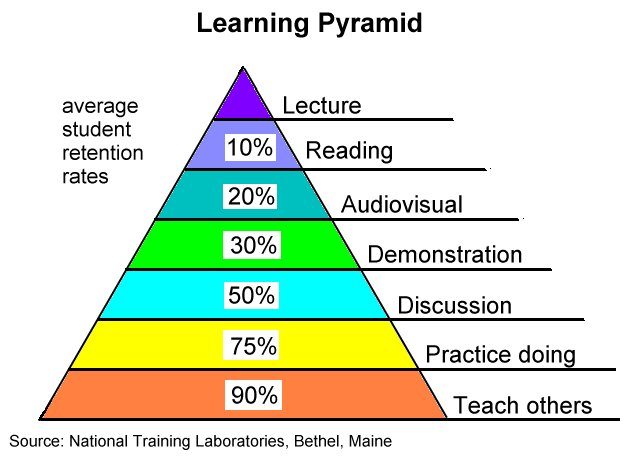
Lecturing alone provides fewer opportunities for active engagement than instructional approaches that incorporate discussion, retrieval, practice, and feedback (see chart below). Master teachers build in time for discussion and critical thinking, because they know questions drive that discussion. They plan their questions before the lesson and can still generate strong ones on the fly.
Teachers working toward a Distinguished rating can answer most of what students ask. When they can't, they say so and follow up rather than bluffing, sometimes handing the research to a student to bring back to the class.
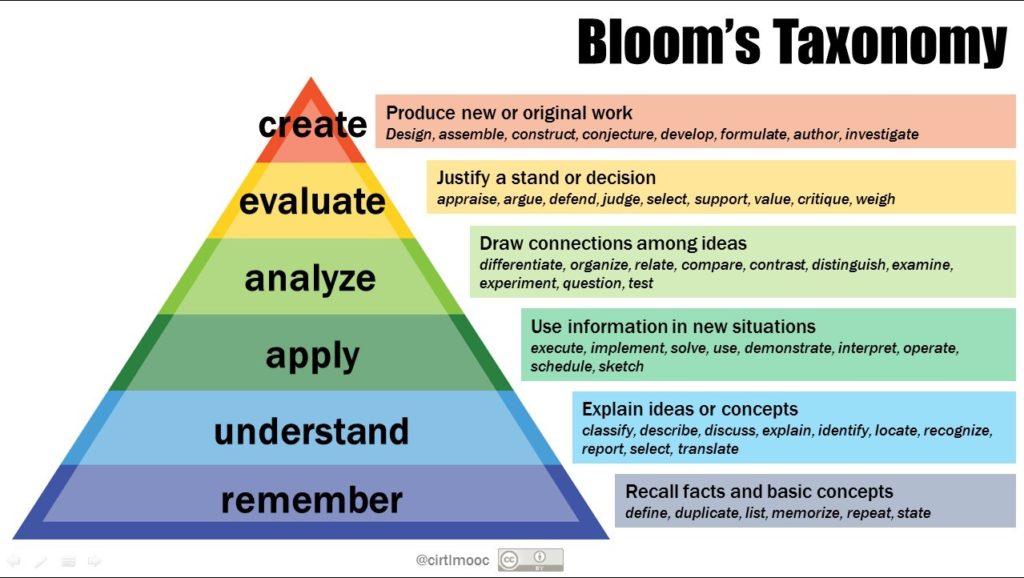
Distinguished teachers move questions up and down Bloom's Taxonomy depending on what's happening in the room (see chart below). They can make a question easier, harder, or change who's answering it: pairs, small groups, or the whole class at once.
9 - Can I Plan a Unit of Study Using the Backward Design that is Appropriately Sequenced and Tailored to the Students I Currently Have in My Class?
For more than 25 years, Understanding by Design, by Jay McTighe and Grant Wiggins, has shaped how much of education plans curriculum and delivery. The premise: start with the end in mind. Distinguished teachers decide how students will show mastery at the end of a unit, then work backward to build lessons that scaffold toward that goal.
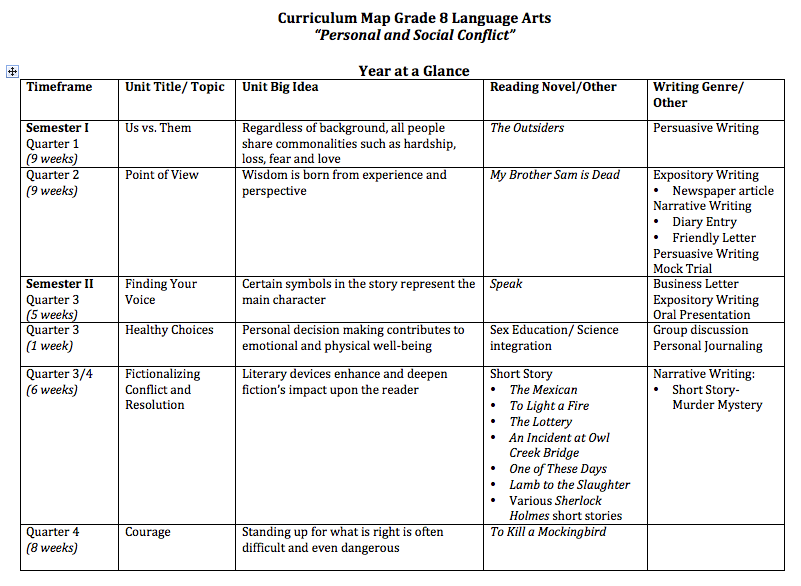
Backward design still has to account for the students actually in the room. A teacher might build a yearlong curriculum map, similar to this one from Kimberly Ray, based on Heidi Hayes Jacobs' work (see chart below), but the map still needs to flex in response to this year's achievement data.
10 - Do I Know My Content So Well That I am Able to Teach It with Positive Results to Mentor, Coach, and Provide Professional Development For Others?
This last question is really what separates Distinguished-rated teachers from everyone else: can they teach other adults? These teachers know their content well enough to coach and lead professional development, and their own students show it in their achievement and growth.
Plenty of teachers know their content well. It takes something more to take it to the level of teaching other teachers. Being able to explain your content and pedagogy clearly to colleagues is often seen as evidence of deep professional knowledge.
This kind of command takes time, often several years. Changing grade levels every year can slow that down. Getting there means spending real time learning both your content and the specific students in front of you, year after year.
Work through these ten questions honestly and you're on your way toward a Distinguished rating.
(Charlotte Danielson Model: Domain 1 Component a)
MORE ROCK MY EVALUATION RELATED READINGS:
- Demonstrating Knowledge of Content and Pedagogy (Currently here)
- Demonstrating Knowledge of Your Students
- Setting Instructional Outcomes
- Demonstrating Knowledge of Resources
- Designing Coherent Instruction
- Designing Student Assessments
Frequently Asked Questions
What is Component 1a of the Danielson Framework?
Component 1a, Demonstrating Knowledge of Content and Pedagogy, sits under Domain 1: Planning and Preparation. It measures whether a teacher understands their subject, knows how concepts build on one another, and can match teaching strategies to the specific content.
What evidence shows I'm demonstrating knowledge of content and pedagogy?
Possible evidence can include lesson and unit plans that reflect current standards and research, records of content-area coursework or workshops you've completed, and moments where your planning visibly connects one concept to a prerequisite or a future one. A single strong lesson isn't enough on its own, and exactly what your evaluator collects can vary by district. Evaluators are generally looking for a pattern across your planning.
How is Component 1a different from Component 1b?
1a is about your subject and your teaching methods. 1b, Demonstrating Knowledge of Students, is about the specific students in your room, their backgrounds, and how they learn. You can know your content cold and still score lower on 1b if your planning doesn't reflect your actual students.
What rating levels does Component 1a use?
Under the earlier Danielson Framework rubric referenced in this article, every component, including 1a, is scored on four levels: Unsatisfactory, Basic, Proficient, and Distinguished. A Distinguished rating generally requires plans and practice that reflect a wide range of pedagogical approaches and an accurate grasp of prerequisite relationships, not just solid subject knowledge on its own. Check with your evaluator on which framework edition and rating scale your district uses.
- Component 1a covers three things: content knowledge, prerequisite relationships between concepts, and content-specific pedagogy, not just subject-matter expertise alone.
- Evidence builds over time: lesson plans, coursework records, and workshop attendance can carry more weight with evaluators than any single observed lesson.
- Know a grade level above and below your own: teachers rated Distinguished can name what students needed to master before your class and what they'll need after it.
- Multiple strategies beat one: teaching a concept only one way, textbook-style, is the fastest route to a lower rating on this component.
Strengthening your evaluation profile often comes down to building content knowledge you can actually document, not just experience you can describe. The programs listed here include options built for working teachers, with formats that let you add coursework in your content area without stepping away from your classroom.
As a 5th grade teacher, in 2010 Jon won the Presidential Award for Elementary Math and Science Teaching (PAEMST). As a principal, his school won the 2012 Blue Ribbon Award. In 2018, he won the National Distinguished Principal Award (NDP). In 2019 he won the National No Kid Hungry Breakfast Hero Award.
Jon is the author of three guides published on teacher.org: An Educator's Guide to Combat Bullying & Bully Prevention; Teacher Evaluation: A Transition Guide to Exemplary Performance; and You are the Wild Card: Infusing Fun Back into Curriculum. He has authored a children's picture book that was released January 2019 titled Benjamin’s Visit to Principal Reads Office…again! (available at www.archwaypublishing.com)
- Learning How to Say No and Set Boundaries with Parents - November 21, 2022
- How to Implement a Check-In, Check-Out (CICO) Behavior System - September 26, 2022
- Teacher Core Values: 7 Strategies for Living Your Code - August 15, 2022