
Demonstrating Knowledge of Students: Danielson 1b Explained


Demonstrating knowledge of students is Component 1b of the Danielson Framework, called "Knowing and Valuing Students" in the framework's current edition. It comes down to how well you know your students' development, learning needs, interests, and cultural backgrounds, and how that knowledge shapes what you teach. These nine questions are a starting point for that reflection.


If you're prepping for an evaluation, you already know Domain 1 covers Planning and Preparation. This piece covers Component 1b under its older name, Demonstrating Knowledge of Students. Some districts still use that name in their rubrics. The framework's current edition renamed it Knowing and Valuing Students. Either way, it's not about writing a better lesson plan. It's about showing you actually know the kids in front of you.
Teachers who connect with even the hardest-to-reach students have something in common. You'll see it in how they talk to those students, how they check in, how they call out something small a kid did well. Those students end up showing respect in return, and it isn't an accident. Here are nine questions worth answering honestly before your next observation.
1 - What Do I Know About Typical Students of This Age?
Strong teachers know what's typical for their age group and grade band, the proverbial "how they tick." Reaching a kindergartner and reaching a high schooler take entirely different approaches, and knowing the difference is its own skill, one Robert Marzano writes about at length in The Art and Science of Teaching.
Knowing what your students are into outside of class is a simple way in. Being able to talk superheroes with a kindergartner or code with a teenager builds trust fast. Think of it like a bank account: the time you put into learning what a kid cares about is currency you can draw on later, when you need their buy-in on something harder.
Understanding adolescent brain development also shapes the kind of conversations you can have. Sarcasm has no place in building real relationships with students, but appropriate humor does. Laughing together breaks down walls in a way almost nothing else does. Piaget's influential theory proposed stages of cognitive development, though later research has revised and challenged parts of the model.
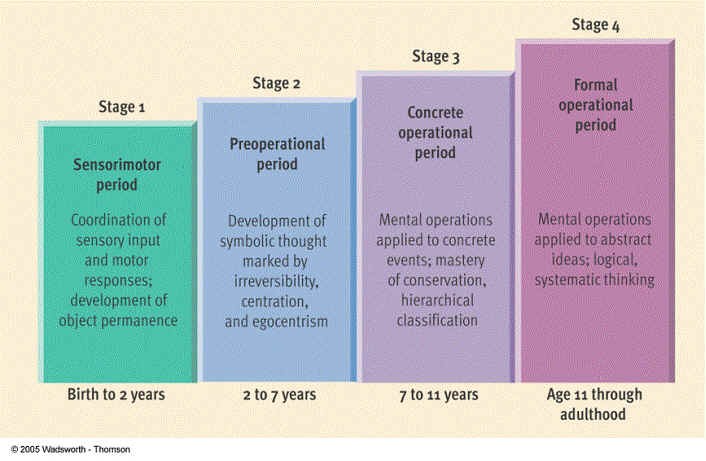
2 - What Do I Know About the Learning Process for Students of This Age?
A math lesson built for a kindergartner and one built for a senior in trigonometry have almost nothing in common, because lesson design has to track developmental stage. How long a student can sustain focused attention varies widely by task, context, and the individual kid, so pace lessons to what you're actually seeing in the room rather than to a fixed number.
More active forms of learning, such as having a student teach the material to someone else, tend to build a deeper understanding than lectures alone. There's no fixed percentage that applies across every subject and student, but the general pattern that doing and explaining beats passive listening is worth designing around.
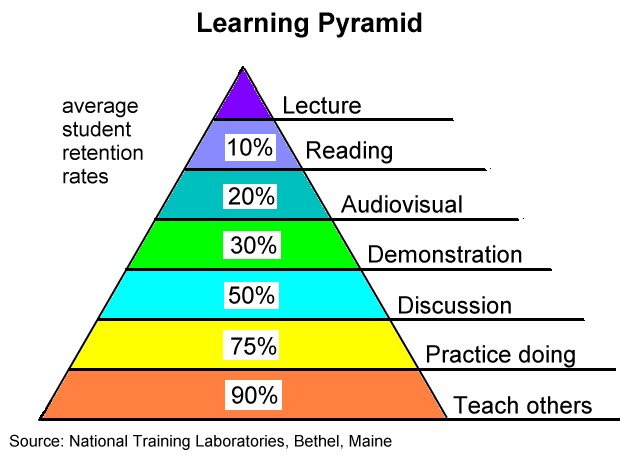
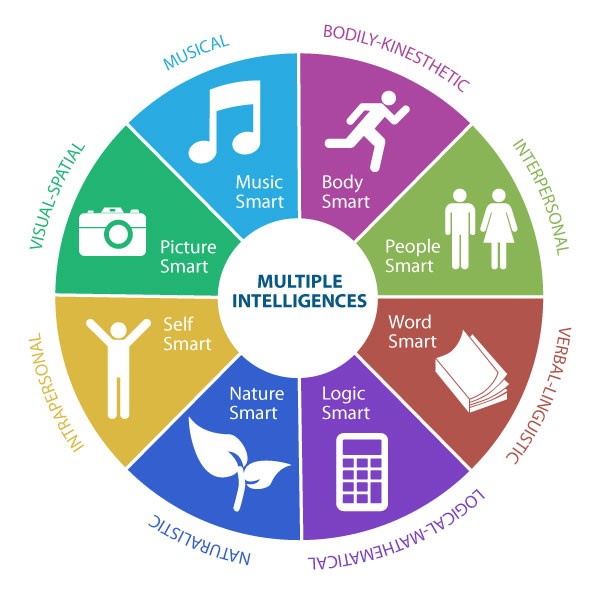
Strong teachers build in multiple ways for students to engage with the material, rather than relying on lecture alone. Howard Gardner's Multiple Intelligences framework is one lens for thinking about the range of ways students can demonstrate understanding, though research doesn't support sorting students into fixed "learning styles" and matching instruction to those labels. Brain development, along with physical and emotional development, shapes which lesson designs actually work for a given group. A quick interest survey can surface what your students respond to, and a good lesson gives them more than one way in.
Finally, think about the level of response you're asking for. Strong teachers lean on inquiry: questions drive the lesson, and students build their own understanding by working through them. Bloom's Taxonomy is a useful tool here too, for both planning the questions ahead of time and adapting them on the fly as students respond.
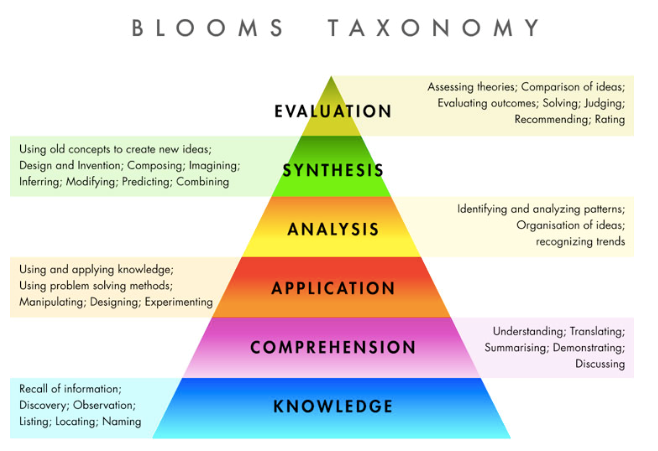
Lessons that account for active learning, multiple ways to engage with content, Bloom's Taxonomy, and where your students actually stand will hold up under observation. The strongest teachers also bring students into the design of the learning experience itself, not just its delivery.
3 - Do My Students Have Special Needs?
Knowing your students means knowing their health needs and their individualized education plans (IEPs). Under IDEA, teachers responsible for implementing a student's IEP must be informed of their specific responsibilities and the accommodations, modifications, and supports they must provide. Beyond that baseline, it's worth reading the plan closely before school starts and connecting with the school's special education team early, so you're not piecing accommodations together in week three. IEPs are dense documents, and getting the right people involved to walk through them helps. Reach out to parents early too. They usually know things about how a plan plays out day to day that the paperwork won't tell you.
RELATED - Parent Participation at the IEP Team Meeting
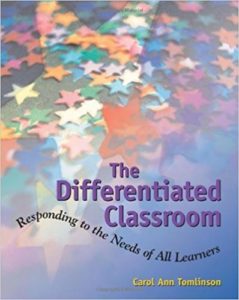
Planning instruction for students with special needs usually means differentiating the process, the product, or the curriculum itself. The goal is to meet a student where they are and build from there. Carol Ann Tomlinson covers this well in her book The Differentiated Classroom: Responding to the Needs of All Learners.
Bringing students into decisions about how they learn is part of doing this well, not a nice extra.
RELATED SPECIAL NEEDS READINGS -
4 - What Academic Information Do I Have Access to on My Students?
Strong teachers spend real time in student data, whether it lives in an electronic file, a school platform, or a paper folder. That means standardized test results, report cards, and any other formal or informal assessment you can get your hands on.
Look for patterns across the grade level, across your classes, and for individual students. Let those patterns drive your planning. Knowing where students are strong lets you move faster through that content and spend the freed-up time where students actually need it.
5 - What Soft Skills and Executive Functioning Skills Do My Students Need More Development?
Soft skills and executive functioning matter as much to learning as the academic content itself. Strong teachers hold students to explicit expectations around these skills, not just around content, because that follow-through is what makes the academic work stick.
Take a student who can't keep a desk or binder organized. Telling them what to do repeatedly doesn't fix it. Strong teachers model it, practice it with the student, and pull back support gradually as the student takes it on. That's the gradual release of responsibility model, and it applies well beyond organization. Don't assume a student already knows how to do something just because you've said it once.
Tracking growth in these areas works best when the student is part of tracking it too.
6 - Do I Plan Curriculum, Instruction, or Assessment for a Diverse Set of Learners According to the Grade Level (or Classroom) Achievement Data?
States and districts set expectations for what gets covered at each grade level, and your actual classroom will have a wide spread of learning needs and academic levels underneath that single expectation. Differentiating curriculum is how you close that gap.
Sometimes the curriculum's reading level is beyond the reach of some students. Find resources that cover the same content at a level they can access. On the other end, some students will be ahead of the curriculum and need something more complex to stay engaged.
Instruction itself can flex too. Strong teachers change delivery mid-lesson when they see students aren't getting it, adding sensory or hands-on elements as needed. That kind of real-time adjustment only comes from knowing your students well enough to read the room.
Assessment gives you information about what students have learned, which you can then use to evaluate and adjust your instruction. Every assessment is another data point on your students. Over-assessing muddies that picture, so use a mix of quick formative checks during the unit and a more formal summative assessment at the end, adjusted to what the unit actually calls for.
Bring students into these decisions where you can.
7 - What Are My Student's Interests?
It's tempting to treat interest surveys as a time-waster, but they're not. Adults learn better when they're engaged in something they care about, and kids are no different. Interest inventories, usually given at the start of the year, tell you what to build lessons around.
The teachers who get real value from these surveys study the answers, look for patterns, and find creative ways to weave those interests into daily instruction, and they let students help decide how they'll learn, too.
8 - What Are the Cultural Backgrounds of My Students?
Knowing your students' cultural backgrounds means actually studying your classroom demographics and building instruction that reflects real traditions, history, and experiences rather than a generic version of "diversity." That means talking with parents, reading, and doing the research, not just checking a box.
Breaking down bias starts with the teacher. Encourage students to learn about each other and to see situations from someone else's perspective. Keep an eye on the curriculum itself for bias, and change what needs to be changed.
Food, music, guest speakers, oral histories, books, and games are all solid ways to bring other cultures into the room. Inviting students and families to take part in that, not just observe it, makes it land.
9 - How Can I Tailor the Instruction to Meet Individual Needs from All the Information I Gather?
All of this information can feel like a lot to take in at once. Start small: pick one piece of a lesson to differentiate. One way in is grouping students by where they currently stand relative to the lesson's goal, such as below, on, or above grade level, and building in a way for each group to access the content, with an extension for students who are ahead. That's one starting strategy among several, not a fixed formula. The current framework's own emphasis is on individual students, their current knowledge and skills, and the whole child, not a permanent three-tier label. Start with one subject, then expand from there.
Interest inventories pair well with student choice here too. A fifth-grade social studies unit on explorers, for example, could let students choose between making a short video, role-playing an encounter, building a model ship, or writing a first-person poem. That single assessment gives students choice and differentiates the output, two things in one move. A third layer, tiered requirements by readiness level, rounds it out.
Before long, you're building lessons around multiple data points instead of one.
(Charlotte Danielson Model: Domain 1 Component b)
MORE ROCK MY EVALUATION RELATED READINGS:
- Demonstrating Knowledge of Content and Pedagogy
- Demonstrating Knowledge of Your Students (Currently here)
- Setting Instructional Outcomes
- Demonstrating Knowledge of Resources
- Designing Coherent Instruction
- Designing Student Assessments
Frequently Asked Questions
What is Component 1b, Demonstrating Knowledge of Students, in the Danielson Framework?
It's one of six components in Domain 1, Planning and Preparation, and it evaluates how well a teacher understands their students' development, learning needs, interests, and cultural backgrounds, and how that understanding shows up in lesson planning. Some district rubrics still use this older name. The framework's current edition refers to the same component as "Knowing and Valuing Students."
How do I show evidence of Component 1b during an observation?
Evidence usually comes through in how you differentiate instruction, how you reference specific students' needs or interests when planning, and how you handle accommodations for students with IEPs or 504 plans. Component 1b may be addressed through planning materials, pre-observation conferences, and other evidence, depending on your district's evaluation process.
What's the difference between knowing students academically and knowing them personally?
Academic knowledge covers test scores, reading levels, and IEP goals. Personal knowledge covers interests, home life, and cultural background. Strong 1b evidence uses both: a teacher who only cites test data usually scores lower than one who can connect that data to who the student actually is.
Do I need to know every student's IEP by heart to score well on this component?
Under IDEA, teachers responsible for implementing an IEP must be informed of their specific responsibilities and the accommodations, modifications, and supports they must provide. That's the baseline, not a requirement to memorize the full document. Local evaluation expectations may go further, so check what your district's rubric actually asks for.
How is this component different from Setting Instructional Outcomes (1c)?
1b is about what you know regarding your students. 1c is about what you decide to teach them based on that knowledge. They're closely linked, and evaluators often look at them together, but 1b is the diagnostic step, and 1c is the planning step that follows it.
- It's Domain 1, Component 1b - one of six components under Planning and Preparation in the Danielson Framework, called "Demonstrating Knowledge of Students" in older rubrics and "Knowing and Valuing Students" in the current edition.
- Know development, not just data - combine academic records (test scores, IEPs, report cards) with what you know about a student's interests and cultural background.
- IEP knowledge has to show up in practice - reading the plan matters less than the accommodations actually appearing in your lesson delivery.
- Differentiate on purpose - adjust process, product, or curriculum based on where students actually are, not where the pacing guide assumes they are.
- Bring students into the loop - interest surveys and student input on how they learn strengthen your evidence for this component.
Component 1b is one piece of a bigger evaluation picture, and many veteran teachers use a strong review cycle as an opportunity to consider what's next: an additional endorsement, a master's in curriculum and instruction, or a leadership credential. The sponsored programs listed here include options designed for teachers already in the classroom and studying while managing a full course load.
As a 5th grade teacher, in 2010 Jon won the Presidential Award for Elementary Math and Science Teaching (PAEMST). As a principal, his school won the 2012 Blue Ribbon Award. In 2018, he won the National Distinguished Principal Award (NDP). In 2019 he won the National No Kid Hungry Breakfast Hero Award.
Jon is the author of three guides published on teacher.org: An Educator's Guide to Combat Bullying & Bully Prevention; Teacher Evaluation: A Transition Guide to Exemplary Performance; and You are the Wild Card: Infusing Fun Back into Curriculum. He has authored a children's picture book that was released January 2019 titled Benjamin’s Visit to Principal Reads Office…again! (available at www.archwaypublishing.com)
- Learning How to Say No and Set Boundaries with Parents - November 21, 2022
- How to Implement a Check-In, Check-Out (CICO) Behavior System - September 26, 2022
- Teacher Core Values: 7 Strategies for Living Your Code - August 15, 2022