
7 Questions to Ask in Managing Student Behavior
11/27/2017
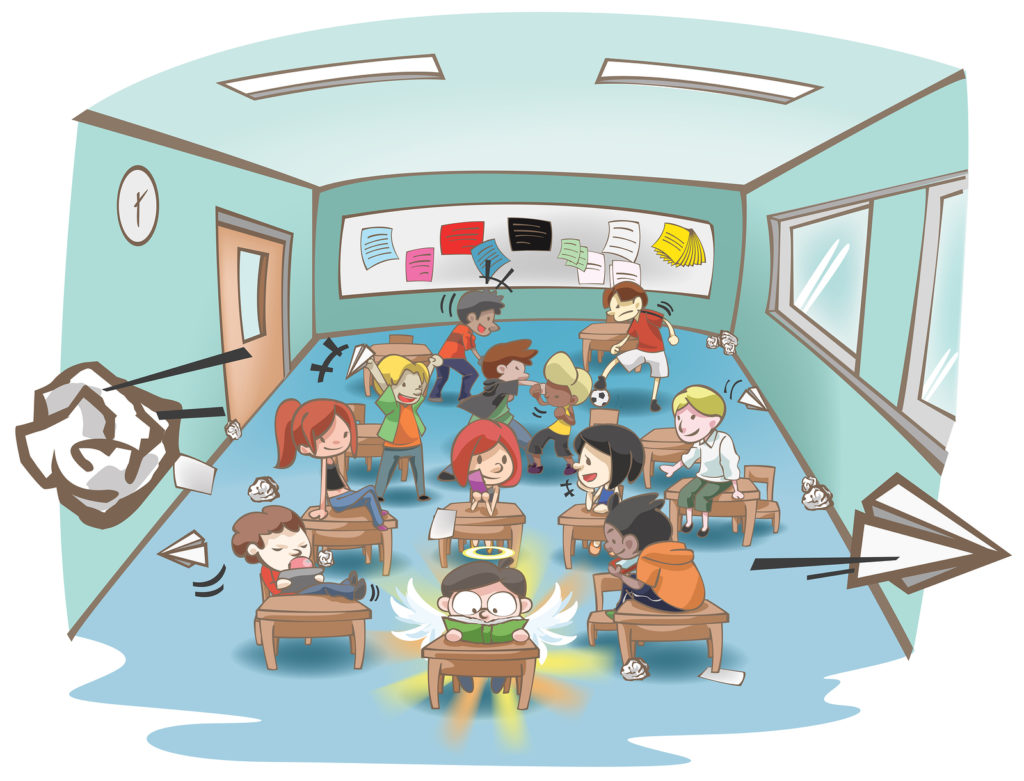


One of the qualities that will get you hired faster than anything else is the ability to manage a classroom full of students. Administrators shy away from hiring new teachers that have a difficult time managing students. The amount of time an administrator must put into teaching and training a new teacher to manage student behavior can be time consuming, thus, not a hiring possibility. Administrators may hire a new teacher as a "project" if they are still developing in this area. Again, the amount of time administrators have to train new teachers has been minimized with duties and responsibilities. If they have a new teacher that can manage a classroom versus one that cannot, these decisions are no-brainers in the hiring process.
There are some qualities that set proficient classroom managers apart from those that are developing. As you dig into learning more about these proficient teachers, you will find the exemplary classroom managers transfer the management back to their students. Management of students is the primary component to a prosperous academic environment.
Here are seven questions you can tackle in order to go from being a proficient teacher to one that is exemplary!
1 - What Types of Classroom Rules Have You Created That Support Student Learning?
Clear and succinct rules can be easy to write and post in your classroom. Teaching them and re-teaching them is the difficult task. Every student is different and a teacher must find the best instructional strategies in order to teach them. Students must buy into the rules and follow them. Students should participate in upholding them, offering revisions, and supporting other students in the learning environment.
There are multitude of philosophies that have given educators guidance in creating a productive and academic classroom. To adhere to one philosophy over another is an impossible solution. The ability to combine and mix philosophies, as well as tips, tricks, techniques, and strategies set exemplary teachers apart from others.
Depending on the time period, what has been socially acceptable has changed. We must understand, also, that what is socially acceptable in one region of the country may not be in another. For example, as of April 2017, 15 states allow corporal punishment (according to an online article from North Carolina Public Radio). In addition, seven states also allow school districts to make this decision on their own, but do not delineate this in their state administrative rules or laws. Altogether, 22 states allow corporal punishment as a means of classroom and school management. Students in one school in North Carolina, with parent permission, can chose paddling by the principal instead of in-school suspension or out-of-school suspension. You fill find a majority of these states are located in the southeast portion of the United States. That leaves 28 states that prohibit this strategy; this number has been decreasing in the last decade.
According to Charlotte Danielson's Framework for Teaching Evaluation Instrument (2013©) the following qualities are found in the best classrooms:
- Orderly, business-like, and productive; not authoritarian atmosphere
- Clear standards of conduct
- Respectful and dignity is upheld
- Positive student behavior is modeled and celebrated;
- Proactive behavior approaches
- Discipline in private and teacher subtly and silently monitors student behavior
Here are a few discipline philosophies and strategies that meet most of these qualities and will give you a solid background in classroom management:
- Positive Discipline - Dr. Jane Nelson
- CHAMPS: Safe and Civil Schools - Randy Sprick
- Love and Logic - Jim Fay and Dr. Foster Cline
- High Trust - Denny McLaughlin
- Precision Commands - Utah Students at Risk
- Classroom Management that Works - Robert Marzano
- Kagan Cooperative Learning - Dr. Spencer Kagan
When developing a clear set of rules a strong classroom management plan takes bits and pieces from research, and other teachers and mentors. You must also take in account what works best for your personality, and what works with the students in front of you. Developing a set of rules is vital to your success. Rules are different then procedures and routines. Rules are the spirit of the classroom, while routines and procedures support students getting what they need on a daily basis. Rules have a consequence, while routines and procedures, when not followed, require more practice.
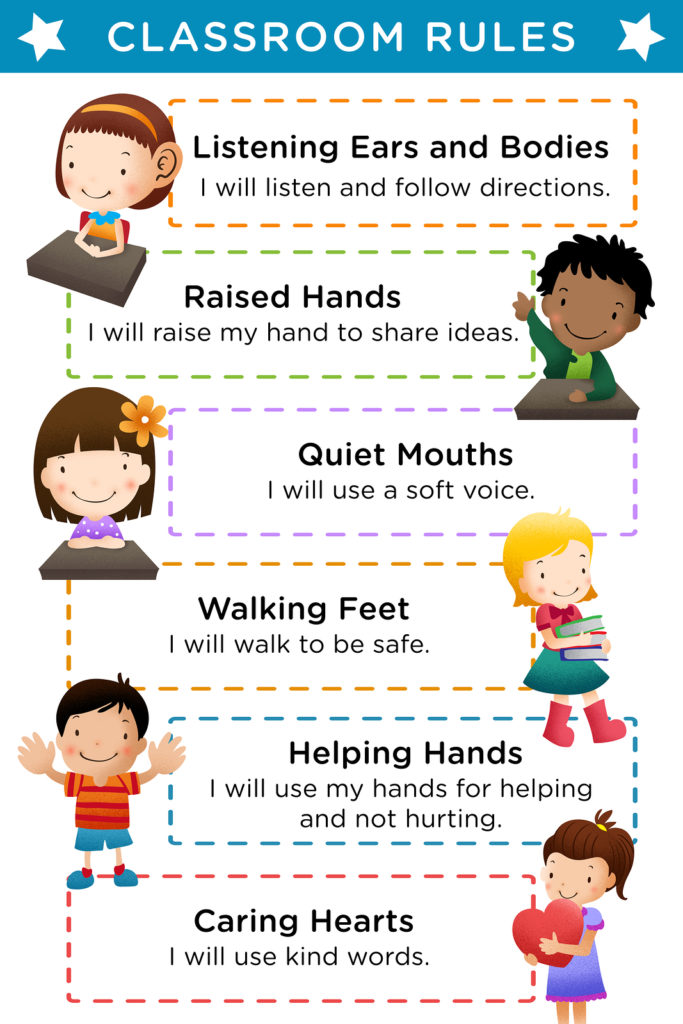
Best practice is to have a few rules that students know and they can recite. When students break a rule, the behavior is labeled, and it is connected back to one of the devised classroom rules. If a teacher has too many rules, it may be hard to incorporate and implement. Understand that you should not mix procedures and routines with your classroom rules. Keep these separate so students understand the differences; confusion and a breakdown of positive classroom culture can occur when consequences and punishments are given when procedures and routines are not followed.
Exemplary teachers create solid rules that carry out the spirit of the classroom. Students support these rules. They are even encouraged and given the words to support others in the classroom when they are not followed. The teacher specifically models words, phrases, and even non-verbal signals in order for students to support with the optimal learning environment. When this breaks down, teachers reteach, model, and practice empowering the students. A sense of agency is created where students are empowered to take on their own learning, as well as supporting the students around them, too.
2 - Is Your Student Behavior Entirely Appropriate?
The culture and behavior of your students in your classroom is in direct correlation…what you permit, you allow. Some teachers may allow different levels of conversations while learning is going on, while some teachers incorporate many conversations into the learning through structures. The best class managers build in the opportunities for students to talk, move, and express themselves as they interact with the content. An exemplary teacher understands that the behaviors the classroom exudes at that moment may need to be changed, adapted, or enhanced.
A classroom that is chatty one day may need more talk time in the learning structures. For example, a teacher may include more Kagan Learning structures that gets students up and talking to each other. Harnessing their talkativeness is an art that exemplary teachers benefit upon when changing instructional decisions.
Exemplary teachers understand that they should take ownership of a student's behavior outside of the walls of their classroom. They are the main influencers in making sure each student is doing their job in other places: library, hallway, lunchroom, and even recess. They work with students in all areas and know that they need to team with other staff members in order for their students to be successful. These exemplary teachers share ideas, strategies, and team around students who have behavior difficulties. Teachers at the developmental or basic level only worry about the behaviors in their classroom. This can be difficult in order to cause true change in unwanted behavior.
Behavior Intervention Plans (BIP), a tool of a tiered behavior system or Response to Intervention (RtI), can be developed and implemented. Setting a goal that includes positive and negative rewards is a great place to start with students. The classroom teacher should start a Tier I plan before a Tier II plan is developed. A Tier II plan may include other professionals in the building supporting the classroom teacher and the student. After data is collected and interventions have been implemented for a set time, a student that is not successful may be referred back to the school's behavior team for Tier III support plan. Special education testing, working with the school's psychologist, or even mental health professionals may the next step for a Tier III BIP.
I found South Bend Community School Corporation Special Education Services illustrates the basic components to a Tier II or III behavior intervention plan:
- Description of Targeted Behaviors
- Hypothesis of Observed Behaviors
- Setting Measurable Goals
- Creating Objectives to Meet Goals
- Environmental Strategies
- School Setting
- Routines
- Curriculum and Instruction Modifications and Accommodations
- Positive Behavior Interventions
- Socio/Emotional Strategies
- Self-regulatory Strategies
- Coping Skills
- Communication Skills
- Negative Behavior Interventions
- Redirection and De-escalation
- Consequences
- Crisis Management
- Evaluation of Data
- Determination of Intervention Success
- Changing Frequency, Duration, or Intensity of Behaviors
- Making Next Step Decisions
3 - Do Students Play a Part in the Creation and Revision of the Classroom Rules?
Authoritarian classrooms have teachers that demand respect instead of earning it. Understandably, power and control are difficult to give up in a classroom. Exemplary teachers understand that empowering students to lead includes having them take an active role in classroom management. Yes, the teacher is the only adult in the classroom that will hand out immediate consequences when rules are broken. These teachers understand that students can help themselves and their peers in the learning process where the learning environment is safe. Classroom environments like this should be the expectation, not an acceptation.
The ultimate goal for educators should be creating a classroom that is full of students who understand the concept of agency. They are willing to do whatever it takes to learn. They take responsibility in their learning and the learning of others in their classroom. They understand that negative and unwanted behaviors can affect their learning. Exemplary teachers empower these students to be the first intervention in making sure they are getting their needs met in learning.
For example, if a student is talking while a peer is trying to read, that reading student may show the non-verbal quiet sign to the offending student. The offending student then understands and quickly corrects their own behavior. The classroom teacher may not even know that this occurs, but can be proud that it was handled in a respectful and kind manner. This transfer of responsibility to the students is difficult to attain, but teachers should be empowering students to be independent with the gradual release of responsibility.

4 - What Verbal and Nonverbal Cues Do You Use to Curb Small Behavioral Problems?
The use of cueing is the number one proactive classroom management tool a student can use in the classroom. What teachers say and do ultimately determines how students react. Exemplary teachers understand they may not be able to stop all behaviors, but know that if it is predictable, they can put strategies and techniques into action to prevent many of them from occurring.
Verbal cueing is the most recognized behavior strategy for teachers. Picking and choosing the correct words to use when there is misbehavior or unwanted behavior is an art form. Not only does the teacher have to think about using respectful language that keeps a student's dignity intact, they must also think about how they will continue teaching. The teacher has to take into account many factors: the student who is being corrected, if this is common or uncommon behavior for this student, what has worked in the past for this student, and whether it is something that can be ignored and handled at later time. At any one time, a master teacher makes roughly 1,500 educational decisions daily. A teacher's philosophy of classroom management plays a role in the words they choose to correct behavior.
Here are some verbal cue sentence starters that teachers can use when working with students:
- You may….
- You can…
- Your job is…
- You need to…
- You should…
- You could…
Non-verbal cues can be just as powerful as verbal cues. For example, the exemplary teacher can move towards a talkative student and the mere presence changes the student's behavior. The teacher can keep teaching, and the students understand the teacher is giving them a nonverbal cue to quiet down. There are many non-verbal cues that can be taught to students, and can be used by both students and teachers. Here are a few:
- Finger Over the Lips - used to quiet someone in order to hear
- Pushing Your Hand Palm Down - used to have someone sit down or get lower for visibility
- Two Hands Down - used to slow someone down for safety
- Twirling Your Two Fingers - used to make someone turn around to focus better
- Shaking Wrist - used to access the bathroom by a student
- "W" in Sign Language - used to access the water fountain by a student
- Raising Your Hand Palm Up - used to have students stand up or get higher
- Lowering Your Hand Palm Down - used to have students sit down or get lower
- Eye Contact or Stare With Eyebrow Raised - used to extinguish an unwanted behavior
- Touch to The Shoulder - used to quiet or stop an unwanted behavior
- Proximity - used to quiet or stop an unwanted behavior
- High 5, Hand Shake, Fist Bump - used to celebrate a student
5 - Do Students Support Each Other with Classroom Management?
The key difference in a well-managed classroom is how well students support each other with learning, and more specifically, with classroom management. Creating a culture where students will take care of most of the classroom behavior themselves may seem impossible to imagine. Exemplary teachers can do just that. They have taught verbal and nonverbal cues so well that students are expected to help stop any unwanted behaviors first.
Can a student in your classroom turn to another student, give them a non-verbal cue (putting a finger over their lips), and be able to quiet another student? The offending student then thinks about their job, quiets down, and the classroom teacher may not even know that this was done! Students can also use their words to be the first line of defense before they go to the teacher for support. Teachers model words and actions that students can use to support their learning.
Many times when a student tries to address someone else's behavior, the offending student makes a comment or continues to do the behavior. In an exemplary teacher's classroom, students feel safe and comfortable enough to discuss or stop another student's unwanted behavior with words or non-verbal cues. In a proficient classroom, the teacher is the primary person who solves these types of behavior problems.
6 - What Proactive Actions Can a Teacher Take to Prevent Behavior Problems?
There are many strategies, techniques, tips, and tricks that teachers can use to prevent behavior problems. Remember, if a behavior is predictable, it can be prevented in some fashion. The following are my top five strategies that will give you some ideas to use in unwanted behavior prevention:
- Build Relationships - Students have a hard time causing a behavior problem for a teacher or staff member they like. Spend time getting to your know your students, their likes, and what makes them tick. Treat your relationships like a proverbial bank account…before you can withdraw, you must have something deposited. Research Jim Fay's philosophy called, Love and Logic!
- Front Loading - Letting students know ahead of time of everything they are going to be doing helps them in a myriad of ways: all transitions, subject changes, answering a question, working with a partner, etc… By front loading expectations, students have time to adjust to a change.
- Active Participation, Learning Structures, and Other Engagement Strategies - The best preventative behavior strategy is powerful engaging instruction. By adding in active participation techniques (research Pérsida Himmele and William Himmele's, Total Participation Techniques), multiple learning structures (research Kagan Cooperative Learning), and adding in engagement strategies (research Dave Burgess's, Teach Like a Pirate, or Robert Marzano's, The Highly Engaged Classroom, or Marcia Tate's, Worksheets Don't Grow Dendrites), you can infuse movement and total classroom participation techniques that keep students engaged and lessen classroom behaviors.
- Teach Routines, Procedures, and Rules Differently - If students know and understand the rules of the classroom, as well as knowing the routines and procedures learning is more likely to occur by a majority of the students. Students seek a clear set of boundaries that continually defined and refined. When they are clearly established and celebrated by both students and teachers, behaviors lessen.
- Keep a Growth Mindset and Find Mentors - If you think you know everything, you will have a student that changes that! We must be learners and understand that we must ask for support from others. No matter how many years of experience you have, finding someone else to give advice, ideas, and support is invaluable to our growth mindset (research Carol Dweck's, Mindset).

7 - How Extensive Is Your Proverbial "Toolbox" of Classroom Management Techniques and Strategies?
Experience plays a role in determining the size of your classroom management "toolbox." A new teacher can read and watch videos of classroom management techniques, but nothing is as valuable as in-class experiences. There are many factors in classroom management. If a teacher works with a high number of behaviorally challenged students, one intense explosive student, or several smaller behaviors in a large classroom, the tools you use determine your success as well as the rest of the students in the classroom. As every teacher will find out, one student can affect the learning of the 30 other students in the classroom. Exemplary teachers are constantly expanding their knowledge by reading, watching videos, working with mentors and colleagues to better themselves. They understand that one strategy is not going to work for all students. They also understand that trauma and anxiety play a role in what strategies they chose to use with individual students. Exemplary teachers offer grace when it is needed, as well as knowing when they need to push a student further or harder to reach their potential.
When a teacher works in a tiered behavior system (see response to question #2 above), they use different levels of behavior strategies and plans. Tier I students should consist of 80% or more of the students in the classroom. The classroom established rules with reinforcement are enough to manage these students. The next 10-15% of students, Tier II, need more support from the classroom teacher. The teacher may implement a classroom behavior plan, and they may even involve another specialist or behavior team to support them. The behavior team may build a Behavior Intervention Plan (BIP). Lastly, a Tier III student needs extensive support through this behavior team, and possibly an Individual Education Plan (IEP) that addresses behavior goals.
Trauma crosses all cultures as well as all economic levels. Exemplary teachers continue to research about the best practices that support students with trauma. They understand that every student is unique and the plan they devise together with the student and family addresses the needs for the student's success. A great resource is Kristin Souers and Pete Hall's book, Fostering Resilient Learners: Strategies for Creating a Trauma-Sensitive Classroom.
Exemplary teachers continue to implement strategies and techniques. They let their students in on these strategies and never keep their moves secret. They get buy-in from students and transfer the power of their best and most effective tools to their students. The true test is when a guest teacher comes into the classroom. Will the classroom continue in much of the same manner with a guest teacher? When observed, students are supporting each other and taking care of their learning. Agency is visible in the classroom of an exempt teacher. Students even celebrate each other when things go well.
MORE ROCK MY EVALUATION RELATED READINGS:
- Creating an Environment of Respect and Rapport
- Establishing a Culture for Learning
- Managing Classroom Procedures
- Organizing the Physical Space in Your Classroom
- Managing Student Behavior (Currently here)

As a 5th grade teacher, in 2010 Jon won the Presidential Award for Elementary Math and Science Teaching (PAEMST). As a principal, his school won the 2012 Blue Ribbon Award. In 2018, he won the National Distinguished Principal Award (NDP). In 2019 he won the National No Kid Hungry Breakfast Hero Award.
Jon is the author of three guides published on teacher.org: An Educator's Guide to Combat Bullying & Bully Prevention; Teacher Evaluation: A Transition Guide to Exemplary Performance; and You are the Wild Card: Infusing Fun Back into Curriculum. He has authored a children's picture book that was released January 2019 titled Benjamin’s Visit to Principal Reads Office…again! (available at www.archwaypublishing.com)
- Learning How to Say No and Set Boundaries with Parents - November 21, 2022
- If You Had Only One Behavior Strategy to Use in Your Classroom, What Would It Be? - September 26, 2022
- Live Your Code: 7 Strategies That Will Help You Be the Most Effective Educator You Can Be - August 15, 2022