
Designing Coherent Instruction: 7 Questions for Danielson 1e


Designing coherent instruction is Danielson component 1e: building lessons and units that connect to real outcomes, use the right materials, group students on purpose, and follow a logical sequence. The Danielson Group renamed it Planning Coherent Instruction in the 2022 framework, but the four elements it measures haven't changed.


Is the ability to design instruction an art form, or is it a science? I argue teachers have to be artists while thinking about the science of not only the makeup of their classrooms, but what information should come next in the learning process. Robert Marzano talks about the art and science in teaching in his expanded book, The New Art and Science of Teaching (©2017). Marzano argues for 43 different elements that maximize instructional effectiveness. Several of them rely on the artist, or human qualities, that a teacher brings to instruction, as well as using proven strategies backed by the latest scientific data.
I believe that, after classroom management, curriculum planning is the number two factor for new teacher burnout and new teachers wanting to leave the profession altogether. New teachers are asked to do an enormous amount of planning with a multitude of expectations, requirements, and understandings. The amount of time they need to put in is intimidating. To be a master teacher in designing curriculum, the teacher must be a consummate connoisseur of the latest curriculum developments, best practices, and brain research, as well as nurturing their own growth mindset by taking risks. They must have a firm understanding of how to differentiate instruction.
What "Designing Coherent Instruction" Means in the Danielson Framework
Coherent instruction is component 1e in Charlotte Danielson's Framework for Teaching, and it sits inside Domain 1: Planning and Preparation. The component covers four things: the learning activities you design, the materials and resources you choose, how you group students, and how you structure a lesson or a unit. Anything an evaluator looks at under 1e falls into one of those four.
One wrinkle is worth knowing before your next evaluation cycle. The Danielson Group's 2022 revision retitled this component "Planning Coherent Instruction." The four-domain, 22-component architecture carried over from the 2013 edition along with the four-point rating scale, and Domain 1 kept its "Planning and Preparation" name, but most component titles were rewritten. Plenty of districts still evaluate on the older instrument, so check which edition yours uses before you start pulling together evidence.
One note on vocabulary before you read on. Danielson scores every component on four levels: Unsatisfactory, Basic, Proficient, and Distinguished. Some districts relabel these bands on their local instrument, so the words on the rubric your evaluator uses may not match the framework exactly. Ratings themselves come from that locally adopted rubric and from the evidence you put in front of an observer, not from any single planning practice.
Each of the seven questions in this article works on at least one of those elements:
| Element of component 1e | What it covers | Questions in this article |
|---|---|---|
| Learning activities | Instruction designed to engage students and advance their learning through the content | 4 and 7 |
| Instructional materials and resources | Materials matched to the learning needs of the students in front of you | 1 and 6 |
| Instructional groups | Groups organized intentionally to support student learning | 5 |
| Lesson and unit structure | Clear organization, sequenced so each part advances learning | 2 and 3 |
Here are 7 questions you can delve into to sharpen how you design instruction and to build the kind of evidence a Proficient or Distinguished rating rests on.
1 - How Do You Connect Your Curriculum to the Students in Your Classroom?
Your school and district has curriculum that you are required to use in order to teach students. Curriculum adoption and review authority sits with states and districts, and the schedules vary widely, so check what your own state and district require. Montana, where I work, sets it in its accreditation rules: districts review curricula at least every five years, or in line with the state's standards revision schedule. They do this in order to make sure the curriculum they have chosen meets the standards, whether that is Common Core standards or standards the states develop.
How the teacher decides to connect this curriculum to the students looks different in every classroom…and, rightly so, the students are different. Master teachers decide what curriculum modifications, adjustments, and enhancements they need in order to reach and teach the students in their classroom.
When planning curriculum, the teacher must first study and learn as much as possible about the students in their classroom. They must dig into the demographics, prior assessment data, and cultural aspects, working from the records and information the school has actually shared with them rather than guessing at causes. In addition, the teacher must study the students who have a customized learning plan (if they are using a tiered support system), health care plans, individualized education programs (IEPs), and any Section 504 plans. A master teacher uses this information to tailor the curriculum offerings, as well as address the social and emotional needs of the classroom.
To reach the Distinguished level in this area, a teacher must also be strong in knowing their resources and materials. What worked for one set of students in the past may or may not work for the current students. Experience helps here, though it does not do the work on its own. What builds efficiency is the reflection and research a teacher puts alongside those years. The master teacher is always searching for resources and materials that are more effective and efficient for the students in front of them. They use the required curriculum as a foundation when planning instruction for their classroom. They differentiate the curriculum by developing learning experiences for below-level, on-grade-level, and above-grade-level learners.
RELATED DEGREE OFFERINGS -
2 - How Can I Incorporate the State, District, and School Expectations into My Daily Instruction and Planning?
46 states adopted the Common Core Standards in full or in part during the original rollout. They were different from what most states had in the past and more rigorous. There has been controversy in the implementation and understanding of their use. Four states never adopted them at all: Alaska, Nebraska, Texas, and Virginia. Minnesota took the English language arts standards and left the math ones. Several more adopted and then repealed or rewrote what they had, Oklahoma, Indiana, and South Carolina among them, and many others have since revised or renamed the standards they kept, so check what your own state currently runs. With that being said, whatever standards are required by your state, the job of your school district is to set you up for success in teaching them with adequate resources and materials.
Master teachers develop curriculum maps that support pacing and sequencing of the required standards. Many districts help plan this pacing and sequence for you. Curriculum mapping lets you know what to cover, when to cover it, and if you are on pace to cover the required curriculum. See Heidi Hayes Jacobs work on curriculum mapping for more detailed examples. In addition, when planning units of study, best practice is to "start with the end in mind." Jay McTighe and Grant Wiggins work titled Understanding by Design, or UBD, made this concept famous. UBD starts with the end goals and gives you steps in how to develop curriculum and learning experiences that meet those goals.
Teachers working at the Distinguished level design learning experiences that cross disciplines and cover multiple standards. They choose a few standards to focus on or address in these learning experiences, but they also know they are covering more. They understand that formative assessment towards these learning objectives determines the pacing and sequence of the upcoming instruction and content to be covered. Instruction that crosses disciplines can help students make connections between subjects. An example of a unit of study is a 5th grade science lesson on food and nutrition. The master teacher would connect this to the discipline of social studies by including the heritages and cultures of the students with the foods they are studying, while also learning more about the students' backgrounds. Students would be using math to calculate the calories in each food item, as well as the fat content. Students would be reading and writing about the chosen food, as well as the corresponding heritage and culture. The spelling list for the week can come from the vocabulary from the content. In this unit, all disciplines are covered, and multiple standards are addressed.
3 - When I Design Instruction, How Does Pacing and Sequencing of Content Affect Student Achievement?
Knowing when to speed up and slow down, as well as what content should come next, is both an art and a science. This is why teaching is so difficult, and why the planning load lands hardest on people new to the role. States differ in the emergency, provisional, substitute, intern, and alternative pathways they allow, so who is standing in front of a class on any given day varies a good deal by place. First-year teachers are bombarded with information; they are learning the content themselves and making decisions on what will be best for students next. That is why most school districts have curriculum maps and pacing guides for teachers to use in order to cover the required content.
Curriculum and pacing guides can be powerful tools for teachers. They guide teachers by letting them know where they should be in the coverage of the required curriculum. They can be controversial as they only take into account the average timeline for most students and teachers. As you start teaching, you will find that there are multitudes of factors that affect pacing. Classroom management and engagement are two of the bigger ones. A teacher still building classroom management can find pacing harder to hold, and so can a teacher whose lessons are not landing, though student attendance, schedule interruptions, staffing, and the content itself all pull on pacing too. Required instructional time is set by each state and often varies by grade level, so look up your own before you plan against a number. Whatever the figure, it is difficult to cover all the necessary content.
Sequencing is vital to the coverage of the standards. Textbook companies and other curriculum providers build from research what concepts should be taught and what order they are introduced and assessed. These textbook companies state they use Common Core standards for content coverage. Yet, when researched in 2013, only a small number actually cover all the content standards in reading or math. The best thing administrators can do is develop teachers to be the ultimate judge of curriculum. Master teachers understand that concepts should build on each other. Assessment data should drive these instructional decisions. Without this data collection, teachers run the risk of introducing concepts too soon or not in a logical order for students. This will have consequences for student achievement. Master teachers connect back to prior learning in the classroom, as well as prior knowledge that the students possess. Teachers know when to plant seeds early in their instruction so that students are ready to learn new concepts. These teachers are aware of their students' readiness levels.
One assessment tool that teachers can use is NWEA's MAP Growth assessment, short for Measures of Academic Progress. Schools choose which tests to give from four subject areas: mathematics, reading, language usage, and science. Students receive a RIT score, an equal-interval scale that places achievement on a continuum and can be compared against NWEA's norms to track growth over time. The RIT score gives instructors evidence about what a student has already mastered and where to pitch instruction next, alongside everything else they know about that student. Master teachers use this data, as well as formative data, to determine the necessary sequence of instruction.
4 - How Do I Plan for Student Engagement with High Levels of Cognitive Activities That Advance Learning of the Required Content?
Master teachers understand they must intentionally plan for engagement opportunities in the instruction. They implement engagement strategies, including active participation techniques, which match both the content and the specific students in their classrooms. Until this is automatic in the instructional delivery, teachers at the Proficient and Distinguished levels write down the engagement strategies in their lesson plans. The difference between the two levels is the ability for master teachers to change, adapt, and modify mid-lesson as they assess the feedback from the students.
The ability to advance learning through planned cognitive activities can be time-consuming. Many teachers believe they do not have the time to plan such activities. Yet, what they do not realize is that though there may be a lot of time up front in the planning, they can implement the strategies later with more effectiveness and efficiency. The strategies can cross disciplines and can be modified easily for other learning experiences.
Master teachers understand the intricate idea of engagement. They know the difference between engagement strategies that are well-designed learning structures and active participation techniques. There are many tools and ideas that can support increased engagement in the classroom; here are a few ideas: Kagan Learning Structures, Whole Brain Teaching, Maker-Space, Genius Hour, Total Participation Techniques, CRISS strategies, Project-based Learning, etc.
- Kagan Learning Structures - collaborative and cooperative grouping techniques
- Whole Brain Teaching or Power Teaching - Chris Biffle's active participation techniques
- Maker-Space - the movement that empowers students to create
- Total Participation Techniques - ideas to increase whole class participation
- CRISS Strategies - instructional ideas to increase engagement, agency, and participation
- Project-based Learning - units of study that cross disciplines, are real-world, and increase engagement
5 - How Can I Group My Students to Create Instructional Effectiveness and Efficiency?
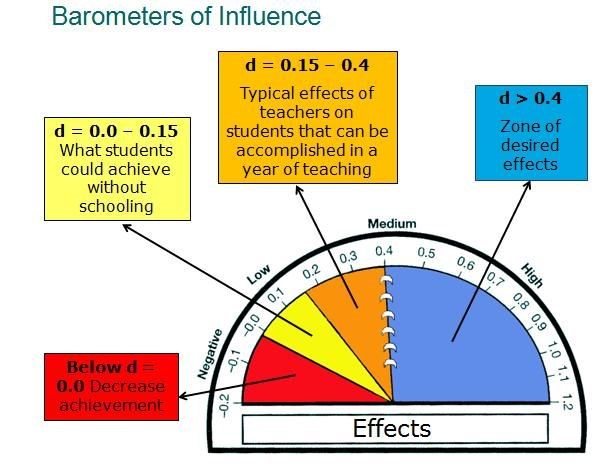
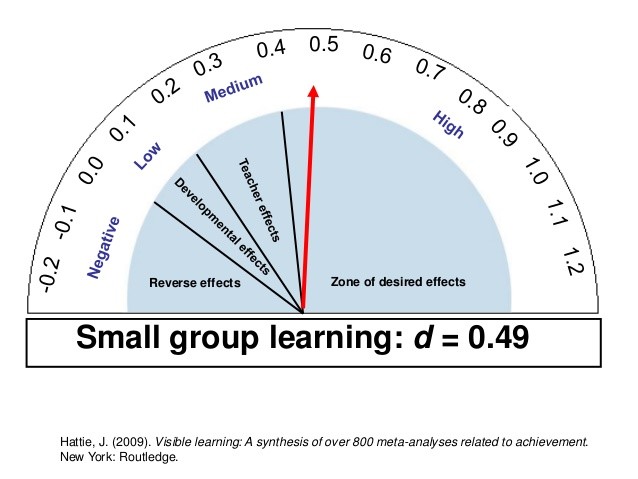
John Hattie, in his book Visible Learning, puts small group learning at an effect size of d = 0.49. Anything above d = 0.40 sits in what Hattie calls the zone of desired effects and should be done in our schools. Master teachers understand this and plan for group work throughout each school day. They understand that grouping students helps them teach more effectively and efficiently. Group size can vary, and the makeup of groups is flexible. What students are part of a small group math intervention may not be the same students in a small reading group.
A teacher must decide using formative data if a majority of the class needs curriculum or instruction retaught or covered again, but differently. If there is only a small group of students that need further support, the teacher carves out time for a small group mini-lesson or other learning experience. Master teachers look for misconceptions, missing skills, and students who need more support in order to make groups. In fact, a master teacher may have a plethora of reasons for small groupings in order to teach more efficiently. Devising small groups is a science, and the more you do it, your efficiency becomes an art form.
Grouping students can be as complex as described in Kagan Cooperative Learning structures. You break your students into four categories: low, medium low, medium high, and high. Then the teacher devises groups of four that include each one of these categories. The "high" student and the "low" student never sit next to each other or across from each other (diagonal. In this fashion, whether students turn and talk with their face partner or shoulder partner, they are always talking to someone that is only one level away from them. This amount of planning by teachers may seem frivolous, time not well spent, but the deeper discussions and classroom culture that is built with Kagan Cooperative Learning is powerful. This amount of planning may even save you time in further instruction later in the school year.
Some master teachers have partners or groupings for different subject areas or even similar/dissimilar likes. Science teams may have a different DNA make-up then a small reading group. Master teachers take into account student strengths and interests, and they know that small groupings can make the difference in student achievement.
6 - How Can I Plan Instruction to Meet Individual Needs of Students?
The ability to plan instruction that takes into account the student needs in the classroom is a daunting task. Work rated at the lower end of this component tends to look like content delivered on schedule with little adjustment for who is in the room, and with learners above or below grade level getting the same lesson as everyone else. That is a description of the planning on the page, not of the teacher writing it.
For the past two or more decades, Carol Ann Tomlinson has been educating teachers on how best to differentiate instruction. In her book titled The Differentiated Classroom: Responding to the Needs of All Learners (©2014), Tomlinson discusses several strategies to differentiate for the varied learner needs in the classroom. She states there are several ways to differentiate; the three easiest ways to differentiate instruction are changing one or all of the following: content, product, and process. Changing content refers to the changes in materials and resources that are used. Changing the product refers to the changes in the assessment or outcome, and how the students will show proficiency toward the learner objectives. Lastly, process changes are how the teacher chooses to teach the content to the student. Here are some examples of each type of differentiation idea:
- Content - Changing the resources and materials used to either meet below or above grade level learners (lower/raise the reading comprehension level of the content, lower/raise the math progression level of the content, extensions in science experiments, etc.)
- Product - Changing how students show mastery of a concept (offering a different format for demonstrating the same understanding, using Bloom's Taxonomy to vary the cognitive demand of questions, building extension options into a project rubric, etc.). Accommodations, modifications, and any change to required achievement expectations are governed by the standards, the student's IEP or Section 504 plan, and district grading policy, so work those decisions through the team rather than on your own.
- Process - Changing how the content is taught in the classroom (using an inquiry-based learning style, direct instruction, small group or individual instructional support, reciprocal teaching, more/less engagement and active participation techniques, etc.)
Master teachers take real responsibility for how instruction lands for each student in their classroom, while knowing that outcomes turn on plenty they do not control. They work at it within what the curriculum, a student's IEP or Section 504 plan, school policy, and the supports available to them allow. They allow for student choice in determining how their learning should be differentiated. Choice can be a powerful differentiation strategy for students. Here are a few other ways to differentiate instruction according to a recent Edutopia article by Lina Raffaelli (2014), "18 Teacher-Tested Strategies for Differentiated Instruction":
- Inquiry-based learning
- Interest surveys
- Use the Five Senses
- Cross-training (2 or more instructional approaches or modalities)
- Giving choice and variety
- Design curriculum connected to the students in your current classroom
- Individual feedback
- Peer-to-peer and other groupings
- Use mini-lessons connected to individual student goals
- Open-ended questions
- Group students based on goals and not labels
7 - How Can I Build Agency with Students, Provide Student Choice, and Solicit Ideas from Students on How to Best Structure the Learning?
This component within the Charlotte Danielson model seems humongous for teachers to tackle. To make a case at the Distinguished level, teachers do all of the above and then include students in the decision-making process. The ability to empower students in the instructional decisions of changing the content, process, or product of their learning creates a sense of agency. Agency has been a buzzword the past few years in education. Agency is the human act of taking initiative in your own learning process. It is argued whether agency is a product of the structure provided by adults in the school setting, or is it the student's innate ability to act. I believe it is both: the teacher providing a safe learning environment with defined structure and allowing students to take action. Students who have a stronger innate ability to act thrive in these environments.
Bill Glasser's Choice Theory is one influential argument for building choice into learning. The research on autonomy and engagement is more mixed than any single theory suggests, but offering students real decisions can support engagement in the right circumstances. Choice empowers students to make a decision. Master teachers create learning situations where students get to make choices in their learning. The secret for teachers is that they must create choices that they can live with. For example, a teacher may assign a writing task with the following two options: 1) Write about a famous leader in history and the impact he or she had on society, or 2) What are the qualities that make an effective leader? By letting students choose between one or two, they can reflect and connect with which question will be easier for them to answer. Likewise, in math, a task can be assigned to choose five math problems from the 20 on the page. This little bit of empowerment gives students a sense of agency. These are simple ways to provide choice. Students can make much more elaborate choices when master teachers design learning experiences. An example of this is the strong English Language Arts learning structure titled Daily 5. It is built on student choice and empowerment: read to self, read to someone, word work, listen to reading, and work on writing.
RELATED DAILY 5 READINGS -
- Daily 5 and Alternative Seating: 4 Reasons Why They Are a Perfect Fit Together
- 5 Reasons Why Daily 5 Is the Best Reading Structure out There
What separates Proficient from Distinguished practice on this component, in my experience, is the ability to empower students. Master teachers include them in making decisions along the pathway to success.
(Charlotte Danielson Model: Domain 1 Component e)
MORE ROCK MY EVALUATION RELATED READINGS:
- Demonstrating Knowledge of Content and Pedagogy
- Demonstrating Knowledge of Your Students
- Setting Instructional Outcomes
- Demonstrating Knowledge of Resources
- Designing Coherent Instruction (Currently here)
- Designing Student Assessments
Frequently Asked Questions
What is designing coherent instruction?
It's the planning work that turns an outcome into an actual lesson: choosing activities that advance learning through the content, picking materials matched to your students, grouping students on purpose, and sequencing the whole thing so each part builds on the last. In Charlotte Danielson's Framework for Teaching, it's component 1e, inside Domain 1: Planning and Preparation.
What are the four elements of component 1e?
Learning activities, instructional materials and resources, instructional groups, and lesson and unit structure. The component is about planning, and what happens once a lesson starts is addressed elsewhere in the framework. How your evaluator gathers evidence for 1e, whether through lesson plans, a pre-observation conference, or something else, depends on the implementation your district has adopted.
Did the 2022 Danielson framework change component 1e?
It renamed it. The Danielson Group's 2022 edition titles 1e "Planning Coherent Instruction." The four domains and 22 components carried over from the 2013 edition, as did the four-point rating scale, and Domain 1 kept its "Planning and Preparation" name. Many districts still evaluate on the older version, so confirm which one yours runs.
What does coherent instruction look like in a real classroom?
A science unit on nutrition that also carries the week's math, writing, and spelling. Small reading groups built from formative assessment data rather than from a seating chart. A pacing guide where you slow down when the data says the class isn't ready. A writing task offered as two prompts instead of one, so students pick the one they can say something about. The examples in this article come from elementary and middle school classrooms, but the planning logic holds at any grade band.
- Four elements, not seven questions - Component 1e is scored on learning activities, instructional materials and resources, instructional groups, and lesson and unit structure.
- Check which edition your district uses - The Danielson Group's 2022 revision retitled 1e "Planning Coherent Instruction," but plenty of districts still evaluate on the 2013 instrument.
- Grouping is worth planning deliberately - Hattie's Visible Learning synthesis reports small group learning at d = 0.49, above the 0.4 mark he treats as the zone of desired effects, though effects in any one classroom depend on how grouping is used.
- Start with the end - Backward design, from McTighe and Wiggins's Understanding by Design, is what keeps a unit coherent instead of a stack of activities.
- Student choice belongs in the plan - Building real decisions for students into a lesson is one practice worth developing, but where your practice lands on this component is set by your district's adopted rubric and the evidence behind it.
Planning at this level is a skill you build on purpose, and a graduate program in curriculum and instruction is one option for teachers who want more preparation in it. The sponsored programs on this page include online and part-time formats put together for teachers who are already carrying a full classroom load.
As a 5th grade teacher, in 2010 Jon won the Presidential Award for Elementary Math and Science Teaching (PAEMST). As a principal, his school won the 2012 Blue Ribbon Award. In 2018, he won the National Distinguished Principal Award (NDP). In 2019 he won the National No Kid Hungry Breakfast Hero Award.
Jon is the author of three guides published on teacher.org: An Educator's Guide to Combat Bullying & Bully Prevention; Teacher Evaluation: A Transition Guide to Exemplary Performance; and You are the Wild Card: Infusing Fun Back into Curriculum. He has authored a children's picture book that was released January 2019 titled Benjamin’s Visit to Principal Reads Office…again! (available at www.archwaypublishing.com)
- Learning How to Say No and Set Boundaries with Parents - November 21, 2022
- How to Implement a Check-In, Check-Out (CICO) Behavior System - September 26, 2022
- Teacher Core Values: 7 Strategies for Living Your Code - August 15, 2022