
Advice for First-Year Teachers: What I’d Tell Myself


The best advice for first-year teachers, from a superintendent 23 years in: spend your time on students rather than materials, build relationships before lessons, protect your own resilience, and start saving for retirement early. For this author, relationships ultimately mattered more than the materials and resources he bought.


This reflection was written in the spring of 2022, two years into the disruption that reshaped American schools. The questions in it have not aged.
A response to a post in the Facebook group Principal's Principles, by Andrea Cosens, an elementary principal at Normandy Elementary in Littleton, Colorado, stopped me cold. She wrote,
"Hold on tight to your core values, they are about to be cross-checked for references."
I connected with Andrea to learn more about her and about that response. I wanted to know her pathway to her current principal position, and found we had some similarities: we both had experiences working with young children, and we were both instructional coaches before becoming principals. Andrea described her pathway,
"My career in education began in my basement when I was five years old. My stuffed animals were my music students. At sixteen, I was hired by a local preschool, which fueled my passion for teaching and supporting student growth and discovery. I've taught all grades preschool through fifth, served as an instructional coach and assistant principal, and currently I'm the principal of an elementary school. I LOVE it. There's nowhere else I'd rather be."
When asked for more insight into her response to the post, she explained,
"Core values matter deeply to teaching, serving, leadership, and self-care. I fully believe in humans and their power to grow and make an impact in this world. It drives what I do to help them achieve their best. I love that I get a front row seat and I get to coach through the action. I'll do anything to help them reach their potential. Without core values, the winds sway you as a person and leader, and work-life balance diminishes greatly. You don't have a center from which to work. Values are your road map to your personal mission and vision, tools that can be used for decision making, teaching, and leading, the keys to building relationships and sharing yourself, a way to drive personal growth, and they are the driving force behind your purpose and passion. When your head, heart, and gut are out of sync, people, especially kids, will tell you in words, body language, and their engagement. It's time to check your actions and words to see how they align when that happens. Your core values will be closely examined and tested for truth by others. When you're lost or shaky in those values, people will question your intent and integrity. Find accountability partners you can trust. Those closest to you will leverage your values to help grow your potential. Know your values, share them, grow them, live them. Own it when you've lost them and lean on trusted resources that can remind you of your talk and walk. It will make all the difference."
Talking with administrators and teachers this past year, I've noticed a pattern of reflection. Many are reflecting on their careers and on what has happened in education since March of 2020, and many are contemplating career changes.
A colleague of mine recently told me she's tired. She's retiring at the end of the year, physically and emotionally drained. Fighting the good fight for public education seems harder every year, and telling the story of what's actually going on in our schools takes more energy than it used to.
A loud minority gets most of the press. We need to flip that script. There's no better time to regain our strength and turn up the volume about the good work happening in our schools. Before I increase my volume, though, I'm using one strategy: reflection. I'm spending time being introspective about my practices, my ever-changing philosophy of education, and how I can keep telling the story of my school district.
Most teachers don't voice their concerns. They avoid conflict, or they're tired of the battle, and many simply don't feel they have a forum for their story. I want to change that in my district. Again, before I go further down that road with my staff, I'm going to stop and reflect.
I am personally finding education to be contentious, and I am second guessing my personal pathway forward! I wonder what skills, dreams, attributes, and advice I would give myself so I could have been better equipped and ready for what would come in 2022 and beyond! What am I missing?
What should I have told myself 23 years ago when I started education?
1 - Spend as Much Time with Students as You Can, You Can't Get That Time Back
 As an elementary teacher at the beginning of my career, I couldn't wait for summer. I felt like 180 days with students was extremely long. I dreaded the start of school. It wasn't until I was an administrator and could reflect on what the start of school looked like for families and staff that I realized how powerful that first day, first week, and first month of school can be for all stakeholders.
My mind then shifted, and I thought to myself, "Damn, I only have 180 days with these kids. I need to start immediately!" I had way too much curriculum to get through, way too many culture-building activities to support the whole learner, and way too many students to build relationships with. I needed to use every minute wisely.
2 - Increase Your Passion for Working with Even the Most Difficult Students
 One of the best pieces of advice I ever received came during my basketball coaching career. A colleague said, "Your team is only as good as your weakest player." I started spending more time developing the skills of the guys at the end of the bench. Wouldn't you know it, doing so helped everyone else as well. A total mind-shift for me as a new coach.
As a new teacher, I wish I'd spent more time appreciating the more challenging students. I admit, I struggled supporting my hardest students at the beginning of my career. It took years of experience and building my toolbox before I could give them the level of support I felt good about. Twenty-three years on, I'd tell you that experienced and first-year teachers share many of the same struggles, which is worth knowing when you assume everyone else has it figured out. There were times I spent 90% of my time with 5% of my population, but I know I made an impact. I wish I'd done more for these students earlier.
Likewise, as a superintendent, I need to spend more time with stakeholders who are struggling or need support.
3 - Build Resiliency and Be the Calm Through the Storm
 I would swear my prefrontal cortex wasn't fully developed until I was 40. My mouth and my actions got me into trouble. Instead of listening before I responded, I spewed a response out immediately. Instead of de-escalating, I tended to add to the tension. I wish I'd learned how to be the calm in the storm, to stay grounded while the tornado swirled around me. I've gotten better at it, but I wish I'd understood its power at the start of my career.
"I believe a two-sided coin illustrates this concept. On one side is resiliency, while the other is trauma, anxiety, and other mental and physical health issues."
You have to build your resiliency skills and strategies in order to navigate the other side of that coin. Part of that work is learning to recognize self-doubt for what it is rather than treating it as a verdict on whether you belong in the profession.
I wish I'd started medication for ADHD and anxiety earlier in my life. I struggled with coping. It wasn't because I'm against medication. I believed the resilience side of my coin was handling it as best it could. Starting medication opened doors, helped me reflect, and gave me access to more strategies while building my resiliency toolbox.
4 - Build Your Philosophy and Live It
 As a new teacher, I floundered, jumping from one philosophy to another, watching what more experienced teachers were doing, changing my beliefs daily. I was reading everything I could about education. I anchored my early philosophy in Skinner's behaviorism, Piaget's stages of cognitive development, and Bandura's social learning theory. Positive psychology later changed part of how I viewed my role in education.
It wasn't until I met a unique and exquisite dude who became a close friend that I once again changed how I taught and how I lived. Trust Psychology and High Trust Philosophy, developed by Denny McLaughlin, changed me for good.
"I wish I would have found this philosophy earlier in my career. It would have helped me navigate so many early hurdles with students, parents, colleagues, as well as friends and family!"
5 - Communicate More in Person than by Email
 A former supervisor of mine had a rule, "If your email is more than two paragraphs, go talk to this person." I can't stress this enough. When I was a new teacher, email was the newest way to reach parents, colleagues, and family. I emailed everyone because it was convenient for me. I could email at any hour and say whatever was on my mind. Then I accidentally sent an email to the superintendent of a district where I was applying for a job, and I realized that message needed to be a conversation in person, along with most of the others I'd been firing off.
"High energy and emotional emails almost always stir up more work for you…!"
I would tell my first-year self to talk to people first when you can, and use email as the backup. So much communication and relationship building gets lost in email. Facial expressions, body language, proximity, the tone of your voice: all of it carries your personality and your connectedness, and none of it survives the inbox. We invented emojis to patch the gap, but the real thing works better. More in-person communication than electronic is more effective, and in the end, probably more efficient.
6 - Put Money Away for Retirement Every Month, and Don't Stop
 I started putting away $25 a month into a tax-sheltered annuity my first year of teaching. Then I wanted a new car. I stopped contributing for a while and told myself I could make up for it later. I should never have stopped.
I wish I'd understood, as a first-year teacher, how money compounds when it's invested. A small contribution every month over a career makes an enormous difference by the end. Giving up one night out a month pays dividends you'll see when you retire. Delayed gratification is one of the hardest concepts for any young teacher-brain.
7 - Keep Asking What You Want to Be Known for When You Retire
 How you live every day should mirror your beliefs and what you want to be known for when you retire. I once knew a teacher who taught a lesson on epitaphs, especially those of famous Montana outlaws. Students were fascinated by history taught this way. She turned the assignment into a game, almost like Jeopardy: she'd read an epitaph and students had to guess the person. Let's play. Guess this figure,
"I was the first person to not be globally challenged!"
Did you guess Ferdinand Magellan? He led the first expedition to circumnavigate the globe, though he didn't live to finish it. Magellan was killed in the Philippines in 1521, and his surviving crew completed the voyage home aboard the Victoria the following year.
Let's apply that lesson to my own career. What do I want to be known for when I retire? I'd say this belongs on my education tombstone:
"He always put students first and was driven with passion to serve!"
When I asked Principal Andrea Cosens what she wants to be known for and what she hopes people say about her when she retires, she responded,
"I believe in seeking out the positive in each situation and that the kids of today and tomorrow will change this world. I know it with every fiber of my being. I don't believe in 'what if,' I believe in 'even if.' Even if the winds of change blow, we can meet change where it's at and use the energy around us to take a step forward. The tiniest steps matter most when facing adversity. I hope when I retire that I've served communities, students, families, and teachers well. I hope I shared light, love, laughter, and life. I hope my story has an impact in the smallest of ways."
8 - Culture Trumps Strategy, Live by It
 As a new teacher, I hunted for the best materials to engage my students. I used technology in my lessons. I used real-life projects that connected our classroom to the world outside its four walls. I spent my own money on materials and resources, and I spent hours building lessons. I still struggled to get students to follow through on my "great lessons."
I wish I'd spent more of those first years building relationships with my students instead. It didn't matter how engaging the lesson was or what content we were covering. What made the difference was the relationships.
I learned over time that if I had strong relationships with students, I could teach them almost any topic, and it often didn't matter what resources I was using. Culture trumps strategy.
9 - Keep Building Leaders and Don't Be Afraid of Giving Away Your Power
 As a first-year principal at 27, I wish I hadn't been afraid to give away more of my power. Really, it should be stated differently: the impact of empowering others. I wish I'd understood servant leadership at the beginning of my career.
I was lucky enough to be handed leadership roles early, as a new teacher. I had a principal who believed in site-based management. Several committees and teams helped run the school, and everyone had a chance to lead in some capacity. I thrived in that environment.
Servant leadership, first set out by Robert Greenleaf in his 1970 essay "The Servant as Leader," now runs through the philosophies of many religious, business, and educational leaders. Part of Greenleaf's argument is that a leader's primary job is to serve others in order to support the organization as a whole.
"Continually building leaders and empowering them to lead may seem like you are giving away your power, but in reality, you are building a stronger organization."
10 - Keep a Growth Mindset and Tell Your Story of Growth Early and Often
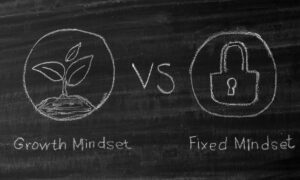 I think I've always had a growth mindset, but I didn't have the words for it until I read Carol Dweck's work. As a new teacher, I wish I'd told the story of growth and of what learning actually looked like in my classroom. Educators have to control the narrative of their own classrooms now. I could have reached more students and more people, much earlier.
Most of us come into education humble. We don't like to brag about what we're doing. It wasn't until I was an elementary principal that I understood the power of public education, and that I had some control over my school's narrative. I started celebrating the learning happening every day in our building. More and more people wanted to participate, and I learned that what I was creating was contagious.
I'm now empowering others to share their narrative. I ask them to post pictures, videos, and stories about what they're doing in their classrooms, on field trips, anywhere learning is happening. Again, I wish I'd started earlier. The impact would have been resounding.
What Would You Tell Your First-Year Self?
Here are the top ten responses to that original Facebook post. There are some powerful statements in here, and they can support all of us in being more reflective. If you like this retrospective format, we ran a companion piece for students leaving high school: Top 10 Pieces of Advice I Wish I Got As a Graduating Senior.
- "Gurl (sic), buckle up…and 2020-2022…invest in some alcohol companies..." Actually, hang in there. The ride has lots of hills and valleys, but in the end, stay grounded in who you are, and when the adults are getting to you, reground by spending time with kids - the whole reason you chose this career."
- Asking for help is a sign of strength, not weakness.
- Self-care is more important than you think.
- Set professional boundaries! There's no prize for overworking, staying late, and being undervalued. Know your worth!
- Put as much as possible in your retirement account.
- That can wait until tomorrow. Go home and play with your kids.
- Don't get caught up in the tornadoes. Be the one who stays grounded.
- When you're at school, be at school. When you're home, be home.
- Investing in yourself is the best investment you can make.
- Don't rush your career. It is difficult to find the balance between parent and administrator. You don't get the parenting years back.
Frequently Asked Questions
What should a first-year teacher focus on in the first month?
Routines and expectations, taught explicitly and reinforced daily. New teachers often front-load content and hope classroom management sorts itself out, and it rarely does. It's far easier to relax a structure you set in week one than to impose one in November. Teach the procedures the way you'd teach a lesson, then hold them consistently.
How do I find a mentor as a new teacher?
Many districts assign a formal mentor as part of induction, and some states require a mentored period before a provisional license converts to a standard one. Check with your district's induction coordinator first. Beyond the assigned pairing, find the person who teaches your grade band or subject and ask specific questions rather than general ones. Isolation can be a major challenge for first-year teachers, which makes finding reliable mentors and colleagues especially valuable.
How should a new teacher handle communication with parents?
Reach out early, before there's a problem to report. A short positive message in the first weeks changes every conversation that follows, because the first contact isn't bad news. Keep a brief log of substantive conversations with dates and what was agreed. When something does go wrong months later, that record is what lets you reconstruct it accurately.
When should a teacher start saving for retirement?
The author's own advice is to start with the first paycheck if you can, and his regret is the year he stopped. What's available to you depends on where you work. Many public school teachers participate in a state or local retirement system, while the specific plan and enrollment rules vary by state and employer. Many school districts offer access to supplemental retirement plans such as a 403(b) and, in some cases, a 457(b). Those supplemental plans are often opt-in, which means a new teacher can go years without noticing one exists. How much to contribute, and when, depends on your own circumstances: existing debt, emergency savings, tax situation, and what your employer offers. A financial advisor or your district's benefits office can walk you through the plans you're actually eligible for.
- Relationships beat resources - Strong relationships with students made more difference than any material, technology, or lesson design this author paid for out of pocket.
- Your hardest students need your best years - The support that took a decade of experience to develop is the support struggling students needed on day one.
- Resilience is a skill, not a trait - Building coping strategies deliberately, including seeking treatment when it's warranted, is part of staying in the profession.
- Talk before you type - If a message runs past two paragraphs, it's a conversation, not an email.
- The author's retirement regret - He started at $25 a month, stopped to buy a car, and counts that pause as the mistake he'd most want his first-year self to avoid.
The arc in this reflection runs from classroom teacher to instructional coach to principal to superintendent. Some moves into school and district leadership require additional education, certification, or administrative licensure, depending on the role and state. If you're considering a master's in education or pursuing the administrative or leadership credential required in your state, the sponsored programs on this page include online and part-time formats built for teachers who are already working full time.
As a 5th grade teacher, in 2010 Jon won the Presidential Award for Elementary Math and Science Teaching (PAEMST). As a principal, his school won the 2012 Blue Ribbon Award. In 2018, he won the National Distinguished Principal Award (NDP). In 2019 he won the National No Kid Hungry Breakfast Hero Award.
Jon is the author of three guides published on teacher.org: An Educator's Guide to Combat Bullying & Bully Prevention; Teacher Evaluation: A Transition Guide to Exemplary Performance; and You are the Wild Card: Infusing Fun Back into Curriculum. He has authored a children's picture book that was released January 2019 titled Benjamin’s Visit to Principal Reads Office…again! (available at www.archwaypublishing.com)
- Learning How to Say No and Set Boundaries with Parents - November 21, 2022
- How to Implement a Check-In, Check-Out (CICO) Behavior System - September 26, 2022
- Teacher Core Values: 7 Strategies for Living Your Code - August 15, 2022