
Top 10 Pieces of Advice for Graduating Seniors: A Speech


The 10 pieces of advice for graduating seniors in this commencement speech are: own your actions, show compassion, take risks, make connections, be alone sometimes, be reflective, make strong friendships, love your family, make your own decisions, and be thankful. The full speech and the countdown template behind it follow.


Giving a graduation speech or any speech can be stressful. Public-speaking anxiety is common, and it doesn't spare people who stand in front of a room for a living.
I may not be the best speechwriter, nor the best speaker, but I have never had the fear of getting up in front of people. This may have come from my need for attention back when I was in school, and doesn't seem to be affected by all the discipline consequences that followed! This does make me the perfect test case for what not to do while public speaking.
I have had microphone problems, tripping going up on stage, written speeches where the pages were out of order, completely dead silent crowds when a joke flopped, and even people talking while I was speaking. All these could be distractions or excuses to quit or never speak again, but having unwavering ice in my veins has kept me going - even though it's probably mostly unequivocal ignorance of perception.
Sometimes a speech in front of ten of your peers or colleagues is more difficult than speaking at a graduation ceremony of over 2,000 people. Framing your speech and having a template is one way you can help ease the stress of public speaking. As you Google speech formats, you will find a multitude of guides and templates out there to help you with everything from structure to cadence and delivery.
With graduation speeches, a good rule of thumb is to speak to the graduates directly, even though the audience includes everyone from parents and grandparents to bored younger siblings. Yes, many graduates may have their minds on other things than the graduation speech, but how can you hope to have them reflect and connect to your words if not by addressing them directly? Dramatic pauses, occasional applause, humorous anecdotes, stories, and lists can make your speech not only different from other speakers or speeches, but hopefully at least one person will be impacted by your words.
A Few Tips for Public Speaking that I Learned From Delivering Graduation Speeches Over the Years
 Here are some things that may help when you start planning to deliver a graduation speech:
- Research the school, the parameters of your speech, the expectations from administration, and anything else that might help create connections between you and the participants.
- Research your topic and pick a speech template that will work for you. You will find numerous formats.
- Get the important stuff in first, and cap it off with a final message. A strong opening and closing can help make a speech memorable, so your attention grabber at the opening and message at the end should both be well thought out.
- Connect with your graduates. Give them concrete ideas to reflect on. Graduation is a time for reflection. All speeches should have a point and message for graduates that hopefully, at least one of them remembers.
- Write, rewrite, revise, and practice during the speech writing process. Try out parts of your speech by practicing it out loud, emphasize certain words, work on cadence, and add in strategic pauses. These pauses may be for dramatic effect, applause or laughter, or merely to break up the cadence of your speech. Your diction and word choice matter. Think of your audience. It all matters.
- Reflect on what it might be like to be listening in the audience. What would you want to hear as a graduate? Use a mentor, colleague, or friend to read your speech and offer feedback.
How I Wrote My Graduation Speech Around a Classic Letterman-Style Top 10 List
 If you're old enough to remember David Letterman as the 30-year veteran cross-over late night host for both Boomers and Gen-Xers, you'll have a unique appreciation for the way I modeled this after the iconic Top 10 lists he used in his post-monologue show-opener.
Counting down from ten to one, his Top 10s lampooned trending topics of the day. And believe it or not, that countdown approach also provides the perfect template for a pretty effective graduation speech.
The Speech Outline I Recommend
Here's a basic outline I would recommend to anyone writing a graduation speech.
| Section | What it does |
|---|---|
| Introduction and setting the stage | Who are you? Who asked you to speak? Who can you thank? Who can you celebrate? |
| Make them laugh | Tell a funny short story, anecdote, or joke. |
| Make them reflect | What is your purpose for speaking? Setting the rationale for your speech is important. |
| Tell a quick story to connect and set up the message | What story can you tell that will connect to the participants? Set up your Top 10 list with your story. |
| Message with Top 10 format | What is your message to the participants? What are 10 pieces of advice or actionable items you want participants to implement? |
| Summarize, give a call to action, and conclude | What do you want participants to do with your message? Did you give participants a call to action? How can you end your message with this call to action? |
This template can be modified to adjust for time. NOTE: 5-10 minutes for a supporting speaker and 10-20 minutes for the main address are useful starting ranges to draft against, but the school and the ceremony program set the actual limit. Ask administration for your slot before you write.
The Graduation Speech I Delivered to the Class of 2021
I've tried it, and it works. Here's how it came together in 2021.
Opening and Setting the Stage
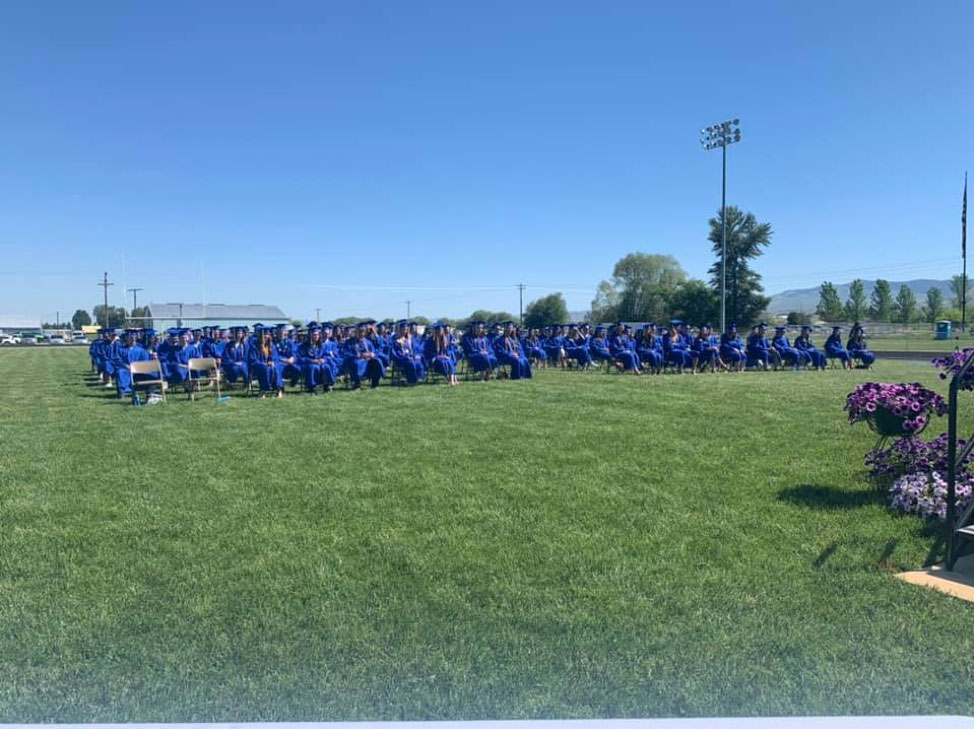
Good Morning. I would like to start with a 20-second reflection on this beautiful day in the Bitterroot Valley. Look at your family in the crowd and our beautiful surroundings; take it all in.
(20-second pause to reflect.)
My name is Jon Konen, and I am the superintendent of this fantastic school district. I want to start and end by commending these fabulous graduates. I commend you on leading by example and making it through one of the most difficult years in history. Please join me in a long applause for these graduates.
(10 second applause, walk away from the microphone, walk towards the graduates, and model applause for them with the crowd, make it about them from the start).
The Story That Sets Up the List
My dad used to tell me a story about having to walk to school uphill both ways in four feet of blowing snow. I didn't believe him; I have been to Fairfield, Montana, and it's pretty flat.
Well, graduates, I think your story for your kids and grandkids will top that. You can say,
"When I was in high school, I had to wear two masks, stand 6 feet or more apart from anyone else, coat my limbs with hand sanitizer, and had to do this through all types of weather and smoke."
Graduates, prior generations have nothing on you now!
27 years ago I stood on my high school stage as the class president and gave a speech about the Top 10 things I am going to look forward to after graduation. You may not know, but I am a huge David Letterman fan, and I never missed his Top 10 lists on The Late Show.
In high school, I was kind of a joker, and the speech I had written for graduation was printed out on computer paper...you know, that old dot matrix printer paper that was connected together. As I sat down in my graduation chair, much like you are now, I taped the end of my speech to my chair, which was in the middle of my high school gym. I walked up towards the stage as the speech began to unravel. I acted like I didn't know it was unraveling as the audience began to laugh at the anticipated and forthcoming 100+ page speech. There is not much I can remember from that speech, but I knew it contained a Top 10 List with pieces of advice for after graduation.
Can you believe this list only included advice for the next 4 years in college? This was not very foresightful on my part, as it was so hard to see past the upcoming four years of college....which actually took five years.
There are so many things to look forward to, graduates...from receding hairlines, to growing guts, to aches and pains that make it hard to get out of the chair.
You will notice my speech this year is only a couple pages in length.
The Top 10 Pieces of Advice for Graduating Seniors
Today is about you, the graduating senior class of 2021. I have compiled another Top 10 list for you: The Top 10 pieces of advice I wished someone would have told me as a graduating senior.
- Own Your Actions - Too many times we hear people placing the blame on something or someone else. If you were ultimately responsible for whatever happened, own it and move on. You will lose less sleep, expend less energy, and can ultimately get past the hurdle faster.
- Show Compassion - Sympathy is when we feel sorry for someone else. Empathy is when we understand how someone else feels. Compassion is empathy in action or taking action on the empathy you feel for others. This is one of the strongest traits that your character will be judged on.
- Take Risks - Opportunities do not come knocking on your door every day. Don't be afraid to take risks. Take a risk in a new job, meeting a new friend, loving someone, or even jumping into a lake. If we sit on the sidelines all the time, we will never know our potential.
- Make Connections - Try to meet as many people as possible. Whether you are a natural extrovert or an introvert, many successful introverts make an effort to meet new people. They understand it is nearly impossible to be successful without the help of others. So, create strategies to remember people. Make as many connections as you can.
- Be Alone Sometimes - One of the hardest lessons I had to learn as a college student was to learn to be good on my own and by myself. Your life doesn't have to have a consistent hustle and bustle of other people around you all the time. Take time to enjoy yourself when you are alone...maybe it's hiking, biking, or even reading. This is a characteristic that many successful people possess in being self-sufficient.
- Be Reflective - One of the many qualities I didn't have as an 18-year-old was the ability to reflect back on where I have been...the things I have done, the words I have used. When my brain developed, especially my prefrontal cortex, my ability to reflect increased exponentially. Take time to stop and reflect. Knowing that you can only control your own emotions, think about your words and your actions. Ask the easy questions...what did you like about a situation and what could you have done or said differently?
- Make Strong Friendships - Whether it is one or two good friends, or many, finding your people is imperative. As you get older you naturally gravitate towards people that are more like you...they love what you love, they believe in what you believe in (for the most), and they like the activities that you like.
- Love Your Family - When you fall down, when you make mistakes, when things go haywire, your family is your support. With that being said, make sure you take care of the relationships within your family. Put time and effort into these relationships as they are your backbone and your biggest cheerleaders.
- Make The Best Decisions For You - Life is full of choices. Some of your choices are going to teach you a lesson, while others will be celebrated. Weigh your options, ask for advice, seek out others who you think are good role models. The words and actions of our role models and mentors will help you make the best decisions for you. Remember, you get to make these decisions, and you must own them whether they are correct or not.
- Be Thankful and Spread Positivity - Look into the crowd. You probably have people here that you can thank for helping you get to where you are: parents, family, friends, teachers, administrators, community members, and more. The impact you can have by stopping to acknowledge these people is powerful, and don't stop with thanking people today; do it every day. Make it a goal to give five people a positive comment or a thank you. They will feel appreciated, and you will feel even better as well.
Closing and Call to Action
As you leave here today, think about implementing one of these top 10:
- Own Your Actions
- Show Compassion
- Take Risks
- Make Connections
- Be Alone Sometimes
- Be Reflective
- Make Strong Friendships
- Love Your Family
- Make The Best Decisions For You
- Be Thankful and Spread Positivity
Congratulations, graduates. You are on your way!
Frequently Asked Questions
How long should a graduation speech be?
The school decides, not the speaker. Ask administration for your time slot before you start writing, because the outline you choose has to fit it. As starting ranges to draft against, this article suggests 5 to 10 minutes for a supporting speaker and 10 to 20 for the main address, then adjusting once you know the program.
What should a graduation speech include?
Six moves cover most of it: introduce yourself and thank the people who deserve it, get a laugh early, give the audience a reason to reflect, tell one story that sets up your message, deliver the message itself, then close with something concrete the graduates can act on. The countdown format works because it turns that message section into ten specific items rather than one abstract theme.
Does the Top 10 countdown format still work for audiences who don't remember David Letterman?
The reference lands differently for parents and grandparents than it does for eighteen-year-olds, but the structure works regardless of whether anyone recognizes where it came from. Counting down builds anticipation toward a single closing point, and it gives a speech ten natural pause marks for applause or laughter.
Should a graduation speech address the graduates or the whole audience?
Speak to the graduates directly. The audience includes parents, grandparents, and restless younger siblings, and they will all listen in, but a speech aimed at everyone tends to connect with no one. Addressing the graduates is what makes reflection possible.
How do you prepare if public speaking makes you nervous?
Practice out loud rather than silently, mark where your pauses go, and have a mentor or colleague read the draft before you deliver it. Public-speaking anxiety is common, so preparation matters more than confidence.
- Ten pieces of advice - Own your actions, show compassion, take risks, make connections, be alone sometimes, be reflective, make strong friendships, love your family, make your own decisions, and be thankful.
- The countdown template - Introduce and thank, get a laugh, prompt reflection, tell one story, deliver ten specific items, then close with a call to action.
- Speak to the graduates - Address them directly even though the whole family is listening, because a speech pitched at everyone connects with no one.
- The school sets your time limit - Confirm your slot with administration before drafting, using 5 to 10 minutes for a supporting speaker and 10 to 20 for the main address only as starting ranges.
- Anxiety is normal - Public-speaking anxiety is common, which makes rehearsal and outside feedback the practical fix.
Being asked to speak at commencement usually means you have moved into a leadership role, whether that is a department chair, a principal, or a district office. The sponsored programs on this page include education leadership and administration degrees for teachers weighing that step, along with online and hybrid formats built for people already working in schools.
As a 5th grade teacher, in 2010 Jon won the Presidential Award for Elementary Math and Science Teaching (PAEMST). As a principal, his school won the 2012 Blue Ribbon Award. In 2018, he won the National Distinguished Principal Award (NDP). In 2019 he won the National No Kid Hungry Breakfast Hero Award.
Jon is the author of three guides published on teacher.org: An Educator's Guide to Combat Bullying & Bully Prevention; Teacher Evaluation: A Transition Guide to Exemplary Performance; and You are the Wild Card: Infusing Fun Back into Curriculum. He has authored a children's picture book that was released January 2019 titled Benjamin’s Visit to Principal Reads Office…again! (available at www.archwaypublishing.com)
- Learning How to Say No and Set Boundaries with Parents - November 21, 2022
- How to Implement a Check-In, Check-Out (CICO) Behavior System - September 26, 2022
- Teacher Core Values: 7 Strategies for Living Your Code - August 15, 2022