
Playing with a Full Deck: 53 Qualities of a Great Teacher


The qualities of a great teacher aren't a single trait but a full deck: compassion, empathy, grit, creativity, and adaptability working together. No teacher starts with every card in hand. The strongest teachers keep building theirs year after year, picking up new qualities through reflection, practice, and plain persistence in the classroom.


Part 5 of 5 … the final installment of a five-part series on how one principal watched real change happen in classrooms when teachers put the ideas from The Wild Card by Hope and Wade King into practice.
I remember my mom saying, "Well, he's not playing with a full deck!" It was one of the first idioms I remember actually understanding as a kid, and I was proud of myself for getting it. It's got a negative ring to it, but I think it points at something bigger in education.
A teacher playing with a full deck is one who's knowledgeable, has real success behind them, and has a wide range of tools for engaging and reaching students. Becoming a teacher who's not just remembered but revered takes a long list of ingredients.
The Wild Card by Hope and Wade King is one way to build that hand. It takes energy, a growth mindset, and a willingness to fail and try again. So how do we play with a full deck when some days it feels like we're missing half the cards?
Here are 53 qualities of a great teacher, dealt out one card at a time. Many connect directly to Hope and Wade King's ideas. The rest come from more than 20 years of my own observing, teaching, and supervising in schools.
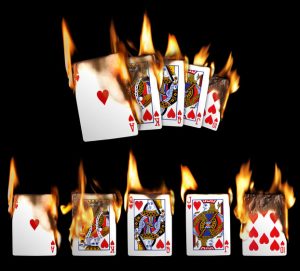
Hearts: The Qualities That Come From Caring
2 of Hearts - Compassion
Compassion is caring and empathy in action. When we model it as educators, we elevate our classroom and school culture. We go from helping a student who can't finish homework to becoming part of that student's support system. We do this by digging deeper into students' lives, because we care enough to ask. We may find out there's a food shortage, a housing problem, or something else at home that makes homework nearly impossible. Wild Card teachers are compassionate!
3 of Hearts - Empathy
Empathy, the ability to understand and feel what others are going through, is a quality we want in ourselves and want to build in our students. Once we understand what someone else is dealing with, we can actually support them. We start to sense other people's emotions and imagine what they might be thinking or feeling. Cultivating empathy in our classrooms builds a caring, supportive culture where students look out for each other. Wild Card teachers are empathetic!
4 of Hearts - Love
Loving what we do, loving who we work with, and loving the students in our classrooms is powerful. We treat every student like our own child. We advocate for them and their learning at every level because we love them. Our love for our students may be the most consistent love they receive anywhere in their world. Being truly invested in our students and in the work is what makes a Wild Card teacher.
5 of Hearts - Desire
The drive to start something and see it through comes from work ethic and desire. We want what's best for our students, and that desire, paired with real perseverance, is what lets us accomplish so much for them, their families, and the wider school community. We also want to keep getting better at what we do, and that desire, backed by reflection and a growth mindset, is what makes a Wild Card teacher.
6 of Hearts - Growth Mindset
A growth mindset means always growing and learning. We accept that we don't know everything, and we're willing to risk failure to get better. We treat any setback with the power of "yet." If we can't reach a student, a growth-mindset teacher says, "I haven't connected with this student, yet." Wild Card teachers carry a growth mindset into every classroom.
7 of Hearts - Reflection
Reflecting on our teaching, our relationships with students, parents, and colleagues, and the words and actions we choose is vital to our success. When we let reflection and feedback actually change what we do, we open ourselves up to reaching our potential. Meaningful reflection builds stronger relationships, makes us more efficient, and makes us more effective. Wild Card teachers use reflection to keep getting better.
8 of Hearts - Grit
Grit, the tendency to sustain effort and interest toward long-term goals, has been associated with achievement, though its predictive power varies by context. We want our students to show grit in their schoolwork, and we need to show it ourselves across the school year. We push forward with an indomitable spirit to finish what we started. We model it, talk about it, and feel it in the moment as we do the work. Wild Card teachers are gritty!
9 of Hearts - Creative
Being creative can look impossible to the people who see the glass as half empty. The truth is, anyone can build creativity, even starting small. We want our students to be creative and unafraid of failing, so we build an environment that nurtures creativity and rewards positive feedback over perfect results. We want that same environment for our colleagues and ourselves, because it's where new inspiration and a renewed passion for teaching come from. Wild Card teachers are creative!
10 of Hearts - Hope
Hope is the one thing we can't afford to lose: hope that we can build a better life for our children, our students, and our community. When hope is gone, everyone loses. Hope and optimism can be useful psychological resources during stressful or difficult periods. We have to teach students to feel hope and to understand what it can do for them, because hope is what turns a dream into something real. Wild Card teachers model and instill hope for others.
Jack of Hearts - Engaging
Engagement gets harder to earn every year in a fast-paced, video-game world, which means we need new strategies to connect with our students. We plan our engagement around the specific kids sitting in front of us and ask, "What will actually reach them right now?" Once we start asking that question and planning around it, we build a classroom that's actually set up for learning. Wild Card teachers are engaging!
Queen of Hearts - Authentic
It can feel like everything done in schools has been done somewhere else before. We keep creating authentic learning experiences anyway. Teachers are famous for borrowing and adapting ideas from each other, which is a fine way to get started, but don't be afraid to put your own stamp on it. Authenticity comes from finding what actually engages the specific students in front of you and building lessons around that. It also means being yourself rather than a copy of the teacher down the hall, and staying happy with how you teach rather than getting lost in comparison. Wild Card teachers are authentic.
King of Hearts - Planning
Planning can slip when we're deep in the daily rhythm of teaching, and it's easy to just keep going without it. The best planners know that time spent up front buys back time later. When we plan learning activities for our students, we account for their specific needs, which makes us more effective and more efficient. We can also plan alongside colleagues on curriculum, instruction, assessment, and school culture. Wild Card teachers are planners.
Ace of Hearts - Positivity
The power of positivity is hard to measure, but it's necessary for job satisfaction and for happy students. Students and colleagues feel our positivity the moment we walk into a room or a conversation. We show it through body language, words, and actions, and we can model the language our students need when they're hit with adversity, stress, or negativity. Wild Card teachers are positive!

Clubs: The Qualities That Hold a Classroom Together
2 of Clubs - Consistency
Consistency is one of the qualities that makes students feel safe. Teachers who follow consistent behavioral routines give students the structure they need. Without it, stress and even chaos can take over. Many students come from homes where consistency is missing, and they crave it from their teachers. When we discipline, it's not the size of the consequence that matters; it's knowing there will be one every time the behavior happens. Wild Card teachers are consistent!
3 of Clubs - Appreciative
Teaching can be an especially rewarding profession. When we appreciate our students, their families, the community, and our colleagues, we carry a mindset that we can make a real difference. We appreciate what each child brings to the classroom every day, what our colleagues bring to the school, and what the community gives us the chance to serve. Reflecting on why we started this work in the first place is what keeps a Wild Card teacher appreciative.
4 of Clubs - Decisive
The number of decisions teachers make in a day is hard to pin down exactly, but some researchers estimate it at thousands over a six-hour school day. There's no question teachers need to be decisive. We take the information in front of us, combine it with past experience, and use our words and actions to make the best call we can in the moment. When you're making that many decisions, some won't be the best ones. We learn from those, stay unafraid of the mistake, and keep deciding in the student's favor. Wild Card teachers are decisive!
5 of Clubs - Humorous
If we don't learn to laugh in this profession, we'll end up crying instead. When adversity hits and the pressure makes us want to buckle, finding the humor in it is what reframes the moment. Humor is easy to find around a school if we make time for it with students and colleagues alike. Some of us even plan humorous activities on purpose, for students, parents, and staff. Wild Card teachers are humorous!
6 of Clubs - Confident
Confidence comes from experience and expertise. Successful teaching experiences make us better at answering questions, handling tasks, and doing the job well, especially when those experiences are high quality. Repeating something at a low success rate over and over never builds real confidence. Quality experience, repeated often enough, is what builds a confident teacher, and reflection helps us notice when overconfidence starts to work against us. Wild Card teachers are confident.
7 of Clubs - Honesty
Trust and honesty are hard to rebuild once they're lost. As educators, we owe students, parents, and colleagues our honesty, even when it's uncomfortable. The real question is whether an honest statement will support the situation or tear it down. Finding the most effective, honest words for the moment is its own kind of art form. Wild Card teachers are honest.
8 of Clubs - Adaptive
Adapting to a new learning environment is hard for students, and it's just as hard for teachers walking into a new school with its own philosophy and culture. New teachers have to learn quickly how to communicate with colleagues and read the hidden social cues of a new building. The better a teacher adapts, the better they get along with the people around them and the less conflict they run into. Adaptive skills carry over into every new setting a teacher walks into. Wild Card teachers are adaptive.
9 of Clubs - Flexible
Rigidity causes stress in a profession that's always changing. Being flexible has to be nurtured, because stress and anxiety set in fast for a teacher who won't bend. Time delays and last-minute changes are two of the areas in education that demand the most flexibility. Wild Card teachers are flexible.
10 of Clubs - Commitment
Committing to something means vouching for it and seeing it through in the time given. Follow-through is vital to a staff's success. Commitment means giving everything to make sure something gets done, and dedication to a project says something real about who you are. When you commit, you're putting your name and your reputation on the line. It's worth asking yourself, "Is this cause worth the commitment?" Wild Card teachers are committed.
Jack of Clubs - Transformational
A teacher shouldn't be afraid to routinely transform their own teaching. Transformational teaching takes a dedicated teacher willing to fail first before changing course. Becoming a transformational leader creates real, positive change in the people who follow you. People want to be around that kind of leader, and they start becoming transformational leaders themselves. Wild Card teachers are transformational leaders!
Queen of Clubs - Overcoming Failure
What matters isn't how many times we fail; it's how many times we get back up. Failure needs to be part of the learning environment on purpose. Students who never experience failure miss out on the perseverance and grit that come from overcoming it. When we teach about failure and how to work through it, students walk into life after school better prepared for it. We can model how to endure failure and talk about it openly with students, parents, and colleagues. Wild Card teachers overcome failure!
King of Clubs - Potential
If we believe every student can learn, we can believe every student has the potential to learn almost anything. Great educators identify a student's potential in a specific area and build on that strength to take them further. Teachers who work well with other teachers find the potential in how each one can support the team or the school with their particular strengths. Finding potential in others is also how we create new leaders. Wild Card teachers find the potential in others!
Ace of Clubs - Challenging
Challenge is one of the qualities that keeps us interested in this job. Teaching without it would be boring, and thankfully schools hand us a fresh set of challenges every single day. Many of us take on these challenges because we truly love problem-solving and the feeling of coming out the other side of one. We build that same feeling for our students by designing lessons with real rigor and challenge built in. Wild Card teachers love a challenge!

Diamonds: The Qualities Built Through Experience
2 of Diamonds - Win-Win
When teachers win and students win, we've built a win-win situation. We look for learning experiences that are enjoyable for us to teach and enjoyable for students to experience and learn from. We problem-solve as situations come up, aiming to make things better for both sides. We're not pitting ourselves against our students or colleagues, and we're willing to compromise to reach a win-win for everyone. Wild Card teachers search for win-win solutions.
3 of Diamonds - Experienced
Experience in education only comes from getting into the classroom and teaching. We use that experience as we go, and often a past student or situation is exactly what leads us to act or speak a certain way in a new one. Knowing that every student is different, we fine-tune our tools to meet the needs of the students in front of us who share something in common with those we've had before. When we don't have experience in a certain area, we find someone who does. Wild Card teachers use their own experience to their advantage and lean on people who have more experience.
4 of Diamonds - Adventurous
Fear of failure keeps many teachers glued to the textbook. Being adventurous for students means being willing to take risks yourself, first. If we're going to tell students it's okay to take risks, we have to model it. That adventurousness can show up in instruction, curriculum, assessment, or location. A field trip is often the most adventurous learning opportunity a teacher has: if the best place to teach a topic is off campus, an adventurous teacher tries to make that happen. Wild Card teachers are adventurous!
5 of Diamonds - Inspirational
Having a former student come back and tell you that you were an inspiration might be the best feeling in this profession. It's the "why" for a lot of us, the chance to make a real difference. Whether you realize it or not, being a Wild Card teacher means students and colleagues will find you inspiring. Staying humble matters here, and so does noticing that everything we say and do is being watched by our school community. Be inspirational, be a Wild Card teacher.
6 of Diamonds - Comfortable
The environment we create in our classroom and school has to be safe and comfortable. Students take more risks and push themselves further in a space where they trust that sharing their opinion is welcome, not just tolerated. What we allow and what we let slide deserve a close look: letting negativity take root breaks down that culture of sharing quickly. Wild Card teachers make their classroom comfortable for everyone.
7 of Diamonds - Work Ethic
Teaching has never been an 8-to-4 job, and our work ethic shows it. Many of us put in long hours making sure learning experiences for our students are engaging and meaningful. We don't give up on students, and we make sure they're learning no matter what, because we believe "all students can learn." Wild Card teachers have a strong work ethic.
8 of Diamonds - Co-Regulators
When a student can't manage something on their own, they need support. If it's a social or emotional struggle, we may have to help them regulate their behavior, which is co-regulation. We add or remove support depending on what's needed in the moment. Teachers need a wide range of tools to support and co-regulate a student who's struggling. Wild Card teachers know when and how to co-regulate.
9 of Diamonds - Safe
Creating safe learning environments is a core responsibility for educators, particularly amid continuing concerns about school violence. We keep working proactively on safety without living in fear, focused instead on what actually protects our students. Wild Card teachers think about safety continually and plan instructional experiences with it in mind.
10 of Diamonds - Celebratory
If it's true that what we pay attention to is what we value, celebrating student successes should happen constantly. We keep celebrating growth and use goal-setting to track it, remembering that growth can be social and emotional, not just academic. Wild Card teachers understand that celebrating growth leads to greater success.
Jack of Diamonds - Evaluative
School isn't only about standards and assessments, but Wild Card teachers are always evaluative. They're constantly checking whether their instructional strategies, materials, and student work are effective and meet the needs of the specific students in front of them. They also stay tuned in to student engagement, looking for the moment that connects a student to a learning experience on a whole new level. Wild Card teachers continually evaluate themselves and their students.
Queen of Diamonds - Change-Agent
Like the wild card in a deck, the one that trumps every other card and changes the game, a change-agent alters the learning environment around them. Wild Card teachers aren't just remembered for the experiences they create; they're revered by students, parents, and colleagues. They take real risks, and they change things for a reason, never for change's sake, using the best information available to make deliberate changes that support student learning and engagement. Wild Card teachers are change agents!
King of Diamonds - Empowering
Some educators worry that giving up power in their classroom means losing control of their students and their learning. Wild Card teachers understand empowerment as a lasting motivator that builds student agency, the moment when students take charge of their own learning. Educators can empower students to new levels of engagement and leadership. Wild Card teachers know exactly how, and who, to empower.
Ace of Diamonds - Accepting
Modeling acceptance for students takes many forms. Empathy, kindness, and compassion are three strategies that help students understand what acceptance looks like. Respecting other people's ideas, actions, and words helps us understand where they're coming from, and building tolerance creates a classroom full of acceptance. Wild Card teachers understand that accepting others is one of the backbones of success.

Spades: The Qualities That Show Up in the Room
2 of Spades - Literacy
Literacy skills are foundational to learning across many academic subjects. Wild Card teachers embrace literacy and can weave it into every instructional strategy. Reading and writing across the curriculum ties every learning experience together. Wild Card teachers keep up with the latest research and aren't afraid to try new strategies built on it. Wild Card teachers are literary giants!
3 of Spades - Supportive
We're always working to build students who are independent and self-reliant, and getting there takes real support. Sometimes we have to co-regulate before a student can regulate themselves, supporting them along that path. Wild Card teachers know the difference between enabling and empowering, and they offer exactly the right amount of support to build independence.
4 of Spades - Coach
At the end of the day, we're a coach. We motivate, encourage, teach, and model, but it's up to the students to perform. We ask questions, build skills, and ensure our "players" have what they need to succeed, using coaching strategies tailored to each individual student, our classroom, and our team. Wild Card teachers are strong coaches.
5 of Spades - Collaborative
There's no "I" in team, but there is one in collaborative. Wild Card teachers know there's more power and efficiency in working as a team. We look for other teachers who want to team up with us, especially those with expertise in our growth areas, and we know that collaborating is something we need to teach and model for our students, too. Wild Card teachers are creative collaborators.
6 of Spades - Energetic
Energy comes from within. Taking care of yourself through exercise and proper nutrition raises your energy level, and people notice where Wild Card teachers get all of theirs. That's where passion shows up. When passion comes through in the classroom, Wild Card teachers get energized, and when students get so engaged they lose themselves in the learning, that energy multiplies. Wild Card teachers are energetic.
7 of Spades - Passionate
Knowing our "why" is something we revisit every day in this work. When we know it, our passion is obvious. Students see it in our words and actions, and they feel it in the learning experiences we build for them. We shape our rooms into learning experiences drawn from our own passion, built to fully engage students in something real. Wild Card teachers are extremely passionate about learning.
8 of Spades - Spontaneous
Being calculated and predictable helps the many students in our classrooms who crave routine. At the same time, we build spontaneous learning experiences to show students that real learning can happen at any moment. We surprise them with the occasional discrepant event, both to help something stick and to make learning fun. Wild Card teachers create experiences that are sometimes spontaneous by design.
9 of Spades - Musical
Patterns of sound and music can support a learning environment, bring people together, and energize a classroom. Wild Card teachers weave music into the learning process and build an experience that's stronger than a quiet, stagnant classroom. Music can drive and motivate a student to work harder, longer, and get more invested in a topic. Wild Card teachers use music to motivate.
10 of Spades - Relational
Strong teacher-student relationships are an important contributor to student engagement and academic success. A positive classroom culture, once built, enables learning to happen in a more productive and efficient way. Wild Card teachers spend time building relationships every single day, especially at the start of the year, because relationships built early on carry a student through the rest of the year. Wild Card teachers know how to build relationships.
Jack of Spades - Happy
A smile goes a long way. When a student thinks back on their favorite teacher, many will say that teacher was happy. As educators, we look for the silver lining even in the hardest situations, and we model happiness for our students by smiling and laughing as much as we honestly can. Positive classroom environments and appropriate humor can support student engagement and learning. Wild Card teachers are happy, and they know it.
Queen of Spades - Intentional
Being intentional with our learning experiences, especially when we're transforming our own classrooms, builds an environment that engages and connects students through deeper understanding. We intentionally provide students with the tools, materials, and manipulatives they need to work through difficult problems, and we often rely on data to guide that intentional planning. Wild Card teachers create intentional learning experiences.
King of Spades - Expressive
Much like an actor on stage, a Wild Card teacher is expressive by nature. We over-exaggerate, or under-emphasize, all in service of creating meaningful, memorable learning experiences. We express and model big emotions about learning so students understand just how much a concept matters. Wild Card teachers keep refining and redefining the words and actions that underlie their instructional strategies to remain as expressive as possible.
Ace of Spades - Contagious
Much like a cold, great teaching can become contagious. Other educators want to learn more about a Wild Card teacher's strategies and to have their own students just as engaged and enthralled with learning. Unlike a cold, Wild Card teachers are happy to help other teachers catch it. Wild Card teachers spread a learning environment beyond their own classroom walls and can shift the tone of an entire school.
The Joker: The Card That Changes the Game
Joker - Wild-Card
Being a real game-changer doesn't come from doing the obvious thing; it comes from changing the rules of the game entirely. We have to keep working to bring fun, laughter, and creative ideas into our instructional strategies. We're not just competing with more engaging activities outside the classroom; we're competing with students who need a real reason to learn the content, more than the generation before them ever did. Wild Card teachers bring that excitement into the classroom and build a better learning environment for their students.
Frequently Asked Questions
What are the most important qualities of a great teacher?
There's no single trait that makes a teacher great. It's a mix of human qualities like compassion, empathy, and honesty, paired with practical ones like planning, adaptability, and grit. The strongest teachers build a wide range of these qualities over time rather than relying on just one or two.
Can these teaching qualities be learned, or are some teachers just born with them?
Most of them are built, not born. Grit, reflection, planning, and even confidence all develop through repeated experience and honest self-evaluation. A few qualities, like natural warmth, may come more easily to some people, but many of the qualities on this list can be practiced and strengthened over the course of a teaching career.
What's the difference between a good teacher and a great teacher?
A good teacher covers the basics: lesson plans, classroom management, and content knowledge. A great teacher brings qualities that are harder to measure, like empathy, reflection, and a willingness to fail and adjust. That combination is what students remember years later.
How many of these qualities does a teacher need to have?
No teacher walks in with all 53. What matters more is which ones you're actively building right now, and whether you're honest with yourself about the ones you're still missing. Growth in a handful of these qualities each year adds up over a career.
How can a new teacher start developing these qualities?
Start with reflection: at the end of each week, name one thing that worked and one that didn't. Pair that with a mentor or a colleague willing to give you honest feedback. Practice, reflection, and feedback can help teachers develop many of these qualities.
- Great teaching is built, not innate. Qualities like grit, reflection, and planning grow through practice and honest self-evaluation, not natural talent alone.
- Compassion and empathy anchor the rest. Human qualities like caring, honesty, and acceptance make every other skill land with students.
- No teacher starts with a full deck. The goal is to pick up new qualities every year, not to arrive with all of them on day one.
- Reflection paired with feedback supports growth. Regularly evaluating what worked and asking a mentor or colleague for honest input can help build these qualities over time.
Building this range of qualities usually means treating your own education as ongoing rather than finished. If you're considering an advanced degree or an additional endorsement as your next step, the programs listed here offer options designed for working teachers who need evening, online, or hybrid formats.
As a 5th grade teacher, in 2010 Jon won the Presidential Award for Elementary Math and Science Teaching (PAEMST). As a principal, his school won the 2012 Blue Ribbon Award. In 2018, he won the National Distinguished Principal Award (NDP). In 2019 he won the National No Kid Hungry Breakfast Hero Award.
Jon is the author of three guides published on teacher.org: An Educator's Guide to Combat Bullying & Bully Prevention; Teacher Evaluation: A Transition Guide to Exemplary Performance; and You are the Wild Card: Infusing Fun Back into Curriculum. He has authored a children's picture book that was released January 2019 titled Benjamin’s Visit to Principal Reads Office…again! (available at www.archwaypublishing.com)
- Learning How to Say No and Set Boundaries with Parents - November 21, 2022
- How to Implement a Check-In, Check-Out (CICO) Behavior System - September 26, 2022
- Teacher Core Values: 7 Strategies for Living Your Code - August 15, 2022