
Participating in the Professional Community: Danielson 4d


Participating in the professional community is component 4d of Charlotte Danielson's Framework for Teaching, covering what you do outside your own classroom. In the framework, the component includes relationships with colleagues, a culture of professional inquiry, service to the school, and participation in school and district projects. The rubric you're scored against is your district's adopted instrument.


"Step up and lean in" is the leadership adage you'll hear in staff meetings across the country, and it means something narrower than it sounds: volunteer when there's a leadership opening. On a Danielson evaluation, that instinct has a name, a component number, and a rating attached to it.
School culture decides how much room you have to act on it. Some schools cultivate leadership everywhere and expect every teacher to contribute at some point. Some administrators treat teacher leadership as a threat to their own authority, and others delegate everything without ever taking a position. A leader has to hold the middle of that range before teachers feel both the room and the urgency to participate.
Staff members have to be comfortable working across grade levels, disciplines, and job functions before they can team around a student, share strategies, or plan interventions. Culture also shapes which professional development gets offered. Beyond the building, teachers lead through state and national organizations, book study groups, college coursework, and district committees. Self-improvement starts with the teacher and is either supported or starved by the school.
Here are five questions to work through if you want to move from Proficient to Distinguished on this component.
What Domain 4d Actually Measures
Component 4d sits inside Domain 4, Professional Responsibilities, which covers the work that happens outside the observed lesson. Your evaluator can't see most of it by walking into your room, so the evidence tends to come from records, professional conversations, and what colleagues and administrators already know about your work. In the framework, the component breaks into four elements.
| Element | What it looks like day to day | Examples of possible evidence |
|---|---|---|
| Relationships with colleagues | You share materials and strategies without being asked, and you plan around students with the people who teach them | Grade-level or department meeting notes, shared unit plans, co-planned interventions |
| A culture of professional inquiry | You treat questions about practice as normal rather than as criticism, and you help colleagues examine their own | PLC agendas, book study records, action research, peer observation notes |
| Service to the school | You take on the unglamorous work that keeps the building running, within the scope of your role | Duty coverage logs, event volunteer lists, committee rosters, mentoring records |
| Participation in school and district projects | You contribute to initiatives that reach past your own classroom | District committee membership, initiative planning documents, conference or workshop presentations |
The rating scale runs Unsatisfactory, Basic, Proficient, and Distinguished. Distinguished performance isn't simply a matter of who started something. It describes teachers taking a leadership role among colleagues, making a substantial contribution to school and district work, and actively promoting a culture of professional inquiry rather than participating in one somebody else built. The extent and quality of the contribution matter as much as its origin. Districts and states adapt the framework for their own instruments, so the distinction that actually applies to you is the one written in your locally adopted rubric. Read that before you assume the national wording carries over word for word.
1 - How Well Does the School "Team," and How Can a Teacher Take "Teaming" to a Higher Level?
Working well with colleagues can be easy, or it can be nauseatingly difficult, and it mirrors the work we do with students more closely than most of us admit. Think about the needs of the students seated in front of you and how you support them so they can get along with each other. A principal has the same task at the adult level: build a professional community where teaming is expected and cultivated daily. Teachers have a role in that cultivation. They can choose to make or break a learning opportunity for themselves and their colleagues.
Mutual respect and support come from teachers who put time into relationships. They believe, much like with students, that the relationship drives the learning. Cooperation comes when a common goal is created, discussed, and implemented as a team. Whether a grade level has several teachers or one, teaming starts with somebody opening the conversation, and basing those conversations on what's best for students keeps the goals honest. On some teams, one teacher drives the effort. On others, the leader role is split across the whole grade level.
At some point you'll find a colleague you struggle to team with. A positive attitude and a growth mindset clear more of those hurdles than you'd expect, and a rubric helps too. The one in The Best Teaming Rubric Out There: How Would You Score Your Team? gives teams a shared vocabulary for scoring where they are and building an action plan with SMART goals. Start small. Constant conversations and small celebrations make it stick.
That article puts the point this way:
"Great teams combine a mix of activities that support high academic rigor and provide experiences that support cultural team building. These teams understand the strengths and weaknesses of their team members. They learn to capitalize on these areas to ensure they are efficient and effective, and they understand they are only as strong as their weakest members."
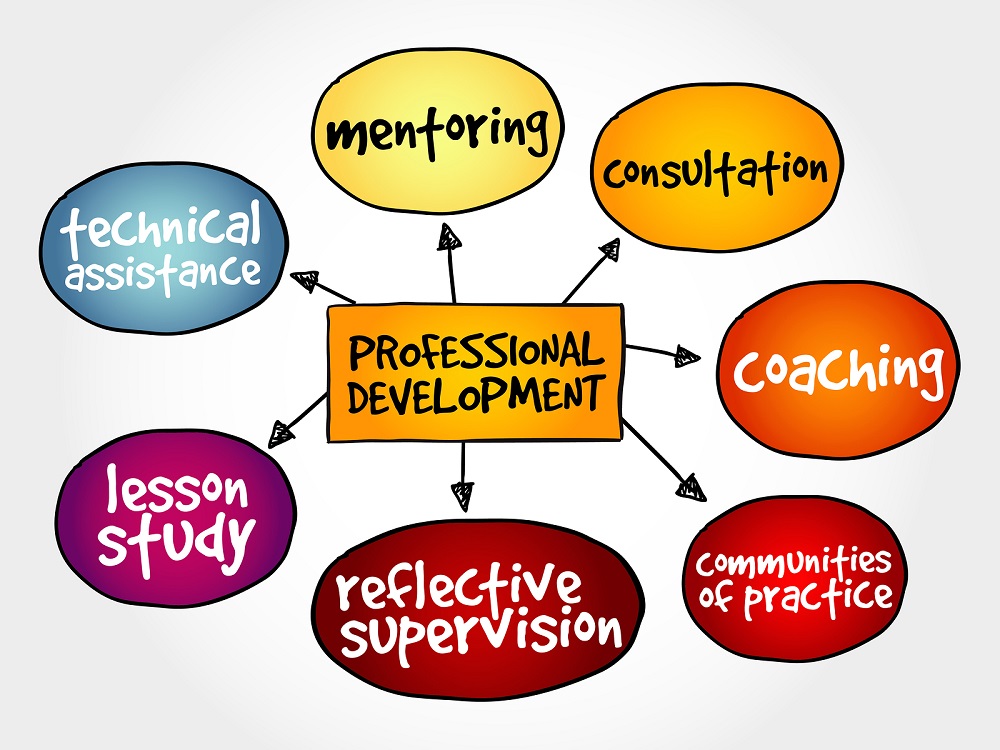
2 - As Teachers Create a Sense of Urgency for Learning with Students, How Can They Model and Maintain This Sense of Urgency for Learning Themselves?
Teachers are constantly trying to create and hold a sense of urgency with students. Run the numbers, and you see why. A school year is roughly 180 days at about six hours of instruction, which comes to 1,080 hours. A calendar year holds 8,760. Formal instruction takes up something like one-eighth of a student's year. That is not much time, and the same arithmetic applies to us.
Going stagnant gets toxic fast. You stop taking professional development, stop working with colleagues, stop picking up a book. Closing yourself off from the school and the wider profession breeds a sense of insignificance, and it can end with you quitting and failing the students on the way out.
If we believe we're lifelong learners, we have to keep finding new ways to get better. Distinguished teachers are humble enough to know which parts of their practice need work, and they know how to learn for themselves. They pursue learning that targets their weaknesses. Students go through school with academic areas that lag and soft skills that need attention, and teachers are no different. Honest self-reflection is where the development plan starts. As 5 Questions to Tackle When Reflecting on Teaching puts it:
"All teachers should establish metacognitive processes. The multitude of benefits far outweigh educators skipping or not making sure this process occurs every day. Funny as it may sound, many effective administrators find a secret hiding place, take a walk, or may even take an extended bathroom visit, in order to reflect, gather themselves, and tackle the next problem. Teachers must find time to reflect as well. Master teachers put reflection into their day in several areas."
That urgency should be visible in your conversations with colleagues and administrators, not just in your head. Keep growth goals at the front of daily observation talk. There should be visible signs that the whole school is working on professional development against matching goals: district goals, school goals, grade level goals, and individual classroom goals. What makes that structure work is when the goals get built together, folded into daily work, and fed by two-way feedback that people actually celebrate.
3 - As a Teacher Encourages Students to Serve the Community, How Can a Teacher Serve the School?

The strongest schools build a sense of community on campus and in the town around it. They run projects that teach students to give back. Teachers have to model the same thing at their own level and keep asking how they can serve the building. A positive school culture makes that easier, because more people are already stepping up and leaning in. With a strong team of teachers and leaders, the opportunities stop being scarce.
A committee that needs another member. A first-year teacher who could use a mentor. A school event nobody has volunteered to help run. Distinguished teachers spot those openings and step into them. They think about their own students' needs first, then about where they can contribute. Their own students are flourishing, which is exactly what frees them up to help. One of the greatest gifts we can give is time. You'll hear these teachers say, "I can do that today." Worth saying plainly: serving the school means contributing within your role. Covering duties that carry supervision, safety, training, or contractual requirements isn't yours to volunteer for on the spot, and your district's policy and your bargaining agreement both have something to say about it.
Teacher leaders step up on school teams, district committees, and community organizations, and they anchor their decisions to what's best for students. You'll see them asking for feedback and listening far more than they speak. Their colleagues trust them.
They also give back to the newest teachers through mentorships, shared resources, and their time. They support their colleagues' professional development, push ideas, and ask growth questions while staying humble about it. You may see them starting book clubs, running subject-area chats on X (formerly Twitter), or using social media to raise the profile of their classroom, grade level, or school.
4 - How Can a Teacher Cultivate and Grow the Professional Community Through Supporting School, District, and Even Community Projects or Initiatives?
A community, a district, a school, and even a single classroom can have a brand. It drives how people perceive you, it lives in hearts and minds rather than on paper, and it runs positive or negative depending entirely on experience. Think about what comes to mind when you hear McDonald's, Nike, Coke, or Ford. Those associations came from an ad, from the product, from a long wait in a line, or from how somebody treated you.
A school's brand can be built deliberately or left to form on its own over time. Schools are learning that if they aren't telling their own story, somebody else is telling it for them. Who would you rather have tell your story: other people, or you? Teachers have a real role in creating, sustaining, and promoting the brand of a school, a district, and a community. Distinguished teachers celebrate what their students, colleagues, and community members accomplish. They understand that celebrating the wins and reframing setbacks as growth makes the next hurdle easier to clear. If the positives are hard to find on a rough week, seven reasons to think of your community as the best is a useful reset.
6 Questions to Tackle When Communicating with Families traces the word "brand" back to a cattle brand and follows how far the meaning has traveled:
"Reliable cowhands were hard to find. When a cattle company found such a person, they treated them well. In return, a cowhand put their lives on the line to manage the cows and keep them safe and secure. They had pride in their work and they 'rode for the brand.'"
In 2017, a school district in Montana made trauma-informed classroom strategies its focus for the year. Administrators picked a set of common activities that every school would run, and speaker presentations and professional development were required for all teachers. Individual schools then built PLCs around the theme and layered their own offerings on top. Schools led book studies, brought in additional speakers, connected with community service providers, and pulled students into the work. One school used a PLC to write grade-level trauma-informed lessons for K-6 that built empathy, kindness, and tolerance. Teachers there stepped up to support the administration's goals and shared what they learned across the building. That's riding for the brand.
5 - How Can a Teacher Become a True Teacher Leader?
Teacher leaders are hard to find, but they're out there. Without them, a school stalls, or the principal ends up carrying the leadership load alone. When the work is shared, and the opportunities are cultivated, the building moves.
Charlotte Danielson's 2007 article The Many Faces of Leadership draws a line worth knowing. Formal teacher leaders hold a title: department chair, master teacher, instructional coach. They apply, they're selected, and ideally they get trained for the job. Informal teacher leaders hold no title at all. They see a problem, take it on, and their influence comes from what colleagues think of their practice rather than from any position on an org chart.
She also sorts the work by how far it reaches, which is a more useful way to figure out where to start than a list of job titles:
- Within your team or department: the closest work, and often the hardest, because it runs on credibility you've already built. Bringing a problem to your grade-level team and asking them to examine it with you counts.
- Across the school: the systems that shape every student's day, including the master schedule, grading policy, and access to electives and advanced coursework. Teachers can bring classroom-level perspective to these schoolwide systems.
- Beyond the school: district committees, state standards boards, conference presentations, speaking at a school board meeting. Work that shapes the conditions other teachers are working in.
Danielson's other point is about the conditions that let teacher leaders appear at all, and most of them belong to the administrator. Teachers need an environment where an unusual idea won't get them criticized. They need administrators who actively want more leaders rather than guarding their own turf. They need colleagues who don't cut down anyone who puts their head up. And they need real chances to learn skills that teacher preparation programs mostly skip: facilitating a meeting, analyzing data, designing assessment, keeping a group discussion on track.
That last gap is the one teachers hit first. You can be excellent in front of students and still have no training in running a room full of adults.
What Counts as Evidence for Domain 4d
Domain 4 often relies substantially on evidence gathered outside the classroom observation. That catches teachers out, because the work is real and the record of it usually isn't. How that evidence gets collected and weighed varies by district and state: some systems ask for an artifact portfolio, others draw on professional conversations, evaluation conferences, existing records, or an evaluator's ongoing knowledge of your practice. Most of what you might need already exists in your email or a shared drive. The job is collecting it before the conference, not manufacturing it after.
A practical starting list: grade-level and department meeting notes, PLC agendas, book study materials, notes from peer observations you gave or received, mentoring logs, committee rosters, records of professional development you facilitated for colleagues, and a running list of school events you turned up to that nobody required you to attend. State agencies and districts publish their own artifact guidance for this component, so check yours before you decide something doesn't count.
One caution: volume isn't the point. A thin folder of things you actually led beats a thick one of things you attended.
(Charlotte Danielson Model: Domain 4 Component d)
MORE ROCK MY EVALUATION RELATED READINGS:
- Reflecting on Teaching
- Maintaining Accurate Records
- Communicating with Families
- Improve the Participation in the Professional Community (Currently here)
- Growing and Developing Professionally
- Showing Professionalism
Frequently Asked Questions
What is Danielson component 4d?
4d is the component of the Framework for Teaching covering participating in the professional community. It sits in Domain 4, Professional Responsibilities, and looks at your relationships with colleagues, your involvement in a culture of professional inquiry, your service to the school, and your participation in school and district projects.
What's the difference between Proficient and Distinguished on this component?
More than who started something. Distinguished performance describes taking a leadership role among colleagues, contributing substantially to school and district work, and actively promoting a culture of professional inquiry. The extent and quality of the contribution count, not just its origin. Districts and states write their own instruments from the framework, so the distinction that applies to you is whatever your locally adopted rubric says.
What evidence should I collect for 4d?
Meeting agendas and notes, PLC records, book study materials, mentoring logs, committee rosters, peer observation notes, and documentation of professional development you led for other staff are all common examples. Keep a running list of voluntary school events too. Domain 4 often relies substantially on evidence gathered outside the classroom observation, though what counts and how it's collected depends on your district's evaluation system, so check its guidance first.
Does 4d only apply to teachers with a leadership title?
No. Informal teacher leaders hold no title and often carry more influence than formal ones, because their standing comes from what colleagues think of their practice. Starting a book study or bringing a problem to your team counts.
How is 4d different from 4e?
4d is about your contribution to the community around you. 4e, growing and developing professionally, is about your own practice improving. They overlap, but a book study you run for colleagues is 4d evidence while coursework you take to strengthen your content knowledge is 4e.
- 4d evidence mostly lives outside the lesson - Domain 4 often relies substantially on evidence gathered outside the classroom observation, and what counts varies by evaluation system.
- Four elements, not one - relationships with colleagues, a culture of professional inquiry, service to the school, and participation in school and district projects.
- Distinguished is about contribution, not just initiative - leadership among colleagues and substantial contribution both count, and your locally adopted rubric defines the standard.
- No title required - informal teacher leaders emerge without being selected, and their influence rests on their practice.
- Culture sets the ceiling - teachers step up where administrators make risk safe and share power rather than guard it.
Moving from Proficient to Distinguished on this component usually means picking up training that teacher preparation never covered: instructional coaching, curriculum design, assessment literacy, facilitating adults. The sponsored programs on this page include master's degrees and endorsements built for teachers who want that skill set while staying in the classroom rather than leaving it for administration. Endorsement and certification requirements vary by state, so verify eligibility with your state's educator-licensing agency before you enroll.
As a 5th grade teacher, in 2010 Jon won the Presidential Award for Elementary Math and Science Teaching (PAEMST). As a principal, his school won the 2012 Blue Ribbon Award. In 2018, he won the National Distinguished Principal Award (NDP). In 2019 he won the National No Kid Hungry Breakfast Hero Award.
Jon is the author of three guides published on teacher.org: An Educator's Guide to Combat Bullying & Bully Prevention; Teacher Evaluation: A Transition Guide to Exemplary Performance; and You are the Wild Card: Infusing Fun Back into Curriculum. He has authored a children's picture book that was released January 2019 titled Benjamin’s Visit to Principal Reads Office…again! (available at www.archwaypublishing.com)
- Learning How to Say No and Set Boundaries with Parents - November 21, 2022
- How to Implement a Check-In, Check-Out (CICO) Behavior System - September 26, 2022
- Teacher Core Values: 7 Strategies for Living Your Code - August 15, 2022