What Teaching Was Like During the Pandemic: Three Teachers on 2020-21

Teaching during the pandemic meant improvising with almost no notice. Three teachers describe last-minute policy changes, classes taught to muted black squares, and public goodwill that evaporated by fall. They also found gains worth keeping: flexible scheduling helped some students, and masking cut the sick days teachers had long accepted.


Teaching was one of the fields hardest hit by the pandemic in the spring of 2020, and it was still reeling and trying to find its footing when the new school year began in the fall. Conflicting priorities and the ideological push and pull at the state and district levels were one thing, and at least that was left to administration to figure out. The reverberations of that chaos ran all the way down to where the rubber meets the road, and the job of managing the day-to-day challenges fell squarely on teachers.
I initially thought I would put together a click-baity list where I could have fun riffing on our favorite things to complain about. But when I sat down and talked with colleagues, that approach started to feel like a cheap way of processing what we'd all been through. I saw in their faces and felt in their words that unlikely blend of total exasperation and unwavering resilience that only teachers are capable of. So instead I pulled the insights that mattered out of those conversations with my friends and fellow teachers.
It was a year to remember, for all the wrong reasons and for a few good ones. Here's what the teachers I talked to had to say about what they faced in 2020-21, and what they hoped would carry forward.
Policy Changes Landed at the Last Minute
Procedural wrangling between state government, teachers' unions and district leadership meant that the final decision on just about everything came in at the last minute.
Teachers weren't included in most of the conversations about exactly how the school year would roll out. For the most part, we had a good sense of whether or not schools would be open for in-person classes based on directives being handed down at the state level, but there were still many questions left unanswered.
We were left scratching our heads about scheduling and hours, how we would serve students who had limited access to high-speed internet and devices, and how standards would be modified and progress tracked in the brave new world of online learning.
Nobody Could Plan a Summer
Ashley, a high school English teacher in the Dallas-Fort Worth area, described a sense of powerlessness in being unable to do one of the things teachers do best: plan.
"Normally I can use the summer to prepare, and tweak what I did last year. But because we didn't know what it was going to look like, there was little I could do over the summer."
Coming into the school year last fall, many teachers said they were in the dark for half the summer, then had to scramble at the tail end and adjust on the fly.
Decisions Fell Down the Chain
Andrew, a high school English teacher in St. Paul, Minnesota, had this to say.
"Like everything with the pandemic, failure is top-down. Our federal government screwed up the pandemic [response], then it was on to each state. States did the best they could, but there was a lot of fumbling. The same thing happened with education."
States pushed decision-making off onto districts, which in turn pushed it onto the schools. Next, many districts went back and added mandates that teachers were required to implement and adhere to. All with no prep time and very few resources.
Teaching to a Screen Full of Black Squares
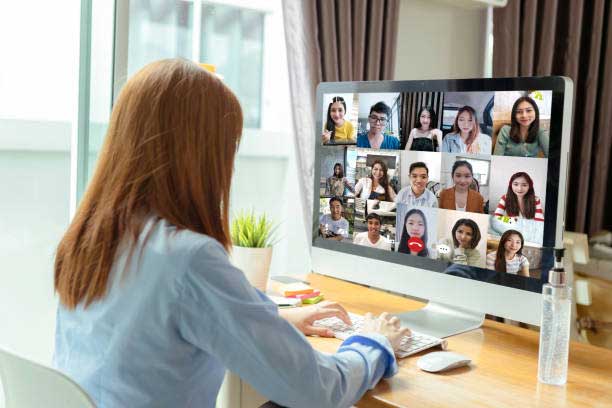
No matter how many times you ask students to turn their cameras on in a virtual classroom, you can't make them do it, and you can't spend the whole class period trying to make it happen. It was simply outside of our control. As a result, many teachers found themselves lecturing to a sea of muted black squares.
Jessi, who lives in Eugene, Oregon, and teaches K-12 art, English, and humanities in a rural district outside the city, acknowledges that she is lucky to be in a small district where she already knows most of her students. She wasn't bashful about reminding them that she's a person too, and that she expected some participation out of them.
Reflecting back on the experience, she said something that I'm sure we can all relate to.
"It's hell to teach to a bunch of black squares. You don't even know if they're in the room anymore."
The Cameras Were Off for Real Reasons
But she acknowledges that many students have a good reason for keeping their cameras off. In rural and remote areas, even the hotspots the schools provide didn't work very well. "Some people's internet crashes if they try to also do video," she says.
And then of course, more students start using that excuse. Rather than assume her students are lying, Jessi chose to acknowledge that they've turned their cameras off for a reason. Self-consciousness is a big one among middle and high school students.
"Eventually I just stopped getting after them," she says. "Even if they're taking advantage of the accommodations, they're doing so for a pretty good reason."
Ashley, in Dallas-Fort Worth, summed it up in a way that likely sounds all too familiar.
"Speaking into a void and talking to yourself is very awkward, and it doesn't really feel like teaching. It's harder to see which kids are having a hard time, and there's only so much you can do. They can just disappear."
Public Goodwill Toward Teachers Ran Out Fast
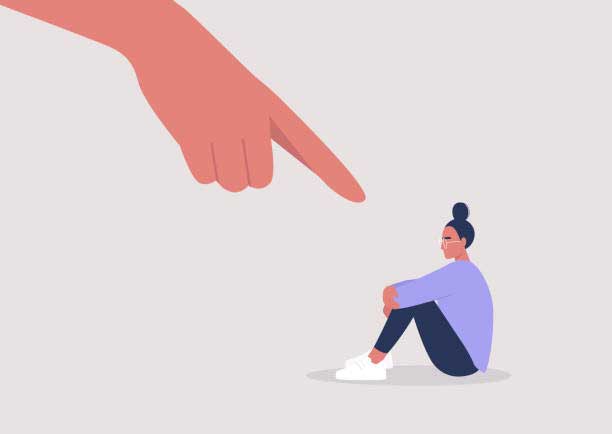
When the pandemic first hit in the spring of 2020 and we were all thrust into the world of virtual learning, many parents expressed their admiration and gratitude for teachers after getting a first-hand look at how difficult their jobs are.
But according to Ashley, that didn't last long.
"That dried up real quick. We have a lot of people who don't care very much about the lives of teachers. They see us as selfish if we don't want to risk our lives."
She adds that a lot of parents feel that teachers are glorified babysitters who need to get back in the classroom and do their jobs.
"I'm a parent, I understand the need for childcare, but the flippant attitude toward our lives has been really grating. Especially after last spring when they were calling us heroes."
Some Teachers Stopped Waiting It Out
Ashley sees a lot of parents saying essentially, "Just go back to in-person teaching, or quit." In her experience, plenty of teachers have done exactly that. She describes her own district as short-handed, without enough substitutes to fill the gaps.
Andrew knows several teachers who are stepping away, and others who are strongly considering it. "The whispers have turned into conversations," he says.
"I don't stay in social media groups that are hostile to teachers," Jessi says, but she saw enough to get the gist. ‘Just go back to school, do your jobs,' is the common sentiment.
"We are doing our jobs: teaching from the classroom or from home," she says. But some parents seem to feel that having to be more involved in their kid's learning because it's taking place at home means they're doing the teacher's job for them.
Students Carried Losses Into the Classroom
Kids have lost friends, family, and classmates, here and abroad. Their parents have lost jobs, and many families faced eviction. As a country, we were all sort of feeling this menacing sense of perpetual stress this past year. Many kids are caring for younger siblings or working part-time, or even full-time.
"You need certain things in order to learn," Andrew says. "For example, you can't learn if you're hungry. You can't learn if you don't know where your shelter is." Housing stability for students is a huge problem. "This is already well-known in education."
As Andrew put it:
"You need to solve the basic needs before starting on educational needs. And safety is a big part of that. People need to feel safe, and right now they're not."
Andrew, teaching in St. Paul near the epicenter of the protests over the murder of George Floyd and the killing of Daunte Wright that spring, had plenty of students who marched in the streets. He touches on how the events of the past year affected many of his students.
"We're having conversations about safety and what safety means in our community. For example, some of my black students feel unsafe in the community. Last year we had police officers in our school, this year we don't. In our classroom, we try to make it a very safe and welcoming environment, but we don't live just in the classroom. We have this whole community around us. And the community includes not just this metro area, where two people have been murdered by the police in the last year, but the whole country."
The Argument Over Lost Learning
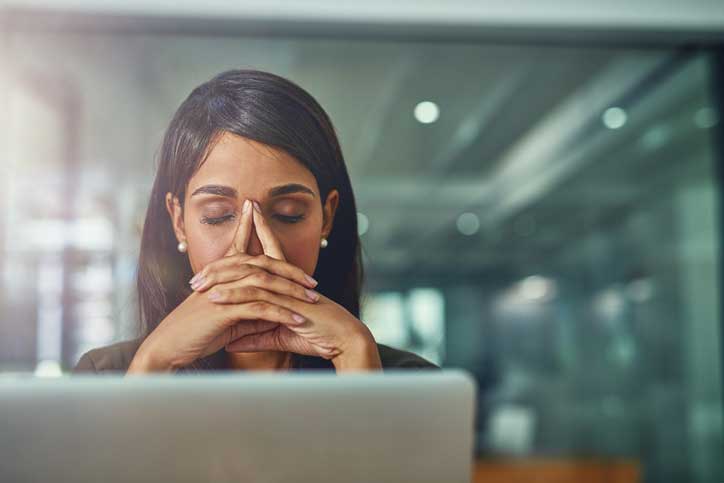
One of the biggest priorities for people who don't work directly with children is the concept of lost learning. To be sure, most kids have learned less this year compared to typical school years. But Jessi thinks it's ridiculous to hold kids to pre-pandemic standards. "Let's be honest, most kids are back in school, and they'll continue learning," Jessi says. "If we try to make up for ‘lost learning,' it's going to slow everything down." Jessi went on to say:
"We've had a very traumatic year. These kids are going through a literal plague. They've learned a lot of other things: Online study, communicating in different settings and situations, how to have patience with their teachers and each other, how to survive. There's been learning, it just hasn't been rote classroom learning."
Rules and Schedules Kept Changing
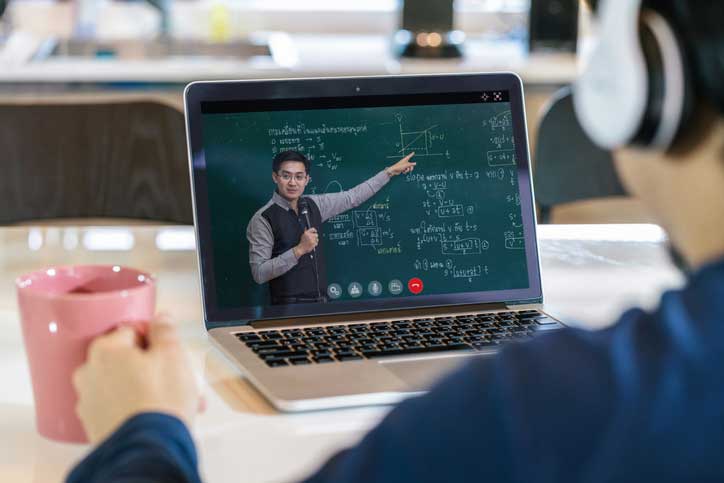
From tech platforms to schedules to cohorts to you-name-it, education was in a constant and chaotic state of flux all year. It led to a lot of anxiety and confusion, which is not conducive to either teaching or learning.
"It's been a very hard year, the most exhausting year," Ashley says, though she hesitates to call it the worst ever. The lack of time to prep in spring 2020, the uncertainty of summer, it all led to a lot of anxiety.
Ashley and Jessi's districts required that teachers commute to the school and teach from an empty classroom, claiming that it would help foster a sense of normalcy for the kids. It's still a seemingly unnecessary hoop to jump through for teachers who commute hours a day like Jessi does. For those with small children, it was a major hassle and expense to try to figure out childcare.
As Andrew put it:
"The whole year has been pushing square pegs into round holes. One of the frustrations is that it's clear nobody had a plan for this. Every quarter was something completely new. Children operate best with consistency, and this entire year was the complete opposite of consistency. It just hasn't been working."
What the Year Actually Taught Us
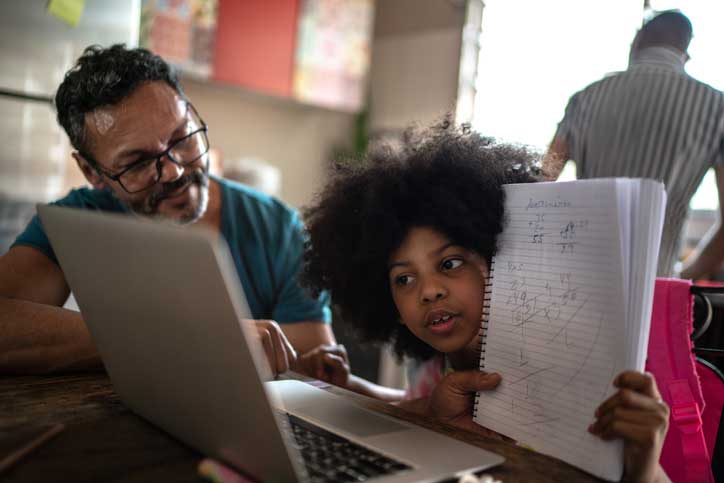
Ashley, Jessi and Andrew all seemed to see an upside to some of the things that were foisted upon us during COVID-19. Many students have thrived. Flexibility in scheduling has allowed them to get more sleep, work ahead or catch up. Students who are distracted by the social element of school have found renewed focus in a more solitary environment.
Some Students Did Better Away From the Building
In general, self-guided students have done well. Some neurodivergent kids have also found that a quiet environment helped them focus better. Students with social anxiety, some students who are especially withdrawn, or who don't feel like they fit in for whatever reason have all had a better year than normal.
"Students who need that social learning have struggled," Andrew says. He adds that he's gained new skills and tools by being forced to figure out how to teach remotely. Texting students from Google Chat rather than from a personal phone, for example, helps maintain appropriate boundaries, while still reaching kids where they spend most of their time-their phones.
Old Assumptions Got Questioned
A silver lining Jessi notices is that the obvious flaws in some concepts are coming to a head. "Is perfect attendance really the be-all, end-all of a successful school year?" she asks. Many say no, even though district goals don't yet reflect this reality. "If you want productivity, maybe don't work people like robots until they dig their own graves."
Jessi also hopes that we'll carry forward new protocols around health and prevention, wearing masks when it makes good sense to do so, and changing the norms around coming to school and work while sick. Jessi credits that change entirely to masking.
"This is the first year in nearly 5 years of teaching that I haven't been terribly sick for about a third of the year. Even coming back to school, I haven't been sick."
"Do I want to go back to a normal school year where nobody wears masks and kids come to school sick? I just get sick, and I'm barely surviving, let alone thriving." Jessi loves being a teacher, "but is it worth my actual physical health? I don't know."
Remote Tools Were Worth Keeping
Despite all the challenges and limitations of virtual learning, Ashley remains positive that the bugs will eventually be worked out and sees the potential for it to become an effective medium for teaching.
"I do think that one good thing that's come from this is we're going to have more of a virtual option going forward. Some kids have found that a virtual option works for them. I found our virtual platform to be an awesome tool that I'll continue to use. I've learned a lot."
Ashley adds that children are getting a head start learning to use tools that they may need to use in the workplace. "We had to come up with lots of creative solutions to problems we never had before," she says, "such as virtual collaboration."
What These Teachers Hoped Would Carry Forward
All three thought the year would leave something useful behind.
As systems adjust to new realities, we'll gain a measure of familiarity and control. Much of the panic of the pandemic stems from fear of the unfamiliar and the inconsistent. As for who's to blame for some of the breakdowns that occurred this year?
"It's a problem, but it's nobody's fault," Ashley says. Everyone has done the best they can, and "you can't be mad at a disease."
"The decisions aren't ideal," says Andrew, "But also, I don't have any answers either." His best guess? Amend structured curriculum, and provide optional, low-pressure enrichment activities. Focus on connection, reinforcing core concepts, and providing resources for families.
"If we've learned one thing, it's that we can't predict the future," Jessi says. She's hopeful that we'll learn real lessons from this year. "The inequities were already there, and the pandemic just highlighted and brought them forward."
So, was it really the worst year ever? Sure, maybe. Ashley hesitated to call it the worst ever even while she was living through it. What all three of them came back to is that they made it to the other side, and that some of what the year forced into the open was worth carrying forward.
Frequently Asked Questions
What was teaching like during the pandemic?
It meant working without the lead time teachers normally rely on. Schedules, platforms, and cohort rules changed by the quarter; decisions arrived after states pushed them to districts and districts pushed them to schools, and much of the improvising landed on individual teachers with no prep time and few resources.
Why did so many students keep their cameras off?
Bandwidth was one reason. Jessi found that school-issued hotspots in rural areas often crashed when students added video. Self-consciousness was another, especially in middle and high school. Teachers could ask, but they couldn't enforce it, and chasing it burned class time that was already short.
Was 2020-21 harder than the spring 2020 shutdown?
The three teachers here describe 2020-21 as the harder year, and one study points the same way. A Kansas State University research brief on a single rural Kansas district found that nine of the ten teachers interviewed there named 2020-21 the most disruptive of four pandemic school years, citing how much was still unknown heading into it. Ten teachers in one district is not a national picture. But it matches what Ashley, Andrew and Jessi describe: the spring 2020 closure was abrupt, while 2020-21 was a full year of rules that kept moving.
Did anything good come out of pandemic teaching?
All three teachers named something. Flexible scheduling helped students who needed more sleep or wanted to work ahead. Quieter settings helped some neurodivergent students and students with social anxiety. Ashley planned to keep using the virtual platform, and Jessi went most of a year without getting sick for the first time in nearly five years of teaching.
- Decisions arrived late - states deferred to districts and districts to schools, so teachers learned the rules for a term after the term had effectively started.
- Engagement became invisible - with cameras off, teachers lost the cues they use to spot a struggling student, and some students simply dropped out of view.
- Basic needs came before content - Andrew's point that a hungry or unhoused student can't learn shaped what these teachers prioritized over curriculum coverage.
- Goodwill was short-lived - the public admiration of spring 2020 gave way by fall to pressure to reopen, and Ashley reported her own district losing teachers faster than it could cover the gaps with substitutes.
- Some changes were worth keeping - virtual options for students they suited, scheduling flexibility, and norms about staying home sick.
A lot of teachers came out of these years thinking hard about what came next, whether that meant a master's, an added endorsement, or a move out of the classroom entirely. The sponsored program listings on this page are a starting point for comparing graduate and endorsement options.
As a 5th grade teacher, in 2010 Jon won the Presidential Award for Elementary Math and Science Teaching (PAEMST). As a principal, his school won the 2012 Blue Ribbon Award. In 2018, he won the National Distinguished Principal Award (NDP). In 2019 he won the National No Kid Hungry Breakfast Hero Award.
Jon is the author of three guides published on teacher.org: An Educator's Guide to Combat Bullying & Bully Prevention; Teacher Evaluation: A Transition Guide to Exemplary Performance; and You are the Wild Card: Infusing Fun Back into Curriculum. He has authored a children's picture book that was released January 2019 titled Benjamin’s Visit to Principal Reads Office…again! (available at www.archwaypublishing.com)
- Learning How to Say No and Set Boundaries with Parents - November 21, 2022
- How to Implement a Check-In, Check-Out (CICO) Behavior System - September 26, 2022
- Teacher Core Values: 7 Strategies for Living Your Code - August 15, 2022