
8 Reasons Why Blogging Can Support Your Growth as an Educator


The benefits of blogging for teachers show up in three places: your own writing gets better, your reflection gets sharper, and your students see an adult who revises instead of quitting. You don't need a platform or an audience to start. A paragraph a day, three times a week, is enough.


"You don't start out writing good stuff. You start out writing crap and thinking it's good stuff, and then gradually you get better at it. That's why I say one of the most valuable traits is persistence."
- Octavia E. Butler
We want our students to be good writers. We want them to be able to communicate clearly and effectively by using their words. Why does it have to be so painful for many of our students?
My question for you is: Is it painful for you as an educator to write?
If the answer is no, you must start blogging. If the answer is yes, you must practice what you preach…and begin writing anyway. Whatever your answer is, you must start writing.
If we can find ways to be writers, we can better instill this trait in our students. And a bonus…writing can heal, encourage, strengthen, empower, and grow you as an educator.
Too many times, educators will not start writing because they believe it's going to take too much time. They think about the writing process: the editing, the revising, the rough draft, and the final copy of the product. This all sounds daunting as we begin writing.
LET ME TELL YOU…it doesn't have to be like that. The length of your writing, the format, and the topic you chose are all up to you. Start with a paragraph a day or even a short reflection from reading a quote.
Personally, I started with WordPress. WordPress.com offers a free plan for starting a blog, and you can create your own backgrounds while the length and format of your writing is totally free for you to decide. I then was lucky enough to apply to an open position from an education website that pays me to blog - Teacher.org!
I started writing weekly blogs, was encouraged to create a bully prevention guide, and everything took off from there. As my job responsibilities have increased, I have only been able to blog one to two times a month, but I hope to get back to a weekly submission.
I believe all educators should be writing…whether it's a paragraph or an ongoing series of articles. Get the words flowing! My dad is an avid reader, not much of a writer, but his favorite author is Louis L'Amour. In fact, he has read all his books. I found a great quote from L'Amour that connects to writers getting their words flowing:
"Start writing, no matter what. The water does not flow until the faucet is turned on."
- Louis L'Amour
Many educators are already writing…they may not even realize it! It may not be the best of writing, but they are writing posts on Facebook, tweeting their own thoughts on Twitter, and more.
Formalizing all your writing into one location can be powerful for so many reasons. Here are eight reasons why you should start blogging to grow as an educator.
1 - Model Writing for Others
Growing up in a family where my dad was a successful businessman, my mom was an elementary teacher, and my sister was in advanced placement English all throughout her high school experience, one would think I might have some writing genes! Nope!
In fact, I grew up hating writing. I hated to push a pencil or type. My thoughts came out all jumbled, and my English teacher worked and worked with me. I even learned how to diagram sentences like a madman, though I couldn't form sentences in a logical manner. I would leave out important information, jump from one event to another with no linear procession, and switch between first person and third person routinely…actually not much different from now, but at least I can go back and edit and revise.
What was I doing teaching writing to middle school students? I moved from teaching elementary 5th grade to teaching three 90-minute blocks of English Language Arts (ELA) in a middle school. I was lucky enough to loop with many of the same students I taught in fifth grade. I found I had to switch my mindset on ELA…I had to fake loving it at first!
I began doing more and more writing for my master's degree at the same time as I was teaching 6th grade…I chose educational leadership. At first, the writing was quite difficult, and I noticed my writing was very similar to my own students. The more I wrote, the more the words flowed easily. I began doing some creative writing, even teaching a breakout club at the middle school: stand-up comedy. We would watch some comedians do a stand-up routine, then we would write our own jokes and practice standing up and saying them in front of the class. This was a disaster at first, but the students in this club helped me see that writing could actually be fun.
I then garnered a principal position in a small rural school in north-central Montana. I continued writing newsletters and correspondence for the parents and community. In addition, I wrote articles for the local Choteau Acantha pertaining to our school.
At the same time, Myspace was just becoming popular among students. Several of them started communicating using this platform. Fun fact: my first suspension of a student was for bully behavior on Myspace back in 2005. Personally, I didn't catch on with this new technology.
From there, I got another principal position in a larger school district. I continued writing and creating assignments for students. Many times I would complete the writing assignment with them to model how much I loved writing, as well as the thought process that went into the many steps of becoming a better writer.
Finally, in 2016, I started my own WordPress blog. I started with only a paragraph or two weekly about topics that connected to my education experience.
There is power in modeling writing for others, even if you do not think you are a very good writer. You must start and keep writing. Students will see that it is normal to make mistakes, have perseverance, and continue to revise your writing. Anyone can be a writer…even this sports-minded, writing-hater turned prosperous old man! I love this quote from Jodi Picoult that quickly sums up why you must start writing.
"You can always edit a bad page. You can't edit a blank page."
- Jodi Picoult
2 - Grow As a Writer
 Modeling writing can support others in their writing process. Others get to see how you choose words and put them together into some type of coherent message. You can actually see the growth of a writer, because words are black and white and visible!
Likewise, as a writer you can check out your own work and see the growth. My first blogs were crap, and you can see much of those right here in this blog roll if you go back to 2017. Some of them received over a couple thousand views, but nothing like my last article that just broke 1,000 shares in under a week!
The style, format, diction, and figurative language you chose to use says a lot about who you are as a person. Technical writing may be boring for you, and having to follow a strict APA or MLA format might make you gag. Creative writing and personal narrative have exploded on social media as people tend to like real stories about real people…much the same phenomenon we see with all the reality TV shows.
For most of us, we remember thinking, "Why would people be interested in watching real life (reality) television shows?" Now, scrolling through the television guide, you will find a plethora of reality shows that cover almost every aspect of life, from decorating cupcakes to being Naked and Afraid in the wild.
Pick a format and continue writing. Change it at any point, but continue to write and be creative. As for me, you can call me the "list man." One of the tips and tricks I picked up from my last editor was the fact that people like looking at articles if it states something similar to this: "8 Tips to Regain Student Culture." People quickly want to see if what they were thinking would be on the list. I found myself doing the same thing. I wanted one more tool, strategy, and idea from these lists every time I click on the link. I have now done over 80 blog articles that all contain lists…much like this article!
So, you ask, how does this lead to personal growth? I am always trying to connect the not-so-obvious to my personal educational experience. My last blog was about the benefits of teaching in Montana…I connected my favorite breweries, my favorite steak joints, and my favorite places to visit. This all creates imagery for the reader to place themselves somewhere in Montana doing the same thing! My growth area has been to connect with the reader in new and creative ways. In addition, I am still working on being more concise with my message, as well as telling a story that educators find relatable.
3 - Stronger Reflection
 Reading back over my own articles and blogs sometimes is arduous. I hate thinking that I could have taken more time to write and explain myself. I get into this reflection mode where I continue to revise and edit, revise and edit, and I finally have to say to myself… "hit send!"
Reflection of the writing process can be a powerful tool in getting your words on paper and connecting a reader to the text. I read the articles out loud for readability…every time. Ultimately, I'd love to be considered to be as good as the people I am around and the books that I have read.
Yes, the books you read can be used for stronger reflection. The more difficult books you read and understand, the better you can articulate your own words in your writing. This is another area I could definitely improve upon. I should be reading more…and reading books that are non-educational. I tend to get stuck reading many educational books that interest me, and I cannot put them down.
There is another use of writing, the power of self-reflection, and not just the writing process. Educators make many decisions throughout the school day.
The ability to reflect on life, including your personal and work life, can be done so in writing. I cannot count how many articles I have started, but have chosen not to publish. For example, I recently wrote an article about how my divorce has impacted parts of my work life. Powerful, but I am not ready to share it. I do feel so much better getting my thoughts out and reflecting on why I am writing what I am writing. This metacognitive process can be a powerful growth strategy for educators.
4 - Connect to your Teaching Expertise
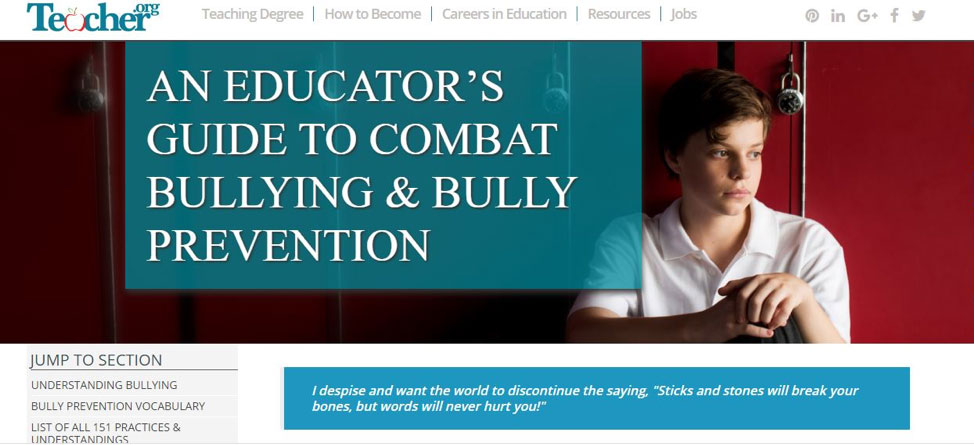
My favorite topics to write about are school culture, promoting public education, bully prevention, and supporting teachers transitioning from good to great!
I have written countless articles in each of these areas and have even written two guides for others to use and follow. Both guides have over 20,000+ views in the past three to four years. That tells me someone is clicking on them…whether the articles are very good or not, I leave that up to you to decide!
Writing about what you know and what you teach can be very exhilarating. You get to become the expert in room 9. You can write about the content and how the students interact with the content. You can even create your own writing assignments connected to the content. Then try writing about your students' writing; it can be very interesting to others wanting to do what you are doing in your classroom.
I love walking down the hallways of my school. I can find 1,000's of topics to write about that could be interesting to others. There is a story hidden in every student, hidden in every corner of the school, and connected to something spectacular in order to create a vivid story. Take a walk with your notebook and start writing down topics that you see in your school: teacher effectiveness, strong content, engagement ideas, hallway procedures, school culture, bully behaviors, students showing positive growth mindset, and so much more.
That reminds me of a great quote from Orson Scott,
Everybody walks past a thousand story ideas every day. The good writers are the ones who see five or six of them. Most people don't see any.
- Orson Scott
5 - Set Goals
 Goal setting is probably one of the most powerful strategies you can use with your students. Setting S.M.A.R.T goals can be fun and useful. A SMART goal must include the following attributes:
- S - Specific
- M - Measurable
- A - Achievable
- R - Relevant
- T - Time-bound
Putting your SMART goals into writing makes them real. When you set your goals in writing, posting them where they can be visible for you is important. Too many times, people create goals and hide them in their emails or work files. Instead, put them on your wall or your door so they hit you in the face each and every day.
Goal setting shows up in John Hattie's research synthesis as one of the influences he associates with gains in student achievement. Worth knowing how to read that: Hattie's rankings are one influential synthesis of existing studies rather than settled proof; his effect-size methodology has drawn substantive criticism, and there is no single number above which a strategy becomes reliably effective. Treat it as a reason to look into goal setting, not as a measured guarantee, and check what your district's own instructional framework asks of you. You can get your students to achieve enormous goals.
In addition, the act of goal setting for your own writing can be part of these SMART goals. Start with an easy goal…try something similar to this:
- S - I will write a blog post.
- M - I will write one paragraph.
- A - One paragraph three times a week is achievable in my schedule.
- R - I will write about a topic from the classroom that is relevant to me, and possibly others.
- T - I will post the paragraph the next month.
When you combine this information into a SMART goal, it can be stated as the following: "I will write a one-paragraph blog post on my classroom three times per week for the next month." At the end of the month, you may have 12-15 paragraphs of writing from your classroom.
What could you change in your life the next time you set your SMART goal?
Personally, my goal when I started writing for Teacher.org was to write one article per week. I did not hit my goal; in fact, I only wrote 23 articles in 52 weeks last year. This year, I changed my goal to one per month. I have exceeded this goal as I have been doing two per month currently!
6 - Heal, Rejuvenate, and Empower
 As discussed in #3 above, writing can be used to heal, rejuvenate, and empower others, as well as yourself. It seems when I turn on the news on television, I see people fighting, breaking laws, and I see it is evident that there is a huge void of kindness. Why not use your writing powers for good?
I have poured my heart into articles about school culture. I feel I have done my job if just one person feels healed, rejuvenated, or empowered. I believe in Dr. Bill Daggett's mantra, "Culture trumps strategy." The way I read that phrase, a school's culture shapes student success more than any single instructional strategy or textbook does. That is my interpretation of a mantra I find useful, not a measured finding.
How can you heal someone? Showing compassion and empathy with your writing might seem ridiculous, but I believe if we all spent more time healing and less time attacking, the world would be a better place. Bringing people together, getting them to see something from a different perspective, and connecting people with resources is a way of healing that can be done with your writing. Start easy by first researching and writing about what you know.
How can you rejuvenate someone? The ability to give advice from what you have learned is only good if someone actually reads your stuff. Too many times I feel like my writing goes unread, yet I hope that someone picks it up and gets something out of it! You can use your words to rejuvenate someone. One example is a second-grade teacher in my building who has been doing room transformations, inspired by Hope and Wade King's book, The Wild Card, and the "Get Your Teach On" mantra. She is continually looking for new ways to transform education for her students by making it engaging and full of surprises! She has written about these transformations and had several shares and views on Teacher.org/daily. Rejuvenating yourself through research and taking a chance can inspire you to love your job differently and bring a new level of satisfaction.
How can you empower others? Several of my last blogs have been about the need to fund and fight for public education in America and specifically in my own state and school district. Every time I talk about the problems I see and foresee coming, I make sure to include solutions. Nobody wants to read about someone who points out all the problems without fixes! My goal is to have my solutions discussed, and if just one person implements them, I feel I have attained my goal. Nothing is more empowering than offering solutions and giving people a voice. When we empower people through our words, it creates a sense of pride that we can bring people together…something this world needs more of for sure…again, watch the nightly news if you do not believe me!
7 - Write a Book
 The All-American dream is to one day write your novel. It is very hard to pick up a pen or to start typing the novel when you have not written very much. In fact, the few authors who get published and whose books are an immediate success are the exception. The author of Where the Crawdads Sing, Delia Owens, was 70 years young when her book was published. Putnam's initial print run was modest, roughly 28,000 copies, and the novel had sold more than 18 million by April 2023. It is never too late to start.
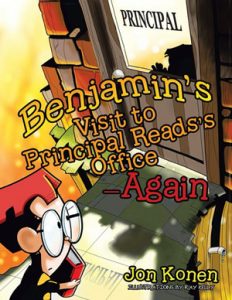
Personally, I have written a children's book but have had little time to market it. I chose to self-publish and pay for marketing, which hasn't turned into much… yet. I love my book, not just the words in it, but the illustrations especially. Ray Kelly, the illustrator, did a remarkable job with the story and brought the words to life.
Start writing a blog…it is a great way to build content, the content for your book. Choose something you know well or create a theme for your writing and get your content built up. It is much easier to get your book written when you already have parts of it penned!
All this can be done if you just start writing. Write about what you know. Write about what you're passionate about. Write about what you do not like, but make sure to give ideas on how to change it! The key is to get writing!
This reminds me of a great quote from Sylvia Plath,
"And by the way, everything in life is writable about if you have the outgoing guts to do it, and the imagination to improvise. The worst enemy to creativity is self-doubt."
- Sylvia Plath
8 - Share the Funny, Sad, and Deeply Emotional Educational Stories
 As an educator, you have so much you can write about that walks through your doors each and every day. You have the kids that make you laugh, the kids who make you cry, and the stories about your kids' home lives that leave you reeling with secondary trauma.
What makes you happy with your students, colleagues, parents, or community? There are so many feel-good stories out there; you must uncover them. If we do not start telling these stories more, then people we may not like are going to tell the story for us…and possibly inaccurately. Before you publish anything drawn from a real student, work out what actually applies to you: FERPA, your state's student-privacy statutes, your district's policies on publication and staff communication, your own employment and confidentiality obligations, and whatever consent or approval procedure your district requires. Changing a name is a start, not de-identification. A grade level, a program placement, a family circumstance, or one distinctive incident can identify a child inside a small community with the name stripped out. If you cannot remove enough detail to make a story truly unidentifiable, do not publish it.
When writing about your student's stories, understand your audience could be their parents. You must understand the impact your words can have on a family, school, and even community. In a recent interview process I went through last year, a constituent came up to me and asked me about a politically charged article I had written a year prior. This told me that that person went through all 80 articles to find dirt on me. Guess who went back through all the articles…me! I have made sure to write from a point of view that is powerful and empowering for the masses, and not attacking any one individual or small group of identifiable people.
A good idea is to run your stories by your administrator before publishing. I know your administrator does not want more work, but after you get the hang of writing without identifying anyone, your writing can become more powerful to you and others. My school district asked that I not use the district's name, nor the name of my elementary school, of which I am a principal. When you look at my 80+ blog posts, you will not see my district or school stated unless I am quoting someone or something and have permission.
Frequently Asked Questions
Are the benefits of blogging for teachers worth the time it takes?
For most teachers, the time cost is smaller than expected, because the useful unit is a paragraph rather than a finished essay. What you get back is sharper reflection on your own practice, a written record you can look at months later, and material you already have if you ever want to write something longer. The teachers who quit are usually the ones who started with a weekly deadline instead of a paragraph.
How do I start a teacher blog?
Pick a free platform and publish something short. WordPress, Blogger, and Substack all let you start without paying anything or choosing a design first. The harder part is deciding what you'll write about often enough to keep going, so most teachers do better narrowing to one thing they already think about daily: a grade band, a subject, behavior, or school culture. Another post in this author's series, Zugzwang Zigzag: An Educator's Nightmare, builds an entire essay around one borrowed chess term.
How often should a teacher blog to see any benefit?
Less often than most people assume. A paragraph three times a week builds the habit, and a finished post once or twice a month is a sustainable pace for someone teaching full days. Consistency matters more than volume, because the reflection benefit comes from returning to your own writing over months, not from publishing frequently.
Can teachers write about their students?
Only within what the law and your district allow. FERPA governs personally identifiable information from a student's education records, and state privacy statutes, district publication policy, and your own employment and confidentiality obligations can all apply on top of it. Removing a name is a starting point rather than de-identification, because a grade level, a program placement, or a single distinctive detail can still identify a child. Administrator review does not by itself authorize disclosure, so find out what written approvals or parental consent your district requires before you publish.
What if I'm not a good writer?
That's the argument for starting, not against it. Writing improves with volume, and the version of you that publishes badly in month one is what makes the version in month twelve possible. It also gives students something they rarely see: an adult who drafts something weak, revises it, and keeps going.
- Start smaller than you think - A paragraph three times a week is a real starting point, and the format, length, and topic are entirely yours to choose.
- The reflection is the payoff - Rereading your own writing months later is where the professional growth shows up, more than in any single post.
- Write from what you already know - School culture, behavior, your content area, and the hallway you walk every day are a deeper well of material than any list of blog prompts.
- Protect student privacy first - Follow district privacy and publication policies and remove personally identifiable student information. Obtain any required approvals or consent before publishing.
- Modeling matters more than polish - Students who watch a teacher draft, revise, and publish learn that revision is normal rather than evidence of failure.
Writing your way through a blog post and writing your way toward a graduate degree are two different projects, and plenty of teachers end up wanting both. If a master's in educational leadership, curriculum, or literacy is the direction you're heading, the sponsored programs on this page include part-time and online formats built for people already working full days in a school. If you're pursuing a credential or endorsement, verify that the program meets the requirements in the state where you intend to work.
As a 5th grade teacher, in 2010 Jon won the Presidential Award for Elementary Math and Science Teaching (PAEMST). As a principal, his school won the 2012 Blue Ribbon Award. In 2018, he won the National Distinguished Principal Award (NDP). In 2019 he won the National No Kid Hungry Breakfast Hero Award.
Jon is the author of three guides published on teacher.org: An Educator's Guide to Combat Bullying & Bully Prevention; Teacher Evaluation: A Transition Guide to Exemplary Performance; and You are the Wild Card: Infusing Fun Back into Curriculum. He has authored a children's picture book that was released January 2019 titled Benjamin’s Visit to Principal Reads Office…again! (available at www.archwaypublishing.com)
- Learning How to Say No and Set Boundaries with Parents - November 21, 2022
- How to Implement a Check-In, Check-Out (CICO) Behavior System - September 26, 2022
- Teacher Core Values: 7 Strategies for Living Your Code - August 15, 2022