
How to Build Positive Relationships with Students: 10 Strategies

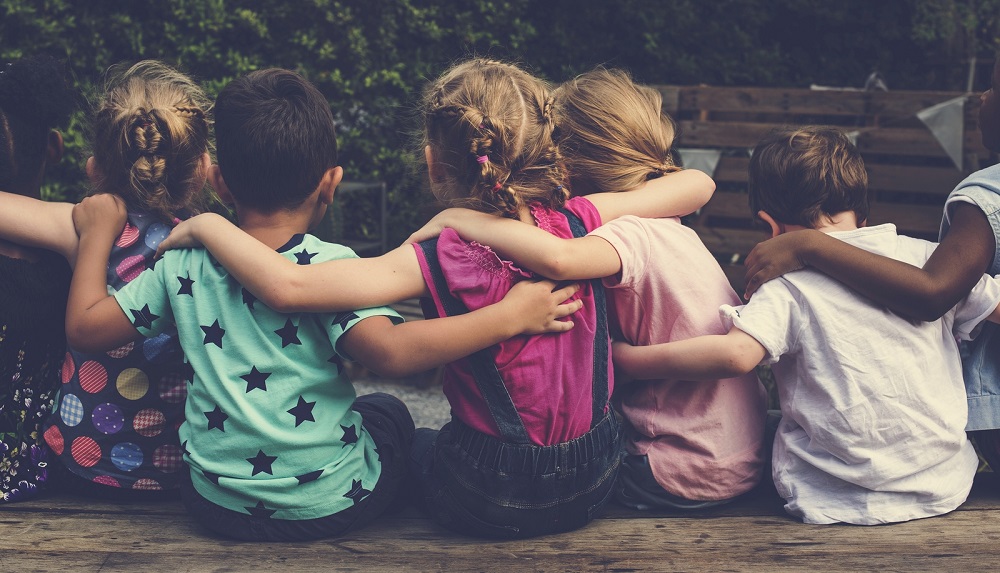
Building positive relationships with students comes down to small, consistent actions: greet them daily, follow through on your word, stay consistent, and actually listen when they talk. This matters most for kids facing adversity, since a stable, trusted adult relationship is a well-supported protective factor that can help buffer stress and support engagement with learning.


The adage, kids do not care what you know until they know how much you care, never rang truer than in today's world. In a study of Spokane-area elementary schools, researcher Christopher Blodgett (Washington State University, 2015) found that 13% of students had experienced three or more adverse risks such as abuse, drugs, neglect, poverty, or divorce, with a contemporaneous account putting the figure closer to one in ten. As of March 2016, Montana had 3,126 children in foster care within the Children and Family Services Division, then the highest count in 16 years (Phil Drake, Great Falls Tribune, April 15, 2016). Many do not have a safe person or a trusted adult to rely on. Prolonged, unbuffered stress from factors like these, what researchers call toxic stress, can affect brain development, relationships, and the ability to manage oneself. We, as educators, are not trained in how to identify or handle the trauma these students possess, yet we are expected to deal with the impact in our classrooms every day. Not every student comes to us with a trauma background, but those that do define and challenge the successes in our classrooms every day. Blodgett goes on to explain, "…trauma interferes with being present with a ‘learning-ready' brain and is a major driver for the behavior problems that exhaust educators and demotivate classmates. For educators, unaddressed student trauma is a major contributor to frustration, low job satisfaction, and burnout."
Is there good news out there? Yes, we know a great deal about how to help kids facing adversity. Research supports stable, responsive adult relationships as an important protective factor, one that can help buffer a child's stress response and build resilience over time. A stable, supportive relationship with a trusted adult can be an important protective factor for a child experiencing adversity. In the world of standardized testing, it is important to understand that without effective relationships, the academic strategies you use to help students prepare will not be effective. The next section will outline 10 strategies for building positive relationships with students, the same strategies that help you achieve the academic outcomes you want.
Greet Your Students
It sounds simple, but how many times are we rushed in the morning and hurry our students into their bell ringers or morning work by starting off by telling them what to do or hurrying to get started? If we began each day by giving each student 15 seconds of our time with a "Good Morning, I'm so glad to see you this morning," or asking them a question, we would change the whole tone of our opening. A string of directions first thing in the morning can raise tension for any student, and for a student who's already on edge, it can make the start of the day harder than it needs to be. As teachers, we can reduce the tension and anxiety in the room by starting off with a simple, one- or two-sentence dialogue with our students. They will feel more relaxed, welcomed, and regulated as they begin their day. As adults, it is difficult to walk through the doors of our work when we are greeted with a series of directions or being yelled at for being late, for talking, or for not getting started right away. Kids are no different.
Do What You Say You Will Do: Follow Through
Students need to know that you follow through. All students need follow-through, but those who have been exposed to trauma crave it. Follow-through creates a safe environment and, in turn, helps students feel safe and secure. When they know you will do what you say you will, they begin to trust you and their environment. This is not a place or a person that will let them down. When a student feels safe and secure in their environment, he can let his guard down and focus on the academic task. Without trust and support, a student's stress response can remain activated rather than settling back down, leaving the brain oriented toward fight, flight, or freeze rather than learning. Sustained over time, that pattern is part of what researchers describe as toxic stress: prolonged activation of the body's stress systems without enough buffering support.
Be Consistent
Working with students as a behavior support specialist, the number one reason students report when I ask why they cannot work with their classroom teacher on an issue is that they do not believe in their teacher because the rules are always changing. Consistency lets a student know that while fair does not always mean the same thing, it does mean there is certainty that something will happen. Students need to believe that when they report a need or an issue, you will address it and give it the same importance as every other reported event. A student knows when you have treated them differently than another student. They can also respect when each situation has different consequences because you have done the investigation, listened to the students, and made a decision based on those facts. They cannot, however, justify tolerating one student's shouting out and yet, when they do it one time, you are at the end of your patience and will enforce the consequence for that infraction. Kids know the difference, and you lose respect faster that way than any other.
Be Positive
Students want a teacher who is optimistic, encouraging, and quite frankly, happy. To them, happy means nice. To build strong relationships with students, they need to feel calm in a classroom. If a student is constantly worrying that you will lecture, nag or "yell" (raise your voice) for unpredictable reasons, they will not ever feel settled in your classroom. Unsettled kids will resist letting their guard down because it leaves them vulnerable. They have perfected the ability to put up walls in their own home to keep them safe from hurtful adults, and they will fall back on that skill when pressed.
Read more to learn if you should become a teacher.
Smile, Laugh, and Actually Speak to Them
As educators, we are under such pressure to cover the curriculum, get students ready for testing, deal with behaviors, parents, and administrators, handle duties, and plan meaningful lessons. It can be easy to fall into the efficiency trap of just putting our heads down and getting through the day to have enough time for everything. When we do this, we risk not taking the time to enjoy our work and our students. By taking the time to personalize your classroom, enjoy your students, laugh and talk with them, and smile occasionally, you will gain teaching time because your students are relaxed, engaged, and open to working in a fun environment. Once, I had dealt with a particularly difficult and aggressive situation, and I was still preoccupied reflecting on it. I was walking down the hall, and a student stopped me to ask if I was mad and what was wrong. When I questioned the student about what made her ask me that, she responded that the look on my face was so poor that I must be mad. The deep-in-thought frown made this student feel like she had done something wrong. If that had been a dysregulated student, I could have affected the ability to focus in class, attempt the work, or listen to the lesson because she was thinking about why I was mad. I had no idea, but it profoundly affected this student. Since then, I have been very conscious of the expression on my face when I walk through the halls, work with a student, talk to anyone, or just listen to kids. A smile goes a long way!
Listen to Them
By encouraging my students to talk to me and then listening to what they say, my relationships and my students' efforts in class have greatly improved, while incidents involving my behavior have decreased. The toughest kids with the roughest lives, who push everyone away, seek me out to tell me the latest chaos in their world just to get it off their chest. They know that I will stop what I am doing and give them my time. I set a timer, and they know I am theirs until that timer ends. Usually, it is enough, but if it is not, we schedule another time during recess, lunch, or some other downtime to finish our conversation. Whether it is three minutes or eight minutes, the student knows this is his time. Sounds difficult to give up that precious few minutes I know. Think of it like this. When reading groups, or Daily 5, or a math lesson or math work begins, that student that you put off earlier will seek your attention during these blocks. It may come out as frustration; it may come out as learned helplessness, reinforcement seeking, or some other time suck that does not let you work with others or maintain a flow of the lesson. In many cases, more than just this student is off now, and you find yourself frustrated because you had a great lesson to teach. Building in time to listen to kids can earn you more efficient use of time, and that benefits all students.
Be Available
It would be so powerful if we could form special, lasting relationships with all our students, but that would put a lot of unnecessary pressure on us. Some relationships form easier than others because we are all drawn to certain characteristics, interests, and mannerisms. We work harder for some students than others, and that is just human nature. It does not mean that we do not try with all our students; after all, we know how important they are to our students, particularly those affected by trauma. If we show integrity in our interactions with students, communicate positively, initiate fix-its when necessary, and model appropriate social behaviors, we will establish an environment that is safe enough for all students. If a student needs a check-in with me every morning, or after every recess, or at the end of every day, and I am available for that every time, then I have created an environment that is healthy enough and safe enough for her. I do not have to have an enduring relationship, nor do I have to feel pressure to fix everything; I have just provided predictability and consistency by being available that will allow her to thrive in my room.
Be Honest
When I need to know something from students, and I have done the background work to provide a safe and healthy enough environment for them, this is my most powerful tool. I do not have to dance around a subject; if I need to know something, I usually just ask kids and then follow up on why I am asking. Kids respond very positively to this technique because they know where the question's motivation comes from. As a behavior support specialist, I have had to investigate fights, violent incidents, and when I start talking to kids, I am straightforward. Remembering that kids like to feel heard, I let them tell their story, empathize with their reactions, and, above all, I do not judge what they report. I usually get the whole story when I use that method. Now, there are plenty of times when the student is clearly in the wrong, and when I objectively describe the situation back to them, I often get kids to own what their part was in the event. Modeling empathy toward the other student, and with them as needed, goes a long way toward earning my students' trust. By being honest and describing my thinking and decision-making processes, I help my students feel secure enough that, even when they mess up, I have their backs. I made my decision based on facts, which I explained to them; I investigated thoroughly and explained my thinking, and they know exactly where I am coming from. This gives students, especially those affected by trauma, a sense of justice, consistency, and the opportunity for second chances.
Involve Your Students in the Day-to-Day Operations in Your Classrooms
There are two kinds of students in your classrooms. The first are very relational and love your attention. Hopefully, you have tried enough strategies above that they are seeking positive attention from you. The second kind of students are kids who are job kids. Their trauma may prevent them from lowering those walls that allow them to be physically nurtured with a hug, an arm around the shoulder, a touch on the arm, etc. Any physical contact should always follow your school's safeguarding policies and only happen with the student's comfort and consent. For a student who isn't open to that, a task can meet the same need for connection without it. If you have an attention-seeking student who may shout out, wander around the room, need to move, etc., try giving him a job.
One thing that's worked in my own classroom, an anecdotal practice rather than an evidence-based intervention, is having a student take a note to the office or another teacher. You may not need anything from the office. That is okay. We call these WGC (wild goose chase) notes in our building. We simply take a note, write WGC in capital letters, and fold it in half. We then ask the student to deliver the note to another colleague in the building. When he delivers the note, the teacher reads it and writes her name on the note with a check next to her name. She says to the student, "I am sorry, I do not have that. Try Mr. Smith." The student then goes to Mr. Smith. This repeats through 3-4 teachers. If you are the last teacher, you simply tell the student, "Oh, I have that. Let your teacher know that I will bring it to her room at recess." This accomplishes a couple of things for the student. First, he gets out of class and walks. Second, he has positive interactions with our adults that help regulate him again. Third, he feels important being trusted to do a job for his teacher.
Another job that helps these types of students regulate involves any heavy work that helps an adult in the building. I have specific stacks of books in my room for students who need work. I might move over to the stack, exclaim how heavy it is, and ask for volunteers to help me. I choose that student and have him move the stack of books to a couple of locations around my room. If a student struggles with transitions in the hall, I have a crate with heavy things in it that we may need, and I have him lead my line and always carry the crate. Sorting papers, filing, and prepping materials may also be other job options. Some students find structured movement or repetitive hands-on tasks like these regulating, so use what fits the individual student and your school's guidance.
Hold Them Accountable
Sometimes once we know a student's story, we tend to expect less from them academically. This is not intentional, but how many times have you seen a student put his head down on his desk and let him be because you know he is frustrated? If you push right now, he will most likely respond with aggression. Or you have a student you know rarely has a regulated night, so you do not expect her to participate at all if she does not disturb others. Finally, maybe you have a student that, quite frankly, can scare you with how big the behaviors can be, so when the behavior starts, the response is to get him out of class as fast as possible. We are not doing any of these students any favors with these reactions. In all our good intentions to give these kids a break or protect their dignity, we send them the message that they are not important enough to fight for their success. When a student is acting out, they are simply trying to manage the intensity of his situation. If we remove them, we send the message that the behavior is too big for us, too. This hurts our chances at trying to form positive relationships, trust, and creating an environment that is safe and healthy enough for our kids.
So how do we hold these kids accountable? Kristen Souers gave such a clear description in her book, Fostering Resilient Learners: Strategies for Creating a Trauma-sensitive Classroom. She says that if it is predictable, it is preventable. If a student will shut down in math each time he is asked to work on an assignment, that is predictable. Some ideas that may help your student stay engaged include a plan to provide a consistent structure. If the student understands what each block looks like, he knows when math will start and when he can expect an assignment. If you go over this plan with him and explain honestly what you see happening in math, get his feedback and ideas, and create a plan that you can follow through on, he will respond more productively during math. Maybe you work out that you will stop by his desk first when you move around the room, then work with a small group, and let him know you will stop back by his desk to see how he is doing. By giving him some predictability, you will lessen the anxiety that leads to some of these distracting behaviors.
Involve your whole class by providing support in peer mentoring or teaming. With a supportive community of learners on board, the student does not have to rely on the teacher as much. Give your student a job so he is involved in the math lesson. He could erase the board, write the numbers for you in the problems, pass out the worksheets, Chromebooks, manipulatives, etc. When these students feel involved in the lesson, they feel less like something is happening to them. Accountability is an important part of helping a student feel like she can be like everyone else in class, and because you held her accountable with supports, she sees that you feel that way as well.
In a time when so many kids live in chaos and uncertainty, when some move through as many as six families in a year, when their brains stay in a heightened state of stress, and they are always in the flight, fight, or freeze mode, relationships are few and far between for these students. The most important gift you can give your students to help them get the most out of you in your classroom is a relationship with you. Kristin Souers said it best in her book, Fostering Resilient Learners: Strategies for a Trauma-Sensitive Classroom (2016),
Relationships require an investment of time, energy, and spirit and the payoff isn't for you alone; remember, it's not about you but about the students you serve. However, the benefits tend to multiply in the context of strong, true relationships - helping us all.
Frequently Asked Questions
Why do relationships matter so much for students affected by trauma?
Prolonged, unbuffered stress can crowd out the "learning-ready" state a child needs to focus and absorb a lesson. Research (Christopher Blodgett, Washington State University, 2015) supports the importance of stable, responsive adult relationships as a protective factor that can help buffer a child's stress response and support their ability to engage in learning.
What's the fastest way to start building trust with a difficult student?
Follow through on what you say you'll do. Consistency, not a grand gesture, is what earns trust with a student who has learned not to rely on adults. A predictable teacher who does what she says, every time, gives a dysregulated student a reason to lower his guard.
How do I hold a struggling student accountable without damaging the relationship?
Make the consequence predictable rather than reactive. If a behavior is predictable, it's preventable: put a consistent structure in place ahead of time, explain it to the student, and follow through consistently every time. Accountability delivered this way builds trust rather than breaks it.
Do these strategies only work for students with a trauma background?
No. Not every student comes to class carrying a history of trauma, but every student benefits from a teacher who greets them, follows through, and listens. The strategies here are just more urgent, and more visible in their effect, for the kids who need them most.
- Trust is built through predictability - greeting students, following through on your word, and staying consistent day to day matter more than any single big gesture.
- A stable, trusted adult relationship is a protective factor - research supports it as a buffer against stress, enhancing a student's ability to engage in learning (Blodgett, WSU).
- Give reluctant students a job, not just attention - a physical task like delivering a note or sorting papers can regulate a dysregulated student without singling him out.
- Accountability and relationship aren't opposites - a predictable, explained consequence builds trust rather than breaking it (Kristin Souers, Fostering Resilient Learners).
Strategies like these go further when backed by the right preparation. The programs featured on this page may include classroom-management and trauma-informed preparation as part of a broader teacher training curriculum, so you don't have to build every one of these skills entirely on your own.

- 11 Strategies to Encourage Students to Own Their Learning - January 19, 2018
- Student Behavior During the Holidays: 5 Potential Stressors - December 21, 2017
- 10 First-Year Teacher Struggles That Catch Veterans Too - November 27, 2017