
7 Reasons You Will Want to Teach Like a Rock Star: Meet Hal Bowman!


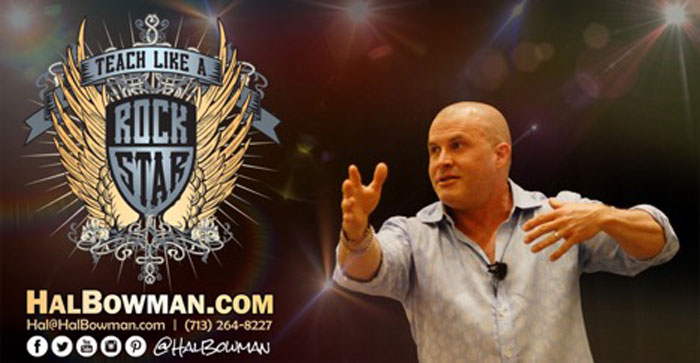
Teach Like a Rock Star is a professional development event for teachers created by Hal Bowman, a former band director who moved into core-content classroom teaching before speaking to educators nationwide. In this interview, Bowman answers seven questions on classroom culture, his podcast, and why he rejects the edu-guru label.


I had just suspended a student for doing something that I had done back when I was in school. I knew this student was not doing this as a personal attack on his teacher or me, yet I may have overreacted with the multiple consequences I had given him. This wasn't his first time being suspended. Then, as I was scrolling through Facebook, I stumbled across a meme that hit me right in the feelers…A Hal Bowman meme.
I immediately reframed my brain and decided I was going to greet this student each and every day with a smile and at least two minutes of conversation not pertaining to school. I vowed to not give up on him and take the easy road out by continuing to suspend him. The relationship formed with this student over the past years has strengthened, and I am proud to say he has had only one office referral since this suspension. Though I have put extra time and effort into this student, he has been the one who has done the majority of the work in and out of the classroom. I am proud of him, and it will be sad to see him leave our school next year. I have to thank Hal Bowman!
Not very often do I get to talk to one of my all-time favorite Rock Star educational celebrities! I recently sat down with Hal Bowman and interviewed him on seven questions that will lead you to Teach Like a Rock Star!
QUESTION 1: Hal, what makes you so passionate about education?
 In the beginning, I was a band director, and all I really cared about was competition, winning, and bringing home the trophy. But once I got to know the kids - once I started to love them - everything changed. After a few years, I moved from the band hall and into the classroom as I began teaching the core content areas. For me, teaching then became all about using my classroom and whatever subject I was teaching as the vehicle for making a positive, lifelong difference in the lives of my kids.
Today, now that I have kids of my own, along with witnessing the disintegration of traditional American institutions like marriage, family, less people going to church, less kids in scouting, less kids competing in youth sports, and so on, I'm more passionate than ever about using our classrooms as the place where kids can become highly intelligent young adults of exceptional character. I'm fully aware that we can't control 300 million people and their families; however, what we can do is have complete control of what goes on in our schools and in our classrooms. It's in the classroom where we have the kids. The classroom is the one place left where we can still make a difference - it's the place where we can teach and where we can parent by creating a second family for our kids. Honestly, for lots of kids, the classroom is their ONLY family. Here's the fact: the leaders of tomorrow are sitting in our classrooms today.
We absolutely can have a deep, profound, lifelong impact on their lives, which affects the future of our communities and our country. How incredibly exciting is that!? That's why, today, education is more important and more exciting than ever before. Those teachers who have proudly and passionately accepted the honor and privilege of all that role has to offer are the ones who step into the classroom with more motivation and inspiration than we've ever seen before in education.
QUESTION 2: Where did you come up with the mantra, "Teach Like a Rock Star?"
Let me go back to the very beginning. First of all, I want to say that at that time, just the notion of me - of all people - thinking I have answers and solutions for other teachers is completely preposterous. Just picture it: there I am sitting alone in my classroom after an extremely difficult, frustrating, and emotionally exhausting day where I felt that I was completely ineffective. Then, all of a sudden, I have the thought, "I bet I could create some valuable content that could not only help teachers, but completely change their lives as educators." Because of how much I struggled, the whole idea of that is just ridiculous.
But then I realized it's not just me who is struggling: pulling my hair out, needing to go out into the hallway during class to compose myself, and crying in my car after school. It's all of us. And, more importantly, I realized we're NOT doing all that because we're ineffective. It's because this job is so important and meaningful to us and how passionate we are about making a lifelong difference in the lives of kids. This is an unbelievably emotional job, which results in tons of emotional experiences. So, I started coming up with ideas that I thought would not just help other teachers, but me, as well.
That being said, here's how the Teach Like A Rock Star theme was created. After sitting through years of horrible PD experiences (like every teacher has), I knew I had a different message, and my vision for PD was also different. So, I knew that I had to be different in every way I approached creating content and delivery. At the time, Jamie Cunningham - who I consulted with a TON on content creation - and I were co-sponsors of a mentoring program at our high school called PALs. That year, we were at our school district's PALs (Peer Assistance and Leadership) training with hundreds of students from all the different high schools in the district who would serve as mentors that year to younger students. During the training, each sponsor from the individual schools was called on stage and the kids in the audience would scream, and cheer, and go insane for their sponsor. After we all left the stage, a visiting teacher in the audience said to me, "That was incredible! You guys are like rock stars for these kids!!" That was it. The Teach Like a Rock Star concept was born.
That's where it came from. And, honestly, it has nothing to do with me or any other teacher being "Rock Stars". It's really all about the kids. That is, how can we create this family and feeling in the classroom so we can give our students a reason to celebrate and cheer for who THEY are becoming? It's about giving kids a space, and a family, and a feeling of being connected that is worthy of cheering for. It is not about the role of a teacher. It is about celebrating kids and giving kids a reason to want to be part of something bigger than themselves. That's what it's really all about. It's this intense approach to classroom instruction that is built on the foundation of everyone coming together - kids included, especially - and doing whatever it takes for our classroom family to be successful. Teach Like A Rock Star is about using the content of the classroom - whatever that may be - as the vehicle to make a difference in the lives of kids so they can go out and make a difference in the lives of others.
So, yes, Teach Like A Rock Star is definitely a "fun" title. But, what it's really about is creating a legacy of people making a profound difference in the lives of others.
QUESTION 3: What are a couple things you want educators to know about you?
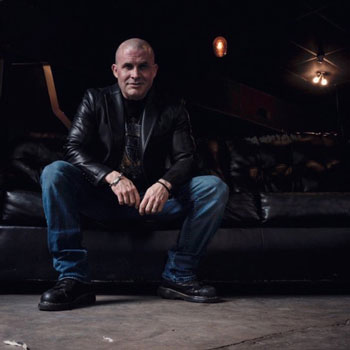
Because of social media, this is a really strange time for those of us who do professional development for teachers. Because of the attention that social media platforms can create, a lot of speakers, authors, and presenters are almost "celebratized". That is, they take on this bizarre, misplaced, edu-guru persona - as if they have all the answers.
For example, when I roll in to perform at a conference or school - lots of teachers have seen my videos, seen my quotes in the morning, and know a lot about me from social media. As a result, teachers have this misunderstanding or misperception that I have nothing but great ideas 100% of the time. The truth is, as a teacher, I struggled for years, not just professionally, but emotionally. I still struggle! I struggle because I'm constantly questioning myself and searching for a better strategy - just like they are.
Listen, teaching is really, really hard. Sometimes, just because someone has written a book or makes funny videos about teaching, we tend to put them on the educational guru pedestal. So, I guess I just want teachers to know that, yes, I may have come up with a few good ideas for education. And, yes, I'm extremely passionate about my delivery and performance at my Teach Like A Rock Star PD events. But, mostly, I just want educators to know that I am just like them - I am completely obsessed with making a difference in the lives of kids. Just like every true teacher, I want to be the one that students talk about for the rest of their lives. And, just like every effective teacher, I am willing to try anything, including making a ton of mistakes, all the while being self-aware and self-critical, and searching for ways that I can improve for my students.
It's just not possible to be a "guru" in this gig because there is no destination in this profession. Instead, it's a constant journey of becoming just a tiny bit better each and every day. You never "arrive", because with professional development there's no end point. For teachers, there will never be a time when you can say, "I have officially arrived. Today, I have become the best teacher I could ever be." It's the same for me. I'm just trying to learn a little bit and get a little bit better every day.
QUESTION 4: Why should people listen to your Podcast?
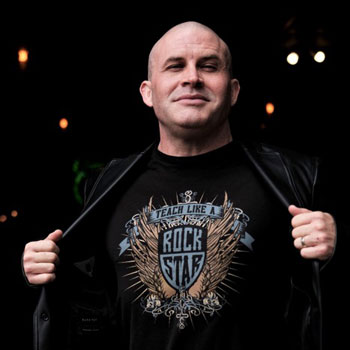
Here is what I love about podcasts. Currently, there are so many educational podcasts being produced by super-talented teachers that you are going to find one that you connect with. There's at least one, and probably a few, that are perfect for everyone. On my show, I have a couple of different types of guests: educators and then ordinary people.
For those teachers that follow my podcast, I think what they like about my show is that whether it is a classroom teacher or an administrator, or just the other day, I had a TV star from Hollywood…EVERYBODY has a story. Everyone can go back and talk about a teacher who made a difference in their lives. And, on my show - I know this sounds crazy - but we don't edit anything, ever. I know for most podcasts, people will talk for an hour or two and then edit down to a 30 minute show. We record and publish every single word. It's a completely raw, authentic, and in-the-moment conversation about awesome educators and amazing schools.
Also, I love highlighting amazing teachers doing amazing things out there. Recently, I had Ricky Ramirez on the show. He's a teacher from El Paso who was recently featured on The Ellen TV Show for his work with kids and his AVID program. That's definitely a cool story. But what's really awesome is that those kinds of stories are happening everywhere across the nation. There are incredible teachers, principals, and parents that I find doing important, incredible work and they are making a monumental difference in the lives of people in small towns across America and they're doing it without publicity or any kind of recognition. It's just what they do. I just don't feel like there are enough people telling this story about what's happening in schools all across America, and I want to tell that story.
In fact, this is exactly how I found you (Jon Konen). I saw online all that you're doing for your teachers and kids in Great Falls, and that story should be told and celebrated. Now you are a badass for sure, but guess what? There is a "Jon Konen" in California; another one in Arizona; one in Delaware; and another in New Mexico. I really do think people would be shocked if they truly knew just how many incredible educators there are out there. In fact, I recommend to teachers all the time; I tell them: "You need to walk into any school and walk through classrooms and see what's happening." You will freak out on the world-class instruction and leadership that's happening out there. Every time I've been in a school visiting and observing I've learned something new by watching someone do something way better than me.
(Hal Bowman interviews me, Jon Konen, #37 on his podcast. Listen by clicking here.)
QUESTION 5: Why should people invite you into their school districts?
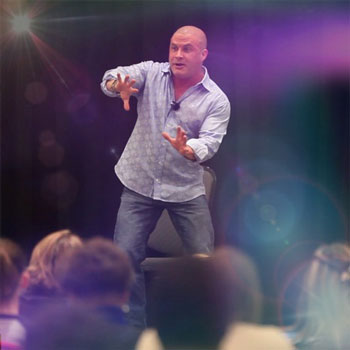
There are a ton of truly great presenters out there right now that schools can bring in. And when it comes to specific topics, there are speakers that are way better than me. If you're looking for an expert on cross-curricular collaboration using technology, or the development of fine-motor skills for young students struggling with writing, I think it's safe to say that I am probably not your guy.
I think my niche - that is, where I truly excel - is helping educators revolutionize classroom and campus culture. From what I've seen from working with thousands of educators across the nation, shifting a classroom or school from struggling to good; or from good to great; or even from great to exceptional; it always comes down to one thing and one thing only: CULTURE.
In fact, it's been my experience that the greatest trainings and presentations on instructional strategies are completely worthless in classrooms and on campuses where teachers and kids are miserable. Culture is EVERYTHING when it comes to educational effectiveness. And, for me, the only way that a change in culture can happen is to empower teachers to dig down deep and ask themselves the hard questions to identify their true purpose. That's always the first step.
Now, I'm not talking about me standing in front of the room and simply facilitating a superficial conversation about being a teacher. Instead, it's about me passionately performing on stage in such a way that I take educators on a deep and meaningful journey of self-discovery to help them discover the answers to their most important questions.
Listen, we spend so much time talking to teachers about data, and instructional strategies, and poring over spreadsheets, and looking at the scores. Now, is that stuff necessary? Absolutely, of course it is! But there's not a single teacher who signed up to do that. As necessary as all that stuff is, it doesn't fuel teachers emotionally to push through those days and weeks that are really, really hard and to continue loving kids relentlessly. When we can empower and inspire teachers to look deep into their hearts and souls and find the answers to the most important questions is the moment teachers access an unending, limitless fuel source.
When teachers can articulate their deepest answers to questions like, "WHAT is the real lesson of my classroom? As a result of my kids spending their lives with me this school year, what is the one lesson I want my kids to think about, use, and give to others for the rest of their lives? As I deliver the content of my classroom, what is that one, single lesson I want my students to learn that will not only have an impact on who they are and who they're becoming, but also have an impact on how they parent their own kids in the future?"
There are so many more, but it's those kinds of questions we need to be asking and discussing constantly with educators in our schools. Look, we all signed up for the same reason - to BE THE ONE. To be that adult of influence in a kid's life who dramatically shifts their trajectory, both on an educational level and a personal level. Deep down inside, we all want to be that one teacher a kid can look back to years later and say, "That's the person who changed my life!" And, with all of my programs and events that I do for conferences, districts, and campuses, it all revolves around helping teachers to learn how to do exactly that.
QUESTION 6: What do you see as the biggest hurdle for educators in your conversations and travels?

Wow, there are just so many hurdles and challenges right now for educators. I'm not even sure how I could identify which one is the "biggest". Every hurdle and challenge we face ultimately impacts the lives of kids, so if you think about it, they're all really "big". I do know that when I talk to educators, what I hear them most concerned about is the pressure they feel with the increasing amount of complex content they're forced to teach students at younger and younger ages. Also, there's always concern about the ever-increasing amount of data that needs to be collected and analyzed, as well as the growing mountains of paperwork required, and whether or not any of those efforts result in better instruction. All those things are incredibly time-intensive and stressful.
But of all the hurdles that educators face, I'll tell you what concerns me most. Throughout the educational system, I don't think that we provide enough evidence for teachers that the process is actually working. Now, remember, all of us employed in schools stay in this career for one reason, and that is to make a dramatic impact in the lives of kids. My question is, "How often are we providing our educators with crystal clear evidence that their work is making that kind of a difference?" We are constantly bombarding teachers with the objective evidence for how kids are performing academically. But what about how kids are performing in terms of their character? Education is not just about WHAT kids are learning; it's also about WHO kids are becoming. There are kids in every classroom across our nation who are becoming more courageous; more compassionate; more respectful; more resourceful; more persistent; and it's all because of the teachers in their lives. We need to consistently demonstrate this to our educators so they can see the change that's happening in the lives of their students. When teachers can see this change, even if it's through subjective and anecdotal evidence, it proves to them that what they're doing is significant, it's working, and it matters.
That feeling teachers get when we see that our efforts are working serves as the rocket fuel we need to keep going. Now, here's what's really interesting. When teachers are excited, and inspired, and motivated about their work because they are constantly surrounded by the evidence that affirms their success, then all of the other stuff they were concerned about - the data collection, the paperwork, etc. - doesn't seem to be that much of an inconvenience anymore because they're so consumed with a passion for their profession.
QUESTION 7: Share a couple of your favorite, most powerful stories from your travels?
Without a doubt, the most amazing thing about my gig as I travel around the nation and work with schools is meeting the most incredible educators on the planet. Think about this: In a school you'll find the hardest working, most kind, loving, compassionate, resourceful people you could ever imagine. Now, multiply that by 140,000 public school campuses in America. I'm telling you, there are literally millions of heroic Americans doing the most phenomenal work everywhere across the nation. As far as the most powerful stories go, you would think it would be some kind of epic, once-in-a-lifetime story that we see in the press that would stand out for me. But instead, it's the smaller stories that I hear from people as we have conversations during the breaks and after my show that truly are the most memorable.
Editor's note: Bowman's figure of 140,000 campuses runs higher than federal counts. The National Center for Education Statistics recorded roughly 99,000 operating public elementary and secondary schools in 2022-23, and about 129,000 K-12 schools in total once private schools are included.
Recently, I was speaking at a conference in the Rio Grande Valley of Texas, close to the border of Mexico. During the break, a teacher was describing her childhood and her experience in school and why she became a teacher. She talked about the extreme amount of violence in her home as she was growing up. But since she was such a good student and so quiet and respectful in school, her teachers never knew how much she was struggling inside. In fact, a few weeks into her 6th grade year, she even made the decision to quit school in December. After the Christmas break, she wasn't going back to school.
But here's what's interesting. That Fall semester, every time she got in line for lunch, one of the lunch ladies would see her standing, waiting for her turn, in the back of the line, and she would take time to wave at her. When she finally got up to the counter, the lunch lady would smile, give her a wink, and she even knew her name. The teacher told me that she didn't remember the lunch lady saying hi to anyone else by name except her, and how special that felt. As a little girl, she was so painfully shy that she was never able to say anything back, but the lunch lady never gave up. At the time, this little girl always wore a pair of pink, sparkly shoes to school. One day, the lunch lady said, "This year for Christmas I am asking Santa for a pair of shoes just like yours."
With tears in her eyes, the teacher told me the only reason she went back to 6th grade that spring was to see if her favorite lunch lady got the shoes from Santa. On that Monday, the first day of school after the holidays, the teacher told me, "As soon as I got in line for lunch, I could hear the lunch lady calling my name and waving. She ran right to me and couldn't wait to show me her new shoes. They were identical to mine!"
It's those kinds of one-on-one, personal stories that I hear from people that I love most. I think the reason it's so powerful is that we often think it requires some kind of epic effort to change a kid's life. However, the truth is, all that's really required is identifying a kid who needs someone; loving that kid relentlessly; and never giving up on that kid.
Visit www.halbowman.com to learn more about Teach Like a Rock Star!
Frequently Asked Questions
What is Teach Like a Rock Star?
It's a professional development event for teachers, created and led by Hal Bowman. The focus is classroom and campus culture rather than instructional strategy, which is the distinction Bowman draws in the interview above: he argues that training on strategy does little in a building where teachers and students are unhappy. Bowman also uses the name for his podcast.
Who is Hal Bowman?
Bowman started out as a band director, then moved into teaching core content areas before building a professional development practice for educators. He now runs Teach Like a Rock Star events for teachers and a separate program called Be The One, built as one-day events held on campus during a regular instructional day.
Can I still listen to the Teach Like a Rock Star podcast?
The back catalog is still up, but the show is no longer in production. Bowman released 98 episodes between 2017 and 2020, and the last one was posted in March 2020. The archive is listed on Apple Podcasts, on his YouTube channel, and on the podcast section of halbowman.com, where individual episode pages carry a player. Each episode is a conversation with an educator or a guest talking about a teacher who mattered to them, published unedited for the reasons Bowman gives in QUESTION 4.
What does Bowman say matters most for improving a school?
Culture, and he's unusually blunt about it. In his experience, moving a classroom or a campus from struggling to good, or from good to great, comes back to culture every time. His starting point is getting teachers to name their own purpose rather than handing them a new set of techniques.
- The name is about students, not teachers - Bowman is explicit that Teach Like a Rock Star has nothing to do with teachers being rock stars, and everything to do with giving students something worth cheering for.
- It came from a PALs training - the phrase was coined after a visiting teacher watched students cheer for their Peer Assistance and Leadership sponsors and told Bowman the sponsors were like rock stars to those kids.
- Culture before strategy - Bowman's position is that instructional-strategy training is wasted on a campus where teachers and students are miserable, so purpose comes first.
- He rejects the guru framing - Bowman says he still struggles, still second-guesses himself, and that there's no point in the profession where a teacher has arrived.
- Small gestures do the work - the story that stayed with him is a shy sixth grader who came back to school after the holidays to see whether her lunch lady got the shoes she'd asked Santa for.
Bowman's argument is that a teacher's influence lands in the culture of the room, not in the strategy binder. If this interview has you thinking about running a classroom of your own, the next question is which preparation route actually fits your situation. The program listings on this page are a place to start that comparison.
As a 5th grade teacher, in 2010 Jon won the Presidential Award for Elementary Math and Science Teaching (PAEMST). As a principal, his school won the 2012 Blue Ribbon Award. In 2018, he won the National Distinguished Principal Award (NDP). In 2019 he won the National No Kid Hungry Breakfast Hero Award.
Jon is the author of three guides published on teacher.org: An Educator's Guide to Combat Bullying & Bully Prevention; Teacher Evaluation: A Transition Guide to Exemplary Performance; and You are the Wild Card: Infusing Fun Back into Curriculum. He has authored a children's picture book that was released January 2019 titled Benjamin’s Visit to Principal Reads Office…again! (available at www.archwaypublishing.com)
- Learning How to Say No and Set Boundaries with Parents - November 21, 2022
- How to Implement a Check-In, Check-Out (CICO) Behavior System - September 26, 2022
- Teacher Core Values: 7 Strategies for Living Your Code - August 15, 2022