
5 Strategies to Teach Children Patience That My Dad Taught Me
8/8/2016
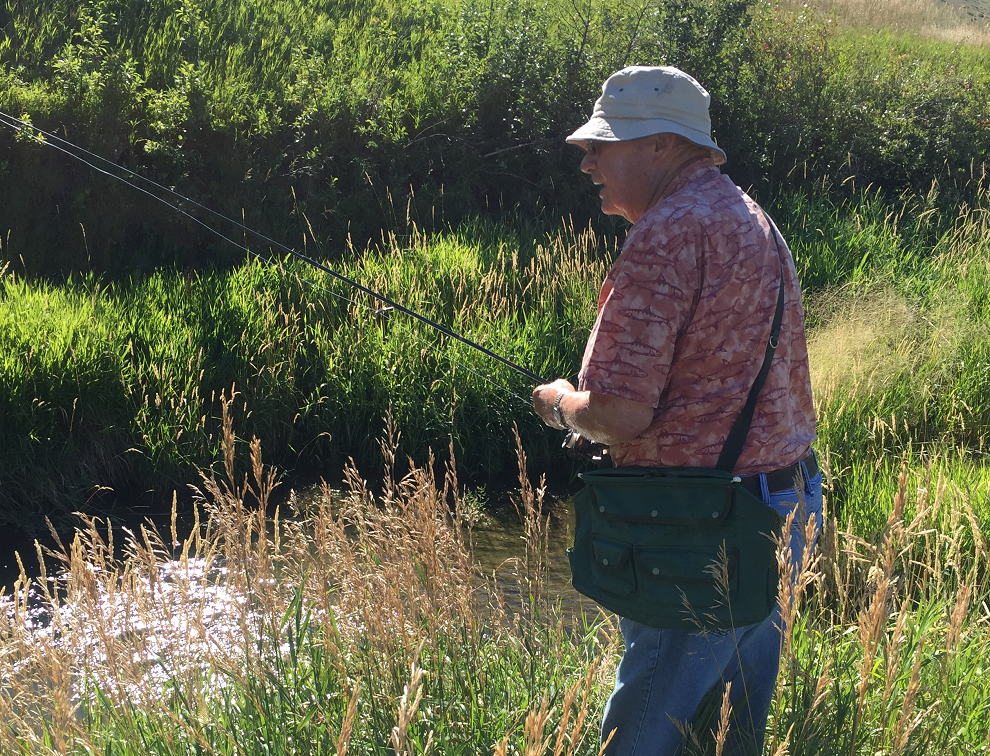


Can you teach patience? I think you can! Having an amazing dad that is the epitome of patience has taught me a lot. Staff members wonder why I don't get rattled when a kid yells, screams, or even tries to throw stuff at me when they are frustrated. It goes back to fishing on Otter Creek…a small stream that eventually flows into the Missouri River in Montana. Can you be a good fisherman and not be patient? I don't think so! Here are five strategies I learned from my dad while on Otter Creek.
1) Wait Time -- The ability to wait no matter the amount of time it takes to get a response. Many educators and parents have a hard time with this concept, and this has been a weakness for me personally. I grew up hating to fish. I couldn't sit, stay in one place, or have the stamina to wait for a bite on my lure. I had to move, had to walk, and had to do something more physical. I would feel my dad getting frustrated, though he would never show it on his face or with his body language. He continued to wait without judgment. This amazing ability to wait, instead of getting mad, yelling, or even making a derogatory comment is a beautiful strength my father had with me. We must give our students more wait time. With accountability higher than ever before, many teachers lack this skill. They feel like they must get on to the next thing, lesson, or assessment. In turn, students have a hard time with waiting for a response. They get distracted from social media, something outside, visual noise of the classroom, or even a "squirrel moment." We must teach wait time when we communicate with our kids.
2) Staying in the Moment - Being "present" seems harder and harder to do with technology and our busy schedules. The old adage of stopping to smell the roses comes to mind. My dad was a pro at this. Though he worked his fingers to the bone until he was in his 70s, he knew that being present meant staying in the moment with what he was doing. While fishing on Otter Creek, dad would stand above me, sometimes with advice, but most of the time just quiet…waiting as I struggled to cast my fishing line into the water. Weeds on one side, seaweed on the bottom, and branches hanging all over seemed to be huge obstacles for me to overcome. He never yelled or grabbed the pole from me to do it himself, he was there offering advice and letting me figure it out on my own. This is exactly what we need to be doing with students when we are with them. We need to teach and model "staying in the moment" to our students.
3) Modeling, Practice, and Tracking - Tracking stamina for a non-cognitive task may seem meaningless, until you can see the power of its use! Creating a visual graph that tracks how long a student can do something is motivating. Students want to intrinsically beat their last time. We use this in our school when teaching stamina for Daily 5, but this strategy can be used for anything…even patience. How long can your students write continuously on a prompt? How long can they stand in line without talking when they are supposed to be quiet? Each time a student breaks the "stamina" for patience, you can mark it on the visual chart for all students to see. Then teach them what patience looks like. You or a student may have to model it, then track it on the graph again. What my dad didn't realize is that he was doing this every single time he worked with me while we fished that darn stream. He would continue to model what it looked like, handed me the pole, and we continued to keep doing this until I was successful with casting! Modeling is one of the highest instructional strategies according to John Hattie's metacognitive study in the book, Visible Learning. We must model and practice patience with our students.
4) Not Just Hearing, but Truly Listening - The ability to listen may be a lost art. To say someone is a good listener, what qualities come to mind? I believe acting interested, eye contact, mouth being closed until their thought is done, and maybe nodding to let the person know you are listening can best be described as a "good listener." When you listen and watch conversations between people, do you ever notice people cutting each other off, responding without letting the other person finish, or even watching something else because their eye and their mind are somewhere else? It seems like their patience is gone, and even more so with students. This happens in the classroom all the time. Teachers who have patience are probably also good at listening. As a teacher you will need to teach the visual cues and social nuances that make a good listener. Modeling or watching a conversation is the best way to teach what it looks like, sounds like, and feels like to be both a good listener and to know that someone is truly listening to you. Respecting the other person should be talked about. Have you ever watched a family sit at a table in a restaurant and no one will be talking, all faces will be down with their nose in their smart phone? Disappointing! My dad is a good listener, and whether mom helped him understand what true listening looks like, I will never know. He would be silent when I shared how I was doing fishing. He didn't interrupt me, but truly listened to my struggles and offered advice on how I can fix my problem. I would then try again and verbally respond to his feedback on how I was doing. Dad would, again, listen to me, and either let me struggle to fix the problem myself, or he would give more strategies for success. This all takes a huge amount of patience. We have teach kids how to truly listen.
5) Being Alongside and Not in Front of - People who exert power and control tend to set people off and even more so, students. Students know when a teacher is exercising their power and control, especially when it is in a hurtful or aggressive manner. The ability for a teacher to let their guard down with a student can be illustrated when a student asks for support. Does the teacher continue to stand, remain in front of the student, and use verbiage where you can tell who is the boss? We need to let that go…we must get down beside our students, "sidle up," and show students we are there to support them when they are challenged. I don't know what it is about someone coming along side of you that is more comforting than someone approaching you head on, but "sidling up" is much more conducive to showing patience. It may come from the industrial age where we think of students as widgets, we fix and put new parts in the widgets as fast as we can, then we go on to the next widget! This mentality of quantity over quality reminds me of economics theories from college! We need to think differently. My dad would sidle up to me and show me how to cast between weeds, over rock shelfs, and around overhanging branches. I felt like he was there to guide me, a true sage on the side. He didn't get in my face, or take my fishing pole, or get mad at my crappy casts…he was there with patience alongside of me! We must teach students to comfort each other by being alongside of someone when we support them.
There are way too many "squirrel" moments in our lives and I believe we have to explicitly teach how to be patient. If we can slow down, be in the moment, and truly listen to our kids, I believe we would have less to grade, be able to handle more behavior problems, and become a more effective and efficient teacher of students. If we then taught our students what patience looks like, sounds like and feels like we would have students that were more empathetic, better listeners, and more effective problem solvers! What this world needs is a trip to Otter Creek in Montana!

As a 5th grade teacher, in 2010 Jon won the Presidential Award for Elementary Math and Science Teaching (PAEMST). As a principal, his school won the 2012 Blue Ribbon Award. In 2018, he won the National Distinguished Principal Award (NDP). In 2019 he won the National No Kid Hungry Breakfast Hero Award.
Jon is the author of three guides published on teacher.org: An Educator's Guide to Combat Bullying & Bully Prevention; Teacher Evaluation: A Transition Guide to Exemplary Performance; and You are the Wild Card: Infusing Fun Back into Curriculum. He has authored a children's picture book that was released January 2019 titled Benjamin’s Visit to Principal Reads Office…again! (available at www.archwaypublishing.com)
- Learning How to Say No and Set Boundaries with Parents - November 21, 2022
- If You Had Only One Behavior Strategy to Use in Your Classroom, What Would It Be? - September 26, 2022
- Live Your Code: 7 Strategies That Will Help You Be the Most Effective Educator You Can Be - August 15, 2022