
10 Note Taking Strategies for Students That Actually Work


The most effective note taking strategies for students go beyond copying what a teacher says: they encourage students to process, summarize, and revisit information. Techniques like the Cornell Method, guided notes, and picture notes work because students physically write much slower than teachers speak, which makes word-for-word transcription impractical. Pairing a capture method with a review step, like a pair-share or summary sentence, can support learning and retention.


Students write at about 0.2 to 0.3 words per second. Teachers talk at 2 to 3 words per second (Piolat, Olive, & Kellogg, 2005). That gap is the whole problem: a student trying to transcribe a lecture word for word will fall behind, then miss the next point while catching up on the last one. Word-for-word transcription is impractical during a normal-paced lecture. The fix isn't faster handwriting. It's teaching students to capture less and process more.
Research points in the same direction: generative strategies such as summarizing and concept mapping have been associated with stronger performance on some learning tasks (Lahtinen, Lonka, & Lindblom-Ylanne, 1997), and strategic note-taking instruction improved several measures of science-information recall among third-grade students (Lee, Lan, Hamman, & Hendricks, 2008). Direct instruction still has its place. But even during a lecture, students need built-in pauses to process what they just heard before the next idea arrives.
Before getting into classroom activities, it helps to know the note-taking systems these strategies build on. The Cornell Method splits the page into a narrow cue column, a wider notes column, and a summary strip at the bottom, so review and capture happen in the same layout. The outline method uses headings and indented sub-points to mirror a lecture's structure as it happens, which works well for students who can follow along in real time. The sentence method asks for a full sentence per idea, and produces more complete notes at the cost of speed. Below are 10 classroom strategies that put these systems, and some original variations, into practice.
1. Confer, Compare, and Clarify
This strategy has students read each other's notes, compare what they wrote, and add to their own. Set up small groups of four working through the same material, a social studies chapter works well, and have students take notes independently first. When a section ends, they trade notes with a partner in the group and ask clarifying questions about anything unclear. After working through the material with one partner, they repeat the process with another partner in the same small group.
If a question comes up that no group member can answer, address it whole-group during the debrief so everyone leaves with the same understanding. Have students add to their own notes and discuss why certain information did or didn't make the cut, then write a one-sentence summary and adjust accordingly. Close with a quick reflection: did their original notes hold up, or did they mostly need additions? That reflection is where the real learning happens.
RELATED - Check out our social studies lesson plans.
2. Graphic Organizers and Guided Notes
Guided notes are teacher-prepared handouts with cues or blank spaces for students to fill in key information during a lecture. Konrad, Joseph, and Eveleigh (2009) found guided notes effective for increasing note-taking accuracy and improving academic performance, particularly among school-age students. They work particularly well in social studies, where there's a lot of information to track across a chapter, and the finished notes double as a study guide. In math, guided notes help students process new vocabulary or a new concept visually instead of trying to write and think at the same time.
3. Anticipatory Guides
Anticipatory guides introduce new material through true/false statements, which also gives students practice with a question format many struggle with on state tests. Write true/false statements about the upcoming content, then have students predict their answers based on prior knowledge before instruction starts. Record those predictions in a column labeled "Before." Students can pair-share, use thumbs up/thumbs down, or do a chalkboard splash to share their reasoning.
The strongest version of this uses statements that could be true or false depending on evidence presented later, which drives the most engaged discussion. Structure it like a K-W-L chart with three columns: "Before," "Statement," and "After," and revisit it as the lesson moves through the material.
4. Picture Notes
Picture notes complement written notes without replacing them. After a group reads a section together, for example a chapter on the New England colonies, model the note-taking process, then have students choose one concept and do a "picture-pause": draw a picture that represents it and explain the drawing to a peer.
The explaining step matters as much as the drawing. In one group, a student who fully understood the New England colonies' governments and religious beliefs paired with a student who only had partial understanding and was struggling with his drawing. Sharing the explanation let the second student fill in gaps and strengthen his own picture. Plan for strategic stopping points and budget about five minutes per picture-pause. At the end of a full unit, have students combine their drawings into one "big picture" illustration with a summary statement, then present it to small and whole groups to confirm shared understanding.
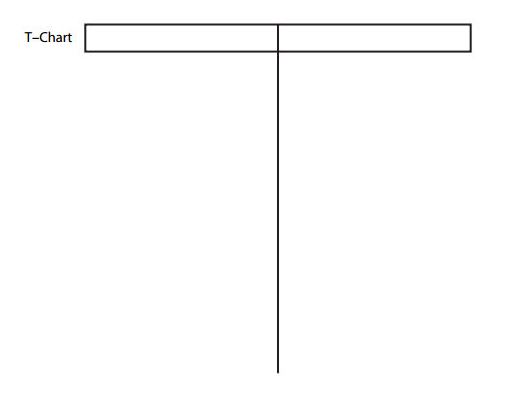
5. Lecture T-Chart
Students draw two columns: notes on the left, a running summary on the right. For students who need accommodations, pre-fill the left column so they can focus on the summarizing step. Build in stopping points throughout the lesson where students read back over their notes and summarize in the right column, using words or a quick sketch. Add a pair-share after each stop so students talk through their summaries with a partner, which can encourage more thorough written summaries.
6. Reflection Logs
Divide a lesson into logical sections and pause at each one for students to write a two- or three-minute summary of what was just presented. After writing, have students stand and move to share with someone, then come back together for a quick whole-group share-out. The movement break does double duty: it gives students a physical reset and is intended to encourage students to interact with the material while it's still fresh, which is especially useful when a lesson leans heavily on lecture and covers a lot of ground. If you're looking for more ways to work brief, purposeful movement into the day, 9 Ideas You Can Use Without Taking Away Recess has several that pair well with this kind of pause.
Reflective Writing
7. Pause, Star, and Rank
While the material is still fresh, have students review their notes and mark the most important concepts with a star. From those, they pick the three most important and write a one-sentence summary for each, then rank the three in order of importance. Share the rankings in a pair-share, then whole-group with a chalkboard splash, so students get a second chance to write down a key summary statement. This one requires no extra prep and can fill any spare five minutes.
8. Key Word Dance
Students review their notes and underline a set number of essential keywords, then turn those words into a poem by making them "dance" on the page. Younger students usually need a model showing how repetitive phrases create a poem-like rhythm. Add a pair-share so students can borrow words from each other's lists. The higher-order thinking happens in the selection process: deciding which words matter enough to include is intended to push students back into re-analyzing their own notes.
RELATED - Looking for 5th grade lesson plans?
9. Debate Team Carousel
Give students a prompt that asks them to take and defend a position using the day's content, and have them work through a four-box template. In Box 1, students write their opinion and reasoning. Pass papers to the right, and the next student adds a second supporting reason in Box 2. Pass again, and in Box 3 students add an opposing rationale, whether or not they agree with it. On the final pass, students add their own opinion with supporting rationale in Box 4. Return papers to their original owners and share out several of the strongest arguments for and against the original opinion.
10. Cut & Paste Word Building
This works well for teaching prefixes and suffixes. Challenge students to build as many words as possible using as few base words as possible, then have them work out what each base word means before adding the correct prefixes and suffixes. Finish by discussing how each addition changes the word's meaning. Scissors and glue break up the monotony of a worksheet, and building physical word combinations pushes students toward higher-order thinking about how word parts function.
Frequently Asked Questions
What is the best note-taking method for students?
There isn't one best method: the Cornell Method works well for building in review time, the outline method suits students who can track a lecture's structure in real time, and picture notes provide a visual way to represent and review information. The most effective approach usually pairs a capture method with a built-in processing step, like a pair-share or summary sentence, rather than relying on any single format.
Why do students struggle to take good notes?
Students write far slower than teachers speak, roughly 0.2 to 0.3 words per second compared to a teacher's 2 to 3 words per second, so trying to capture every word makes word-for-word transcription impractical during a normal-paced lecture. Struggling note-takers are often trying to transcribe rather than summarize, which is a skill gap, not a speed problem.
How can teachers support students who need note-taking accommodations?
Guided notes with key information pre-filled give students a model to follow and reduce the writing load, which helps students who process auditory information more slowly. Pre-filled T-charts, picture notes, and paired note review also lower the barrier for students with learning differences while still building the underlying skill.
How often should students practice note-taking strategies?
Note taking strategies for students work best with repeated, varied practice rather than one big lesson on the "right" way to do it. Rotating between strategies like reflection logs, anticipatory guides, and picture notes across different subjects gives students multiple entry points and helps them find the approach that fits how they process information.
- Students can't write as fast as teachers talk - the gap between writing and speaking speed makes word-for-word transcription impractical during a normal-paced lecture.
- Processing beats copying - generative strategies such as summarizing and concept mapping have been associated with stronger performance on some learning tasks.
- Built-in pauses matter - even necessary direct instruction needs stopping points for students to review and process what they just heard.
- Named systems still help - teaching students recognizable frameworks like the Cornell Method or outline method gives them a starting structure before customizing.
- Variety serves more learners - rotating strategies across the ten methods here gives students multiple entry points for different note-taking preferences.
Building strong study habits like these is one piece of what makes a classroom run well, and the right teacher prep program shapes how confident you feel putting strategies like these into practice. The sponsored programs listed here include options for both new and experienced educators looking to sharpen their instructional toolkit.
References:
- Konrad, M., Joseph, L.M., and Eveleigh, E. (2009, August). "A meta-analytic review of guided notes." Education and Treatment of Children, 32(3), 421-444.
- Lahtinen, V., Lonka, K., Lindblom-Ylanne, S. (1997). "Spontaneous study strategies and the quality of knowledge construction." British Journal of Educational Psychology, 67(1), 13-24.
- Lee, P., Lan, W., Hamman, D., Hendricks, B. (2008, May). "The effects of teaching notetaking strategies on elementary students' science learning." Instructional Science, 36(3), 191-201.
- Piolat, A., Olive, T., & Kellogg, R.T. (2005). "Cognitive effort during note taking." Applied Cognitive Psychology, 19(3), 291-312.

- 11 Strategies to Encourage Students to Own Their Learning - January 19, 2018
- Student Behavior During the Holidays: 5 Potential Stressors - December 21, 2017
- 10 First-Year Teacher Struggles That Catch Veterans Too - November 27, 2017