Why Is Public Education Important? A Principal’s Case
Why is public education important? Public school systems have a legal obligation to provide access to eligible students regardless of protected characteristics, and to provide a free appropriate public education to eligible students with disabilities. Free K-12 schooling also aims to build informed citizens and prepare students for work, training, or college.


*Posted with permission.
Here is a math equation we can stand behind…
Compassionate Community Support + Strong Public Education = Solid Foundation to our Society
Our forefathers created a feeling of nationalism by bringing people together from diverse backgrounds, religions, and areas of the world. The idea of freedom was prevalent among the young budding colonists in America.
What makes the feeling of freedom so enticing for these colonists…freedom from persecution? They believed they could govern themselves, and sever ties with England. The documents created from these ingenious leaders include the Declaration of Independence and the Constitution. In these documents, phrasing and diction were of the utmost importance. The Constitution has been amended twenty-seven times, while the Declaration of Independence stands as originally adopted in 1776.
In much the same way, our modern day communities bring all types of students together through free public education. Our public schools enroll students according to residency, attendance boundaries, age, and other state and local rules, and they cannot lawfully discriminate against the students they serve. We must have some common beliefs as we go forward….here are four we believe help answer our math equation above: CCS+SPE=SFS!
Create a Strong D(d)emocratic Society
In order to continue creating individuals that will contribute to our democratic society (small "d"), we must have strong public schools. Students, like our ancestors, must take part in deciding the future for themselves, as well as for their future children. We must continue to teach how a democratic society works. We must show, tell, and model how positive contributions and positive action can change a community.
"We must show, tell, and model how positive contributions and positive action can change a community."
Scale is part of why that civic work matters so much. Public elementary and secondary schools enrolled 49.5 million students in prekindergarten through grade 12 in fall 2023, according to the National Center for Education Statistics. Private schools enrolled 4.7 million K-12 students in fall 2021, the most recent year NCES reports. Public schools carry a major share of civic education in the United States, reaching tens of millions of students a year.
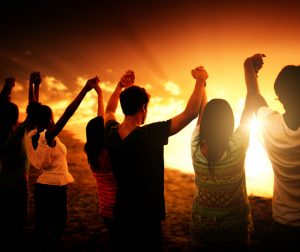
Compassionate Community Support
We as Americans take care of each other. Unfortunately, we only get to see a lot of this support after a natural disaster, terrorist attack, or school shooting. You see people uniting to help and support each other. We must highlight all the great ways we support each other positively. We all know negative stories sell newspapers and intrigue people.
"As a society, we must continue to flip the story."
As a society, we must continue to flip the story. Instead of highlighting the negative people or events associated with an incident, we should be talking about the sidelined positive stories. We believe Americans are compassionate people.
Compassion is an action word associated with empathy. Empathy's definition states that we should try to see from someone else's perspective or point of view in order to empathize with them. Showing compassion takes this concept of empathy one step further. A person who shows compassion sees a need or problem, finds a solution (as best they can), and finally implements a plan of action. Our public schools show compassion and they need to continue highlighting how they are teaching it, as well as how students are taking action.
"Compassion is an action word associated with empathy."
Create Students Who are College and Career Ready
Our public schools aim to prepare students for postsecondary education, employment, training, and other pathways. Schools have high standards and graduation requirements. As you look in most newspapers after each school term, you will see a long listing of students who are making the grade, honor roll. We urge you to track the progress of districts.
We understand not all students are ready for college. Readiness for work or training varies by student and by district. Many students take preparatory courses that help them take a job right out of high school, or set them up for further training.
There is a number attached to that. NCES puts the U.S. average adjusted cohort graduation rate for public high school students at 87 percent for the 2021-22 school year, 7 percentage points higher than a decade earlier. Those preparatory courses have a federal funding stream behind them as well. Perkins V, the career and technical education law reauthorized in 2018, supports state and local career and technical education programs, one of several sources districts draw on for the courses that lead toward a trade or a certificate.
Our Public Schools Mirror Our Society's Identity
What we believe in our society is what we ultimately teach in our public schools. Who adopts academic standards and who controls curriculum varies by state and locality, and in many places teachers, community members, and state officials all have a hand in the process. School boards and district offices divide responsibility for curriculum, staffing, and materials differently from state to state, working within the state and federal requirements that apply to them.
In addition to academic standards, schools are tasked with supporting students in a multitude of ways that were not evident decades ago. Socio-emotional learning, mental health support, trauma-informed practices, medical services, and food support all show up in schools now, though which of them a given school or district actually offers varies a great deal.
Recently, the mantra in education states, "We must do Maslow before we address Bloom's." It is a slogan rather than a rule. Neither Maslow's Hierarchy of Needs nor Bloom's Taxonomy of Learning establishes that basic needs must be fully met before higher-order thinking can happen. What the phrase captures is that unmet needs can interfere with learning, which is why so many schools now attend to them.
"We must do Maslow before we address Bloom's."
Schools are now asked to respond to student mental health needs alongside academics. Our public school teachers are learning classroom strategies that support students, which is a different job from diagnosis and treatment. Those belong to licensed clinicians. Some districts partner with outside mental health organizations and find space for them in their buildings, though capacity varies widely from one district to the next.
Through compassionate community support and strong public schools, we can create a future in our communities that provide a solid foundation for our children, and our children's children. Will you help us in celebrating and telling the stories of our public schools? List your ideas for topics to cover below.
Frequently Asked Questions
What is public education?
Public education is tax-funded schooling provided at no charge to students, operating under state authority. In the United States, that covers traditional district schools and, in most states, public charter schools, though charter laws and governance differ considerably from one state to another. Responsibility for academic standards, curriculum, staffing, and materials is divided between state and local authorities differently depending on where you are.
Why is public education important to society?
Public education carries broad access obligations that other options do not. It must provide access to eligible students regardless of protected characteristics, and provide a free appropriate public education to eligible students with disabilities. That reach is what makes it a civic institution rather than a service you shop for: it delivers much of the country's civic education, offers students across income levels a route toward work or further study, and in many places serves as a delivery point for meals and for health and counseling services.
Do public schools have to enroll every student?
Not without conditions. Enrollment depends on residency, attendance boundaries, age, and other state and local rules, and some students are served through specialized placements. What public systems cannot do is discriminate against eligible students on protected grounds. Two rules shape the rest of the picture: the Individuals with Disabilities Education Act guarantees a free appropriate public education, or FAPE, to eligible students with disabilities, and in Plyler v. Doe (1982), the Supreme Court held that states cannot deny free public schooling to children based on immigration status.
What does "we must do Maslow before Bloom's" mean?
It is a popular slogan in education, not an established rule. Maslow's hierarchy of needs describes food, safety, and belonging as foundational, while Bloom's taxonomy describes the levels of thinking a teacher is trying to reach. Neither one says learning stops until basic needs are met. The point of the phrase is simpler: hunger, fear, and other unmet needs can make learning and sustained attention more difficult, which is why so many schools now run food pantries and counseling programs alongside classes.
- Broad access obligations - Public school systems must provide access to eligible students regardless of protected characteristics, and a free appropriate public education to eligible students with disabilities.
- Scale carries the argument - NCES counted 49.5 million public preK-12 students in fall 2023, against 4.7 million in private schools in fall 2021.
- Wide civic reach - Public schools deliver a major share of civic education in the United States, to tens of millions of students a year.
- Barriers to learning matter - Unmet needs like hunger and fear can make learning harder, which is why many schools now carry meals, counseling, and trauma-informed practice alongside academics.
Every argument on this page depends on having enough qualified teachers in classrooms. Preparation programs differ in length, cost, and format, and states set their own approved-program, testing, background-check, and endorsement requirements, so what counts as a valid pathway depends on where you plan to teach. The sponsored programs on this page include online and hybrid options.
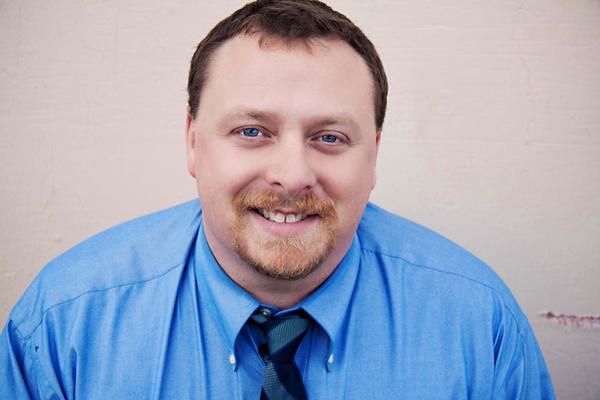
As a 5th grade teacher, in 2010 Jon won the Presidential Award for Elementary Math and Science Teaching (PAEMST). As a principal, his school won the 2012 Blue Ribbon Award. In 2018, he won the National Distinguished Principal Award (NDP). In 2019 he won the National No Kid Hungry Breakfast Hero Award.
Jon is the author of three guides published on teacher.org: An Educator's Guide to Combat Bullying & Bully Prevention; Teacher Evaluation: A Transition Guide to Exemplary Performance; and You are the Wild Card: Infusing Fun Back into Curriculum. He has authored a children's picture book that was released January 2019 titled Benjamin’s Visit to Principal Reads Office…again! (available at www.archwaypublishing.com)
- Learning How to Say No and Set Boundaries with Parents - November 21, 2022
- How to Implement a Check-In, Check-Out (CICO) Behavior System - September 26, 2022
- Teacher Core Values: 7 Strategies for Living Your Code - August 15, 2022