
School Custodian Appreciation Ideas: The Toilet Paper Caper

The best school custodian appreciation ideas cost almost nothing: student thank-you notes, a staff assembly, a social media shoutout, or an administrator pitching in on safe routine tasks the custodial team approves. National Custodian Day falls on October 2, but recognition only sticks when students and staff also stop making the mess in the first place.


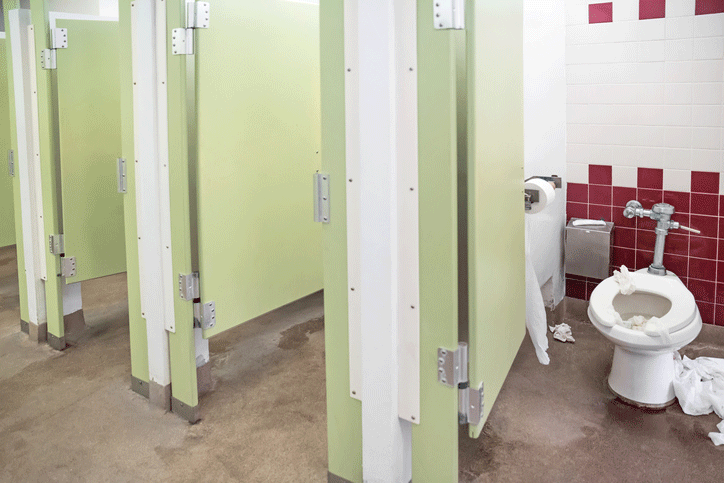
Thirty-one cameras, and I still refuse to use them to solve the Toilet Paper Caper. We have cameras in just about every location on our campus, and we've solved plenty of problems by reviewing the tape. There's one in the hallway outside our main bathroom. It doesn't point into the bathroom, but I can see everyone who walks into that area.
Our upper bathroom is shared by more than 200 students, and the real number is higher than that, because the whole school passes it at some point in the day. So when something goes wrong in there, we struggle to pin it down. We've had problems every week since school started.
Cameras were never going to fix this, and neither is a lecture. Here are five things we'd forgotten as users of that bathroom, and of every bathroom in the building, plus a sixth on how to show your custodians you mean it.
1. It's Not Just the Custodian's Responsibility
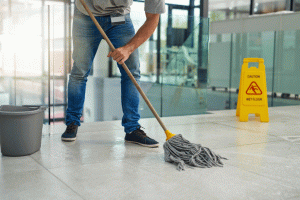
Four hundred students and 50 staff in one building every day makes a mess. I can't stand the mindset that cleaning is the custodian's job, so the rest of us don't have to think about it. If every student and staff member stopped using the garbage cans, no custodian could keep up, and the school would look like a dump inside a week.
We all have to own it, or the building doesn't stay a decent place to work and learn. As a middle school and elementary teacher, here's what I did with my students, and my custodian loved it:
- "3 Pieces" - At the end of the day, students who found three pieces of garbage were allowed to leave first. I stood at the doorway holding the garbage can. I gave suggestions to those who were struggling. There were days we only did one piece as students started talking: "If we keep the classroom clean throughout the day, we do not have to do 3 pieces at the end of the day." When students start talking in those terms, you know you have reached the pinnacle of cleaning stardom.
- Music - Play an end-of-the-day cleaning song. I have heard other classrooms sing during this time, but at the older grade I would play a popular song. Some students even danced and cleaned at the same time. This can be used at any age, and even adults clean better when there is music blaring.
- Locker and Desk Checks - I used meaningful work jobs in my classroom. I had one student be the desk checker, and one person be the locker checker. Each day they reported to me how each of these areas looked. One caution: don't set these jobs up for failure. Watch for students resenting these middle managers.
- Clean Along the Way - The minute before recess or lunch can be powerful cleaning time. If we clean along the way, the less we will have to clean at the end of the day. One minute per day, placed two or three times in your instruction, keeps your room looking good and teaches students responsibility at the same time.

2. We Need to Empower Students
The first idea shifts responsibility off the custodian and onto all of us. This one takes it a step further and hands it to students. When we can't work out who keeps wrecking our bathroom, we step up communication instead of surveillance. Students become the watchdogs of their own bathrooms.
They report back to teachers and to me as soon as they see something dirty. Often they just handle it: a paper towel that missed the can gets thrown away without anyone asking. We call that out publicly when it happens. In our school, publicly recognizing students who helped keep areas clean seemed to encourage more of that behavior.
We give students the words for this, not just the expectation. They know how to talk to another student who's making a mess, and they know which adults to find immediately. They also understand the mechanism: messes left alone multiply. In our school, students tell us the moment graffiti shows up on a wall. When appropriate under school policy and safe to do so, students responsible for a mess may help restore the area.
3. Conversations About Cleaning Need to Happen School-Wide, Routinely
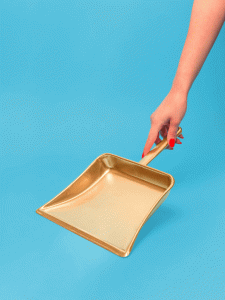
Some schools hand out a "Golden Dustpan" award to the classroom or grade level that sets the standard. In our experience, keeping the conversation going schoolwide helped make cleanliness a continuing priority. Every time we let it drop, the building gets dirtier. Vary how you keep it going:
- Morning Announcements
- Classroom Announcements
- Praise the Positives
- Random Classroom, Hallway, or Bathroom Checks
- Tracking Success Chart (make it visible)
The point is a clean school so learning can happen. None of this takes more than a couple of minutes a day, depending on where your building is starting from. Done routinely, it stays a priority.
4. Get All Staff Involved
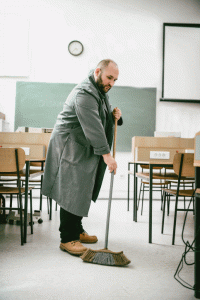
"Many hands make light work" is the quote that comes to mind. Make cleanliness a priority for every adult in the building, and it's less work for everyone. Leadership should praise the staff for it, not only the students.
Celebrate the custodians routinely, and celebrate the teachers and support staff who pitch in too. They make a real dent, and they also do the quieter work of noticing students who are doing the right thing and saying so.
Getting everyone involved is a culture play as much as a cleaning one. Staff want to work somewhere that's cared for. That starts with teaching: name explicitly what a clean area looks like, how it gets maintained, and how you'll check. When staff buy in, the building changes.

5. Celebrate Your Custodians
The job can feel thankless, and Toilet Paper Capers never really end. Our students, staff, parents, and community members need reminding of what these employees do so the rest of us get to work in a clean school.
If you want a date to build around, National Custodial Workers' Recognition Day falls on October 2. You'll see it called National Custodian Day, Custodian Appreciation Day, and a few other names, which is worth knowing when you go looking for printables and templates.
One note on language. Custodians are generally classified/non-certificated staff rather than positions requiring an educator license, though terminology varies by state and district. That distinction shows up in contracts, pay scales, and who gets invited to which meeting. Plenty of the people in your building have never thought about which side of that line the custodian sits on. Recognition is a decent moment to make it visible.
We celebrate students constantly and teachers fairly often. Classified staff gets less. Here are ten ways to recognize them without a budget:
| Idea | Who Organizes It | What It Costs |
|---|---|---|
| Singing telegrams or private concerts by your musical groups | Music teacher | Nothing |
| Staff pitch in on safe, routine cleaning tasks approved by the custodial team | All staff | Nothing |
| Teachers use a prep period to help with routine tasks the custodial team signs off on | Teaching staff | One prep period |
| Each class brings the custodian's favorite food item | Classroom teachers | A few dollars per family |
| Writing tribute to the custodian | Students | Nothing |
| Special assembly for the custodian | Administration | Nothing |
| PTA purchases a needed item for the custodian | PTA | PTA funds |
| Special clothing, designed for your custodial team | Administration or PTA | Low, if bulk printed |
| Principal shadows the custodian and helps with safe, approved routine tasks | Principal | Nothing but pride |
| Social media shoutouts | Whoever runs your accounts | Nothing |
One caution on the hands-on ideas. Custodial work involves chemicals, equipment, and tasks that require training and protective gear, so nobody outside the custodial team should simply take the job over for a day. Ask the custodial team which routine tasks are safe and appropriate to help with, and stick to those.
Appreciation That Doesn't Add to Their Workload
The fastest way to undercut a thank-you note is to hand the same person an extra two hours of work on Friday night. A lot of what custodians want isn't a gift at all. It's the rest of us being less expensive to clean up after.
Three habits that do more than any assembly. Give advance written notice when an outside group books your building, including what they'll need for trash and how they want tables set. Put the cafeteria back the way you found it after an evening event. And when someone wants to launch a recycling or green initiative, bring the custodial team into the planning before it starts, not after, because there's usually already a system in place and the new project either works with it or doubles someone's route.
None of that is glamorous. All of it is what people mean when they say they feel respected at work.
Frequently Asked Questions
When is National Custodian Day?
October 2, every year. It also goes by National Custodial Workers' Recognition Day, National Custodian Appreciation Day, and Custodial Staff Appreciation Day. It's an observance rather than a federal holiday, so no school is required to mark it, and plenty of buildings pick a different day that works better with their calendar.
Are school custodians certified or classified staff?
Generally, classified. In most districts, "certificated" or "certified" staff means employees who hold a state teaching or administrative license, while classified staff covers custodians, paraprofessionals, bus drivers, food service, and office staff. The two groups usually sit under different contracts and pay scales. Exact terminology varies by state and district.
What's the best no-cost way to thank a school custodian?
Ask them what would actually help, then do that. Short of asking, the two that land hardest are having students write directly to them and having an administrator spend time alongside them helping with safe, routine tasks the custodial team approves. Both signal that someone looked closely at the work instead of buying a card.
How do you get students involved in appreciating custodians?
Give them a role, not an assignment. Student-written tributes, a class-made book of notes, a banner in the main hallway, or a short video of thank-you messages all work, and they work better when the same students are also the ones reporting messes and cleaning up after themselves the rest of the year.
- October 2 is the date - National Custodian Day gives you a hook, but nothing stops you from moving it to a week that fits your school calendar.
- Cleaning is everyone's job - Student routines like "3 Pieces," meaningful work jobs, and a one-minute clean before recess cut what lands on the custodian.
- Custodians are generally classified staff - Terminology varies by state and district, but these positions typically don't require an educator license.
- The best recognition is less work - Advance notice for evening events, resetting the cafeteria, and looping custodians into new projects early beat any assembly.
- Keep the conversation running - Cleanliness slides the moment a school stops talking about it, so build it into announcements and visible tracking.
If working through this made you think about the leadership side of school culture rather than your own classroom, that's worth taking seriously. The programs listed on this page include educational leadership and administration tracks built for teachers who are still teaching full time, several of them fully online.
As a 5th grade teacher, in 2010 Jon won the Presidential Award for Elementary Math and Science Teaching (PAEMST). As a principal, his school won the 2012 Blue Ribbon Award. In 2018, he won the National Distinguished Principal Award (NDP). In 2019 he won the National No Kid Hungry Breakfast Hero Award.
Jon is the author of three guides published on teacher.org: An Educator's Guide to Combat Bullying & Bully Prevention; Teacher Evaluation: A Transition Guide to Exemplary Performance; and You are the Wild Card: Infusing Fun Back into Curriculum. He has authored a children's picture book that was released January 2019 titled Benjamin’s Visit to Principal Reads Office…again! (available at www.archwaypublishing.com)
- Learning How to Say No and Set Boundaries with Parents - November 21, 2022
- How to Implement a Check-In, Check-Out (CICO) Behavior System - September 26, 2022
- Teacher Core Values: 7 Strategies for Living Your Code - August 15, 2022