Is Remote Learning Here to Stay in Public Schools?

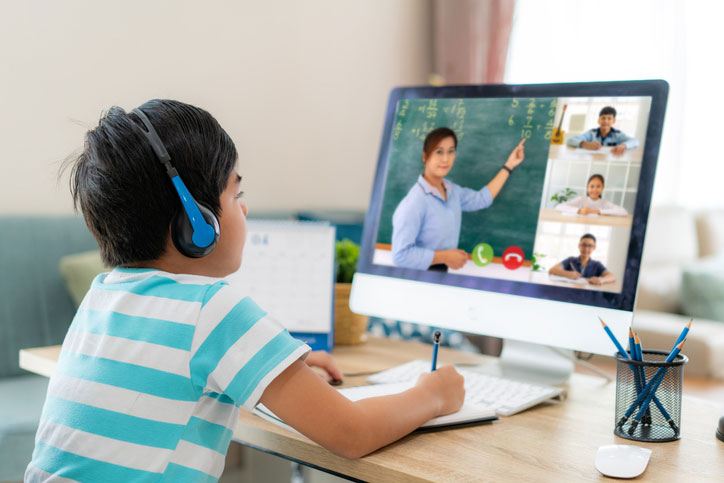
Is remote learning here to stay in public education? Yes, though as an option rather than the default. Virtual public school enrollment has held steady or grown in states like Georgia, Texas, and Michigan through the mid-2020s. Many districts continue to offer some form of remote learning years after the pandemic emergency that started it.


"Never let a good crisis go to waste…" - Winston Churchill
It's easy to pick on remote learning. It isn't as strong a method of instruction as learning onsite and face-to-face, and you'd be hard-pressed to find many educators or parents who'd argue otherwise. Engaging students is harder. Holding them accountable is harder. Parents don't always know how to support the work, and screen time goes up. I've heard every version of "it wasn't like this when I was in school" and "we need to get back to normal."
In the rush to return to normal, use this time to consider which parts of normal are worth rushing back to. - Dave Hollis
We're missing the boat if we think remote learning will just disappear now that the emergency that forced it onto every school is years behind us. Whether public education will board this large, moving ship for the long haul is still up for debate in many districts. Here are seven reasons I believe remote learning is here to stay, and why public educators need to come to grips with it.
1. Remote Learning Fits the Lifestyles of Some Families
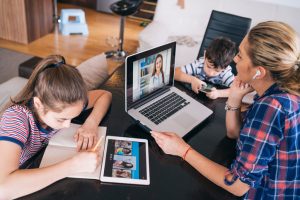
Some families are clearly thriving with a remote option. They get more time together, and remote learning allows for schedules that don't fit the standard school day. A lot of companies have found their employees work just as well from home, and they're saving real money by not covering the costs that come with a physical office: heating, electricity, plumbing, and the rest. Employees working from home are supporting their families and getting time back.
In my area, the Bitterroot Valley in Montana, we've watched families move in from all over the country while keeping careers based in California or New York. They like the lifestyle and the location, and when they're given the choice to work remotely, plenty of them make the move, citing cost, safety, and quality of life.
That same choice needs to be part of successful public schools going forward. Families want the option to work remotely and have their kids learn remotely, whether that means relocating for a bigger home, more property, or a community they prefer, or simply not uprooting a kid's education every time a job moves. There are other lifestyle reasons too: families supporting a competitive athlete who has to travel, farming and ranching families, migrant workers, and families doing project-based or seasonal work.
And it's not just about income. Families who once considered homeschooling for religious or philosophical reasons can now choose remote learning through their local public school, or even the best public school in the state. For two decades, a lot of us in public education fought against exactly this kind of flexibility. It's worth recognizing what we'd be giving families by allowing it. This can get competitive: schools that offer remote learning well may see enrollment climb relative to schools that don't, which raises real questions about equity for students who can't choose their school. That's the subject of the seventh reason below.
2. A Student's or Family Member's Health Condition Changes How Education Should Be Delivered
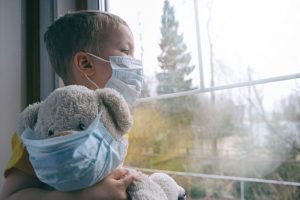
Our K-12 district runs remote programs for a meaningful share of its student population, and a recurring theme in those families' stories is a health condition, either the student's own or someone else's in the household, that makes them wary of public places. Some of these students are medically fragile and squarely in a high-risk category. Even with widespread vaccination and better treatment than a few years ago, it's understandable that these families aren't willing to take on unnecessary exposure.
Public education is at a point where it can and should offer a remote option for these families. Schools that force every student back onto campus regardless of health circumstances risk pushing some of these families toward homeschooling instead, where they may then ask their state for a voucher, or turn to a private company, charter school, or magnet school offering more flexibility. Keeping remote learning available inside the public system is one way to avoid pushing families toward the voucher conversation in the first place.
3. Some School-Aged Kids Are Also Working

During the pandemic, many students who worked outside of school were classified as essential and kept showing up to work, sometimes for long hours because older coworkers were out sick or unwilling to be in public. Some of those students are still with us now, choosing remote learning while keeping the same job.
Many families rely on two or three incomes just to get by. Giving students the choice between on-site and remote platforms lets them keep working while still meeting the requirements of an accredited program, rather than forcing a choice between a paycheck and a diploma.
4. "In and Out" Families Are a Permanent Fact of School Enrollment

A lot of districts I've talked with see students moving between remote and onsite learning throughout the year. Our own district tries to limit those transitions to the start or end of a grading period, but circumstances keep forcing exceptions. High-mobility enrollment isn't new, but a remote option makes it far easier to manage.
Offering a remote option lets schools retain students and keep them on track even as families move from place to place. It's still one of the harder problems to solve, and it will keep pushing us to think differently about how we deliver instruction to a student who might be in three different towns in one school year. With schools now routinely providing devices and a learning platform, keeping a remote option available for these students is more realistic than it was a decade ago.
5. If Public Schools Don't Lead Here, Someone Else Will
My strongest argument for keeping remote learning comes down to this: if public education doesn't take this on, private companies, private schools, and others will. According to EdSurge's 2025 review of virtual-school trends, the National Center for Education Statistics tracked the number of fully virtual public schools growing from 478 in 2013-14 to 691 in 2019-20, and NCES data since then shows the count climbing further, to 1,093 fully virtual schools by 2021-22. States and individual districts have filled that gap on their own: Georgia's statewide public virtual school, Georgia Cyber Academy, enrolled nearly 10,000 students in the 2024-2025 school year, and Michigan's Virtual Learning Research Institute reports that about 11% of Michigan public school students took at least one virtual course in 2024-2025.
I believe strongly in public education as the backbone of the country. Making the best schools available only to families who can pay for them creates real inequity. Public schools are in the best position to build a remote learning platform that gives every student a shot at it, no matter what county they were born in.
Our district has had years now to refine this process, and what we've built is something I'm proud of. Imagine where that refinement is another ten years from now. Again, I ask: if not us, then who?
6. Privatization and School-Choice Programs Are Only Growing
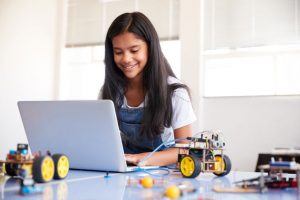
Public education already provides some choice in most states, whether that's open enrollment across district lines, specialized tracks, or dual-credit and career-and-technical programs that let students earn certificates in fields like welding, CNA work, or dental hygiene. A number of states have expanded voucher and education savings account programs in recent years, allowing families to redirect funding tied to their child toward a private or charter school. Many public school leaders have opposed this, since it can pull real dollars, and the staff and programs those dollars support, out of the local district.
Public education can make its own case here: offer the same range of choices, including remote learning, inside the free public system, and there's less reason for a family to look elsewhere. I believe we can do it as well as, or better than, the private alternatives.
7. Offering Choice Helps School Funding, Too
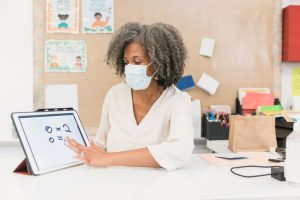
National School Choice Week runs every January and promotes a broad range of schooling options, including traditional public schools, charter, magnet, private, online, and homeschooling options. Even so, I'd argue that many public school districts already offer the same kind of choice that the movement promotes and don't always get credit for it. Open enrollment lets families attend a school outside their assigned zone, and in many districts a parent can choose a school within the district that fits their student, whether that's a magnet-style focus on Career and Technical Education, music and the arts, or STEM.
If your state allows the per-student funding to follow the student, remote learning can be delivered anywhere inside the public system, not just from a family's assigned building. During the pandemic, Montana temporarily relaxed restrictions on remote instruction for out-of-district students, and I believe that flexibility is worth making permanent.
Public schools can offer real choice, and plenty already do it well. We'll be stronger by offering remote learning as an additional option. If public schools don't, charter, private, and magnet schools are lining up to take those students instead. Again, I ask, "If not us, then who?"
Frequently Asked Questions
Is remote learning here to stay in public schools?
Yes, though it looks different than it did during the pandemic. Many of the districts that kept a remote option have turned it into a defined program with its own enrollment, curriculum, and staffing rather than a stopgap. Public virtual programs such as Georgia Cyber Academy and Texas's Lone Star Virtual Academy, a public virtual campus in Fort Stockton ISD, illustrate that shift toward a permanent, structured offering.
Why do some families choose remote learning over in-person school?
The reasons vary: a family member's health condition, a student who also works, frequent moves, or simply a schedule that fits better with remote work. None of these are about avoiding in-person instruction on principle. They're practical decisions about what lets a specific family keep their kid in public school at all.
Does remote learning hurt public school enrollment?
It can shift enrollment between districts if only some schools offer it well, which raises real equity questions for students who can't choose their school. It's a smaller risk to enrollment overall than losing those same families to homeschooling, a voucher program, or a private or charter school that offers remote options.
Is remote learning as effective as in-person instruction?
Research generally finds that outcomes vary substantially by program design and student population, and fully virtual schooling has often produced weaker academic outcomes than in-person schooling on average. It tends to work better as an option for specific circumstances than as a wholesale replacement for the classroom, and the districts that have kept it running well treat it as a distinct program with its own design, not the emergency version rushed into place in 2020.
- Remote learning outlasted the emergency that created it. Some states and districts have built structured virtual programs that continue to grow years after the pandemic ended, though the picture varies district to district.
- It solves real, ongoing problems. Health conditions, working students, and highly mobile families are permanent features of public education, not pandemic artifacts.
- The alternative to offering it isn't necessarily the status quo. Some families who need flexibility and don't get it from their public school turn to homeschooling, vouchers, or private options instead.
- Funding portability matters. Where per-student funding can follow a student into a remote program, public districts can compete with private alternatives on the same terms.
If your school is building out remote or hybrid instruction, the credential you bring to it matters. The programs featured here include options built around online and blended teaching methods, and several allow you to continue working while you complete the coursework.
As a 5th grade teacher, in 2010 Jon won the Presidential Award for Elementary Math and Science Teaching (PAEMST). As a principal, his school won the 2012 Blue Ribbon Award. In 2018, he won the National Distinguished Principal Award (NDP). In 2019 he won the National No Kid Hungry Breakfast Hero Award.
Jon is the author of three guides published on teacher.org: An Educator's Guide to Combat Bullying & Bully Prevention; Teacher Evaluation: A Transition Guide to Exemplary Performance; and You are the Wild Card: Infusing Fun Back into Curriculum. He has authored a children's picture book that was released January 2019 titled Benjamin’s Visit to Principal Reads Office…again! (available at www.archwaypublishing.com)
- Learning How to Say No and Set Boundaries with Parents - November 21, 2022
- How to Implement a Check-In, Check-Out (CICO) Behavior System - September 26, 2022
- Teacher Core Values: 7 Strategies for Living Your Code - August 15, 2022