
Dealing With Difficult Students: 9 Reasons to Give “That” Kid Attention

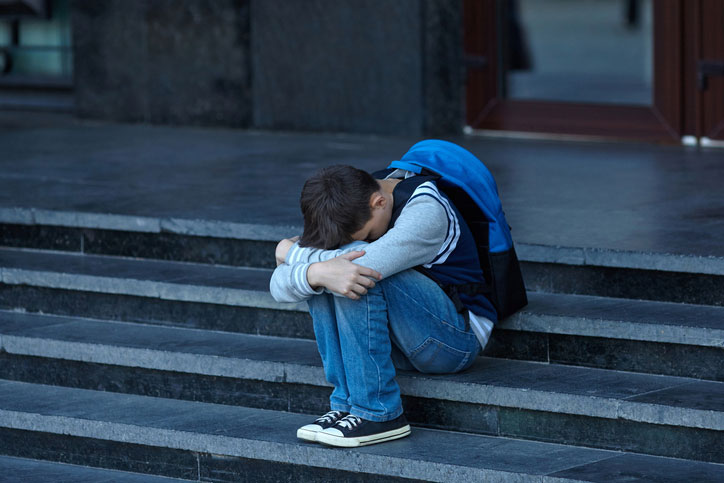
Dealing with difficult students starts with reading the behavior instead of removing the child. Persistent behavior can have many contributing factors, so look for patterns and individual needs rather than assuming a cause. Building the relationship, modeling missing skills, and sharing the load with colleagues keeps that student in class.


You know that one student who may drive you nuts, who may test all the boundaries, and who makes you lose sleep at night? Yes, "that" kid!
As a principal, my goal is for teachers to have tools to use with "that" kid in order to keep him or her in the classroom. I continually work with teachers on expanding these skills. Sometimes it comes down to LOVE! We can choose to dislike them, or we can choose to love them.
Some teachers spend more time worrying about "that" student being in their class, rather than creating successful solutions to implement. They want this student out of their class or sent to the office for long periods of time. "That" student can cause huge disruptions in learning, especially for the remainder of the students in the classroom. I understand the student (and possibly the teacher) may need a break away from the classroom for a while.
When a teacher comes to me with a student problem, I will always support them. I am going to ask some questions first. My first question is usually about the relationship between the student and the teacher. I am going to ask what they are doing to create a stronger relationship…every day!
I am lucky at my school that my teachers have heard this mantra, some of them for nine years. Many times they come to me with solutions, strategies, ideas, and techniques rather than just bringing me the problem. You know your staff has built something strong and is healthy when you can all get to a solution fast and not wallow in the problems.
Many times "that" student's behaviors may point to something larger going on. Trauma, anxiety, and other factors are possibilities worth considering, not conclusions we can draw from behavior alone. We must see the bigger picture and understand a stronger relationship will endure the toughest times. Here are nine reasons to love "that" kid!
1 - Behavior Can Provide Information
 Too many times we as educators do not take time to really study the behavior…dig deeper. If we dig deeper, we can learn so much more about the behavior being exhibited by our students.
Time usually is a factor in truly being able to solve behavior problems. If we could find something that works immediately, we are truly lucky. As educators, we are seeing more behaviors where the strategies and techniques we once used are not working consistently.
Behavior can provide information about what a student is experiencing or needs. Environmental, developmental, medical, disability-related, learned, and social factors can all play a part. My perspective on behavior was flipped when I took several workshops and became friends with Stacy York Nation, founder of Gobeyou.org! She illustrated that a student may need something that they never received in their young development; even sitting and consoling a high school-aged student may change "that" kid's world! She talks extensively about brain development and how we can implement tools and strategies depending on the needs of each individual child.
Stacy helped me understand I need to study the behavior more. By looking at the frequency, duration, and intensity, I can find and implement strategies and solutions to difficult student behaviors. Currently, in our school, we are transitioning from being trauma-informed educators to developing a trauma-invested school and community culture.
2 - Double Scoop
Sometimes the student you have worked hardest to reach is the one who treats you worst, and it can mystify you. Denny McLaughlin, from his work in Trust Psychology, calls this the "Double Scoop" and describes it as a student lashing out at the caregivers closest to them. That is his concept and his explanation. It is not an established account of why any particular student behaves this way, and I would not use it to decide what is going on with a child in front of me.
As educators, we cannot take this as a personal attack against us. Whatever is driving it, our job is to learn how to support that student. Rather than settling on a motive, look at what is actually happening and work out when to bring other people in.
Flipping your perspective with "that" kid is vital. This is where tip #1 above is crucial. We must dig deeper into this behavior, learn what the triggers are, and find out which supports actually help that student process and problem-solve frustration.
3 - Be the One
 It is sad to think that some students can go through their school experience and never have an advocate, not one teacher or staff member that knows them! How sad is that?
Be the one that changes "that" kid's life!
As my good friend, Hal Bowman, states, "Don't give up!" … Much of his writing, memes, and messages focus on school culture and working with the most difficult students. He professes the unwavering need for educators to have perseverance and not give up on "that" kid…giving them everything you have!
Be the one who fought for them, who helped when the going was tough, and who was there when they needed a shoulder to cry on. You may never hear about it years later. Do it anyway.
As an educator, I can tell you a few educators in my own school experience who fit this description. Many years after graduating, I have found out that those teachers were also supporting many other students in my school. I truly put these teachers on a pedestal!
Be the one!
4 - Grow
As educators, we sometimes feel like we cannot connect with our most challenging students. We feel like all our strategies and tools in our proverbial toolbox are not working…and we need more!
Researching best practices, connecting with colleagues in behavior and relationship building, and watching others can all be great strategies in continuing to build that toolbox. I am a firm believer that if it isn't working, then I need to find something else and not be afraid to admit it isn't working…YET!
Having a growth mindset when working with "that" kid is a must! In fact, we must continue to grow not only the toolbox, but the relationship with "that" kid. How many seeds are we planting and how much water are we giving those seeds? Sometimes it's about stepping back and deciding that maybe the seeds (problems) need fertilizer (creative ideas) instead of more water (same old strategies)!
Be open to growing yourself more and understand "that" kid is helping you grow…though it may feel like he or she is turning your hair grey or causing wrinkles!
5 - Challenge
 As educators, we understand that we chose this profession because we love kids. That is what carries a lot of us through the hard days.
We love connecting with our kids and seeing them engage in learning experiences we create. We are challenged each day to keep that engagement at a high level. In much the same manner, we must flip our perspective on behavior.
Too many times we say, "If only I could just teach." Well, working with behaviors and engagement is part of teaching. Supporting classroom behavior and social skills sits with all of us. Specialized behavioral intervention is a different matter, and responsibility for it can depend on the student's IEP or behavior intervention plan, on staff role and professional qualifications, and on district procedures.
I understand that the challenge we have with "that" kid is real. No one is saying your job is easy as an educator, but choosing education as a profession is full of challenges. We must take on these challenges the same way we take on the challenge of teaching multiplication. There are multiple ways to teach it, and we must know them all in order to connect with all our students. Likewise, we must take on the challenge to find the strategies to work with "that" kid in order to make him or her successful.
The challenge should drive us!
6 - Model for Others
Loving the toughest kid in school takes grit. Have you heard conversations in your school similar to this, "Well, Jimmy ("that" kid) was horrible for Mr. Smith, but did remarkably for Mrs. Craft." Students can respond differently from one classroom to the next for many reasons, including environment, structure, demands, supports, scheduling, peers, and accommodations. That difference is information worth talking about, not a verdict on either teacher.
Let's dig into what is working in the room where things are going better. What does that setting look like, how is it structured, and what is that teacher trying that the rest of us could test? Educators need to be self-reflective and not take it personal when a colleague is having more success with a student. Why is it so hard for some teachers to admit they need more strategies or should learn more from their colleagues? Some of us are lucky enough to have a passion partner on staff, a colleague who will go try something new alongside us.
I believe the strongest teachers are those who can admit they need support, find new strategies, and then implement them with "that" kid. As a principal, I would fill my staff with teachers who can do this!
7 - Model for "That" Kid
 Many times as educators we do not put repetition into our toolbox. We want the quick fix to a behavior problem. Some students need to see a skill modeled far more often than we expect. When I say a thousand times, that is my shorthand for patience, not a number to count to.
Loving "that" kid means we must take the time to model behavior for them. Here are several things you may have to model again and again for "that" kid:
- respectful words
- responding to an adult or peer
- asking for support with respect
- attentive, respectful communication in whatever form works for that student
- physical presence and stance
- using words such as thank you, please, sorry, etc…
- accepting a compliment, constructive criticism, apology, etc…
- asking to play with a peer, offering choices to play, and compromising in order to play, etc…
Plenty of students arrive without much practice at these skills, and we are the ones working to build them. I try not to guess at why, because I usually cannot know. What I can do is teach the skill that is missing in front of me.
When we teach and model for "that" kid, we are giving them the skills to be a more successful communicator. If repeated instruction is not moving the needle, that is the signal to work out why and bring in the appropriate supports, not to run the same intervention indefinitely.
8 - Giving Others a Break
 This strategy might be controversial for some educators, but I cannot tell you how much this strategy helps build a culture of loving and caring for "that" kid. When our axiomatic cup is full, we sometimes cannot take one more disrespectful comment or behavior from "that" kid, or we are quitting our job.
Ask that teacher to take "that" kid.
You can be a sanctuary for "that" kid. Give the teacher, the students, and other staff who work with "that" kid a break by forming a relationship and working with them for a period of time. It may only be for 15 minutes, but 15 minutes might give the teacher enough time to gather themselves mentally and physically.
I have several teachers in my building who are unbelievable with this strategy. In our school, we believe that the more a student is connected to the adults within our walls, the more we can leverage their behavior based on relationships.
Buddy classes have been a fabulous addition to our school culture. A buddy class connects two classrooms, usually separated by several grades, for academic and behavior purposes. We sometimes send a student with work to their buddy room, rather than the office. This increases the schoolwide culture of learning rather than simply reinforcing exclusion. Follow your school and district procedures when you do it. The student needs appropriate adult supervision, their privacy protected, and anything in an IEP, 504 plan, or behavior intervention plan followed. A buddy classroom supports those plans. It does not stand in for required behavioral or special education services. To learn more about buddy classes, visit an article I wrote on the topic.
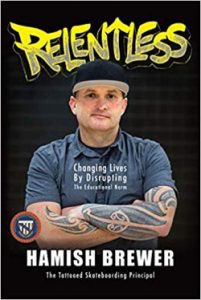
In the book Relentless, Hamish Brewer puts it plainly: "No excuses. We don't blame children!" His argument runs from there. Excuses and finger-pointing are not improvement strategies, and the person responsible for how you respond to a situation is the one looking back at you in the mirror. Your actions and your reactions belong to you.
Be relentless in how you support "that" kid! Don't give up and don't make excuses…support your colleagues and help be responsible for "that" kid! The best educators can… so can you!
9 - Love "That" Kid Like Your Own
 As educators, we sometimes forget the child with severe behavior problems could be our own! Empathy plays a role in understanding "that" kid. I was lucky enough to have a mother who supported me, who gave me tools and strategies, and held me accountable. I may not have been "that" kid, but I sure had a reputation for getting into trouble. Talking recently with some of my past teachers, they are thankful that I chose education for many reasons…retribution may be one of them!
What if "that" kid was your kid? How would you like him or her to be treated by the school staff every day? How do you expect other adults to treat your kid?
Once I flipped my perspective, I then developed more empathy for "that" kid. This past week I went out to seven straight recesses to support a student who has been struggling. We worked on words, actions, and most importantly, how he can ask others to play. I helped shape the words he and his peers used with each other. This student is used to playing games that deal with death, murder, and enacting Walking Dead scenarios. Getting physical with other students occurred every recess…usually hitting. We played several safe games where hands were not used to grab, pull, or hit others like zombies! I am happy to say this student had three consecutive successful days.
Sometimes you have to ask yourself, ‘If this was my kid, what would I work on with him or her, and how can I support them?'
We must love "that" kid like they were our own.
When Behavior Needs More Than a Relationship
Everything above assumes a student who tests limits, disrupts a lesson, and wears you down over weeks. That describes most of what teachers mean by "that" kid. It does not describe a student who is a danger to himself or to others, and it does not describe a student whose behavior is already documented as part of an identified disability. Those run on a different track, and relationship work supports that track rather than substituting for it.
The practical question is which track you are on. Frequency, duration, and intensity give you something concrete to describe, which helps when you bring other people in. Referral and support processes vary by school, district, and state, and they should be started when concerns indicate it rather than after some set waiting period.
| What you are seeing | Where it goes first |
|---|---|
| Testing boundaries, talking back, refusing work | Relationship work. Study the frequency, duration, and intensity, then model the missing skill |
| Behavior that spikes after one identifiable trigger | Relationship work plus notes. Track the trigger pattern before you change your response |
| Behavior that persists, escalates, or significantly interferes with learning | Your school's support or referral process, started when concerns first indicate it rather than after a set waiting period |
| Behavior tied to an identified disability | Keep implementing the applicable classroom supports and the student's IEP, 504 plan, or behavior intervention plan. Classroom strategies align to that plan, and the team comes in when a review or change may be needed |
| Any threat to this student's safety or another student's safety | Your school's crisis procedure, immediately. This is not a relationship problem |
None of this replaces the nine reasons. It sets the boundary around them. Relationship work and a referral are not alternatives, and starting one does not mean abandoning the other.
Frequently Asked Questions
What does dealing with difficult students actually mean day to day?
It means treating the behavior as information rather than as an offense. You watch how often it happens, how long it lasts, and how intense it gets, and you use that to work out what the student is missing. Then you teach and model that skill, repeatedly, while you keep building the relationship.
Why does the same student behave better for another teacher?
Students may respond differently across classrooms for many reasons, so comparing environments and strategies with the other teacher can help identify useful differences. It is not a judgment on your skill. Ask what their room looks like, how it is structured, and what they are trying, then test what might transfer.
Is it ever right to send a difficult student out of the room?
A break can be the right call for both the student and the teacher. What matters is where the student goes and what it signals. A buddy classroom with work to do keeps the student inside the culture of learning. Long stretches in the office mostly teach the student that removal is the outcome.
What if I have tried building a relationship and nothing has changed?
Change the strategy rather than repeating the same one louder, and don't wait it out. If behavior is persistent, escalating, significantly interfering with learning, possibly disability-related, or raising any safety concern, follow your school's support and referral procedures promptly instead of carrying it by yourself.
- Behavior can provide information - frequency, duration, and intensity give you something concrete to describe rather than a cause to guess at.
- Don't assume the motive - look for patterns in challenging behavior and involve appropriate supports when needed.
- Repetition is a real strategy - respectful words or asking to join a game may need modeling many times over. If it isn't working, find out why and get support.
- Share the load - buddy classrooms and colleagues who will take the student for fifteen minutes keep both the child and the teacher in the building.
- Know when to bring others in - persistent or escalating behavior, disability-related needs, or any safety concern go to your school's support process promptly, while you keep implementing the applicable classroom supports.
Working with students whose behavior challenges you is one of the parts of the job teachers most often say they want more training in. The sponsored programs on this page include graduate work in special education, school counseling, and educational leadership, which lead to different roles. Certification/licensure requirements for special education, school counseling, and educational leadership vary by state; verify that a program meets the requirements for the role and state where you intend to work.
As a 5th grade teacher, in 2010 Jon won the Presidential Award for Elementary Math and Science Teaching (PAEMST). As a principal, his school won the 2012 Blue Ribbon Award. In 2018, he won the National Distinguished Principal Award (NDP). In 2019 he won the National No Kid Hungry Breakfast Hero Award.
Jon is the author of three guides published on teacher.org: An Educator's Guide to Combat Bullying & Bully Prevention; Teacher Evaluation: A Transition Guide to Exemplary Performance; and You are the Wild Card: Infusing Fun Back into Curriculum. He has authored a children's picture book that was released January 2019 titled Benjamin’s Visit to Principal Reads Office…again! (available at www.archwaypublishing.com)
- Learning How to Say No and Set Boundaries with Parents - November 21, 2022
- How to Implement a Check-In, Check-Out (CICO) Behavior System - September 26, 2022
- Teacher Core Values: 7 Strategies for Living Your Code - August 15, 2022