
How to Make Curriculum More Engaging: 8 Teacher Strategies

Making curriculum more engaging rarely means replacing it. You can't always change the scope and sequence you're handed, but you can change how it lands: room transformations, genius hour, movement, self-assessment, celebrations of learning, music and drama, games and quests, and structured discussion all work inside a mandated curriculum.


Part 4 of 5 … Join us in the fourth installment of a five-part series that tells the story of how one dedicated principal observed positive change in the classroom when teachers incorporated the principles and philosophy from the popular book, The Wild Card by Hope and Wade King.
Let's empower you as a teacher!
Are you stuck in the same old lesson-planning mode? You use the same curriculum you have for several years. Your district may even require you to teach it word for word, or scripted. Yet, you understand your students need more challenging material, as well as knowing where they continue to struggle. Many of you may even supplement your curriculum with materials to meet the needs of most of your students…straying away from the mandated curriculum.
Standards should be what drives our instructional planning. No curriculum should be assumed to fully align with every applicable state or local standard without review, whether your state has kept with the Common Core or developed its own. Whether your administrative leaders require you to follow the curriculum only, or they let you create or find materials that meet the standards, teaming with leadership is necessary.
Do you know what your school leadership believes? If you team with other teachers, what do they do to meet the needs of their students?
The students in front of you may be different from the students you had last year. Knowing this fact should make you think about how you will meet their needs through the curriculum you use. Engagement and interest should play a role in what you choose. My hope is that all educators in leadership positions allow you to find materials that support the needs of the specific students seated in front of you.
Here are eight ways you can change your stale curriculum to meet the standards and the students seated in front of you…as inspired by Hope and Wade King's book, The Wild Card. The authors state, "If you hate the curriculum, the students will hate it more…why be a barrier when you can be a Wild Card?"
Here are the eight strategies at a glance, with what each one asks of you.
| Strategy | What it looks like | What it asks of you |
|---|---|---|
| Room transformations and costumes | The classroom becomes a pirate ship, a jungle, a campsite. All content for the day or week runs through the theme. | Planning ahead, borrowed or clearance costumes, and a willingness to start small |
| Passion projects or genius hour | Students choose a topic and report out. Time is earned as classwork gets finished. | Clear minimum expectations and a checklist students can work from |
| Active participation and movement | Whiteboards, floor markings, exercise breaks, tapping, yoga. | Questions built to fit your room, and permission from your custodian for floor work |
| Self-assessment and self-advocacy | Students score their own work on a simple rubric and set goals from it. | Consistency, so reflection happens on every activity rather than occasionally |
| Celebrations of learning | Students present finished work to families, peers, and community members. | Scheduling, family outreach, and one showcase per quarter or per year |
| Music, dancing, and drama | A class or school theme song, school-wide dances, students acting out historical roles. | Choosing the song with students, then actually using it in daily routines |
| Simulations, games, and quests | Revolutionary War role-play, modified board games, Kahoot, open-ended engineering quests. | Building or adapting the game, and setting rules students can follow |
| Discussion, debate, and Socratic seminar | Question stems, structured debate, student-led seminars, Kagan cooperative structures. | Explicit teaching of protocols before the first discussion, and practice after |
1 - Room Transformations and Costumes
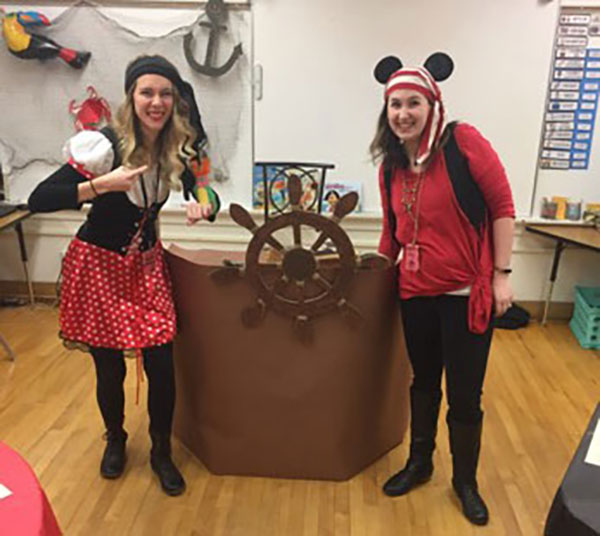
 Decorating your classroom again may seem like the most difficult thing to do during a school year, but room transformations can be a powerful way to engage and energize a classroom. Students in room 11 walked into their classroom this year, and there was visible yelling and screaming about what the classroom was transformed into…a pirate ship. The front of the classroom contained a large steering wheel like you would see on a pirate ship. The desks were arranged as if they were on the ship, and a plank lay on the side of the room connected to the ship. Students were encouraged to dress in costume. What cost under $20 dollars to put together created a memory of learning that students will remember for the rest of their lives. With over 1,000 views on Facebook in under 48 hours, the look of excitement and joy was evident as all the students were filmed walking into room 11 in the morning. You could hear them say, "No way, I can't wait for what we are going to do today." The teacher had an eye patch and was dressed as the wretched pirate leader.
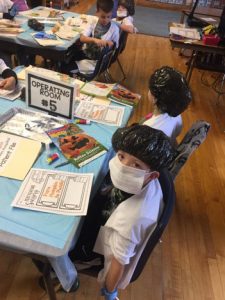
Much like Hope and Wade King in the book, The Wild Card, students in room 5 climbed up into their jeeps in the middle of Jurassic Park. A large volcano was protruding from the back of the room, while vines and trees were dispersed around. Large Easter eggs were painted to resemble dinosaur eggs on a table near the volcano. Being a Jeep owner, I personally loved how the desks were paired together to resemble CJ7 Jeeps. A guest scientist came to the classroom and showed students a chemical reaction that created a spewing volcano. The students were ecstatic. The teacher wore an explorer outfit that fit right into the movie Jurassic Park; she was ready for an adventure.
In room 4, students stumbled into a forest ready to go camping inside. A tent, campfire, and forest were visible in the classroom. Even the teacher dressed the part as an outdoor camper. Campfire stories, including ghost stories, could be heard around the fire that day.
All these amazing room transformations may sound like a lot of work (*they may be the first couple of times you try it), but they become easier to complete as you start thinking ahead on your proposed theme. You ask yourself, where can I get things for free? As the Kings state, "Start small." Start with doing a minor room transformation, and don't get into a competition with the teacher down the hallway or on Pinterest…there's always someone who can put more time or money into their transformations. Another helpful hint is to borrow costumes or find costumes on sale after Halloween. Having a plethora of cheap clothing and materials will help make your room transformations come alive and encourage students to do the same. It shouts, "Learning can be fun!"
All the curriculum (teaching across content areas) for the day or week was centered on the theme that each teacher chose. From reading, writing, math, science, to social studies, these thematic units engaged students in a world they seldom see. The engagement in each of these rooms during these transformations was extraordinarily noticeable. The inclusion of hands-on activities made these experiences something that will be remembered for a lifetime.
KIDS DESERVE IT!
2 - Passion Projects or Genius Hour
 What do students do when they get done with their work? Do you have a set plan for them? Do they know what to do, or are they constantly coming up to you and asking What can I do now? Passion projects and Genius Hour may not have been born out of these questions, but they can be the answer. They can now be found in almost every school as a way to spur engagement, excitement, and increase personalized learning. We want students to be creative, grow agency for learning within themselves, and personalize their learning through their own interests.
Passion projects can be defined differently depending on who you are talking to and how they have implemented them. The Passion Project Company defines it as the following,
Passion Projects are creative side projects. They're connected to your deeper meaning and they have tangible outcomes. Anyone can do them. What you need most is inspiration and commitment. Past projects include learning to play the violin, writing a book, creating a trailer for a documentary, prototyping a gardening app, and doing 30 days of random acts of kindness.
In room 7, students work hard each day and are actually rewarded with time to work on their passion project. Each student chose a project to start. Projects sometimes spanned weeks, while others were shorter. They were expected to report out their project to the teacher and the rest of the class. Specific minimum expectations were set on what students were expected to do with their time, as well as what they were responsible for when they reported out. This made it easy for students to use the checklist to see what they needed to do over the span of the time. Of course, the teacher would meet one-on-one and set different expectations if the student's passion project didn't meet the minimum requirements. The goal was to use all the academic time in the classroom as well as getting students to delve into a self-chosen topic…creating agency of learning.
Genius Hour can best be described by writers from the www.geniushour.com website as the following,
Genius hour is a movement that allows students to explore their own passions and encourages creativity in the classroom. It provides students a choice in what they learn during a set period of time during school. It's not easy to determine where the idea was originally created, but there are at least two events that have impacted genius hour.
In room 9, students were given time to work on self-chosen topics. These topics didn't connect directly to the content being taught…but sometimes they were an extension of what was being taught by a teacher. Genius Hour projects did not have many set expectations, but most teachers like to set minimum expectations. Students are all given time to start these projects, and then more time is earned as students finish work.
3 - Active Participation, Movement
 Competing with electronics can be a struggle for teachers as they try to find new and interesting ways to engage students. Getting students moving and participating can sometimes seem like a challenge, too. There are a multitude of strategies to get students interacting with curriculum, each other, and engaging their brains more productively. Adding kinesthetic movement to instruction is a common way to keep students engaged with the material. Treat it as a practical classroom tactic rather than a claim about how the brain stores information.
Active participation can look different in every classroom. The age-old whiteboards and markers are an easy way to get all students engaged in every question. By adding in a simple squat and reach with a board, you can get students exercising while answering. My favorite, and you must ask your janitor and principal, is marking up and writing on the classroom floor. Coming up with appropriate questions that fit the room configuration then becomes the challenge. In my classroom over my teaching career, you would have found the following:
- Cardinal Directions- N, S, E, and W - north, south, east, and west
- Likert Scale- 0-10 numbered on a scale - 0 could represent never, and 10 represents always
- Likert Scale- Probability Words - Never, highly unlikely, unlikely, 50/50 or possibility, likely, highly likely, and Certain
- Agree/Disagree- A and D - Agree on one side of the room and disagree on the other
- Quadrants- 1, 2, 3, 4 - Number each quadrant of the room (could even add the positive and negative attributes for the quadrants)
- Number Line- -10 to +10 -- Positive and Negative Integers
- Multiple Choice- A, B, C, D - Each quadrant had a letter associated with it, and I even encouraged students to think they might stand or crawl for a question that had multiple answers
- (NEW) Random Numbers - By placing random numbers around the room on the floor, it can create excitement for students, as they didn't know what was in store. While students are walking around doing a think-pair-share or stand up-hand-up-pair-up, you could give a code word, then students would scurry to the nearest random number on the floor. Then announce Who has number XX? Then that student or students would have to answer a question for a mystery motivator.
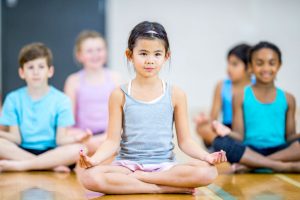
Movement such as exercise, tapping, yoga, meditation, and even weight lifting is used in classrooms as a way for students to take a break, settle, and get a better sense of their own bodies.
Room 3 uses exercises routinely to get students up and moving. They do simple toe touches and arm reaches, and may even do some dancing or jumping up and down. Not only does this get the wiggles out, but it also gives a brain break for students who need to do something other than sit and get in their seats. A great program that many classrooms in our school use is called S'cool Moves. There are nine ways the training overcomes barriers and is a model for multiple tiers of systems of support (MTSS), as stated by the authors of the website:
- Minute Moves are used daily by all staff and students to quickly get everyone on the same page.
- Strategies are integrated seamlessly with academic skills so no time is taken away from teaching.
- Resources go further from services being delivered in the classroom to support all learners in need.
- Students lead routines as soon as possible so they support each other and no one is singled out.
- Support staff and teachers use clear, specific activities that take the guesswork out of collaborating.
- Staff learns a new routine each month to grow their skills without adding to feelings of overwhelm.
- Research is provided on the backs of Minute Moves activity posters for solid, sure footing.
- School culture experiences a shift from "my kids" to "our kids" through universal tools.
- A framework of theory, research, and tiered intervention guides collaboration for staff.
Room 7 uses both tapping and yoga routinely in their classroom. Tapping, also called emotional freedom technique, is an alternative practice that proponents say helps with stress and anxiety. Its proposed mechanisms are disputed, and the research on it is limited, so treat it as something some teachers and families choose to use rather than an established intervention. The teacher had a parent who was trained in tapping, and she came into the classroom and taught students in the fall. Students used this technique all throughout the year.
The teacher also uses yoga in her classroom. Each student was given a yoga mat and was given instruction from a trained yoga teacher. The teacher and students then revisited these moves all throughout the year.
Though we do not have classrooms currently using meditation, it can be found all over the web being used in classrooms at any age. A fellow colleague of mine has a weight bench in his office. Students who need to regulate with heavy work can come down to his office and use his weight bench. Of course, there are many expectations and rules when using this equipment.
4 - Self-Assessment, Self-Reflection, and Self-Advocacy
 We must get students involved more into their learning. We as educators spend so much time coming up with engaging lessons, yet we don't involve them enough to make sure their learning sticks. By using self-assessment in some fashion on every learning activity, students have time to reflect on their work productivity, as well as the quality of their work. Having them score themselves, even as simple as a 1, 2, or 3 on a rubric, can help them reflect on the quality and completeness of their work. By goal setting and being specific with the rubric, students can be self-motivated to increase their knowledge and create a sense of agency.
Being able to have time to reflect during the school day can be another powerful tool that teachers use in order to get students thinking about their thinking. This metacognitive tool should be used much more in classrooms as students continue to learn about how they are learning. They are able to put words to what they are good at, as well as describing their growth areas.
Ultimately, we want students to be able to think, act, and respond for themselves. We want independent learners who can problem-solve. We encourage students to use their words as we model them and even help them co-regulate. This active modeling strategy can work for a majority of students if used enough times systematically. Teaching students to be self-advocates can be difficult and daunting. It takes time and patience, as well as persistence, to make a difference in students' lives.
As stated earlier, KIDS DESERVE IT!
5 - Rediscover Your Passion, and Celebrate Kids' Love of Learning
 Everyone loves a good party. What if you could combine a great party with fabulous student work products? We call these "Celebrations of Learning." Your passion as a teacher drives the excitement and engagement of your students and families, and this strategy is a win-win for you!
When students showcase what they have learned with peers, family, and community members, many take more ownership of it. In my experience, they take more pride in the work, too.
In our school, every grade level does at least one Celebration of Learning throughout the year, and many do them at least once a quarter. Here are a few ideas for each grade level that have been done in our school:
- Kindergarten - Math Games and Learning Lunch with Parents
- First Grade - Turkey Creations, Fraction Rabbits with Parents
- Second Grade - Create-an-Insect Presentations, Teacher-Parent Math Game Night
- Third Grade - State Reports, PowerPoint Presentations to Parents
- Fourth Grade - Informative Speeches, Seesaw Presentations to Parents
- Fifth Grade - Veterans Day Writing, Historical Wax Museum
- Sixth Grade - Student-Led Parent/Teacher Conferences, Science Environments Presentations
Finding new and creative ways to celebrate student learning has transformed in the past few years. Getting families into our school is the primary goal, but some teachers are using an application called Seesaw. It creates a digital portfolio for students so they can showcase their learning. Presentations on Seesaw include visuals, video, music, and audio. Parents can view this online at home, as well.
In addition, I have encouraged some teachers to create their own YouTube channel. Parents can subscribe to the channel, and they are then able to see whatever the classroom posts. Before posting anything involving students, follow your district's privacy and media-consent policies and use a district-approved platform and settings. Unlisted or private settings on a public video platform are not a substitute for that.
When selecting projects for students to showcase their learning, do not be afraid of starting with your own interests first. You may have special talents that would encourage students to learn more and also encourage them to try something new. In the same manner, teachers need to step outside of their comfort zone to find new ways that their students can showcase their learning. I encourage teachers to try one new technology-infused project every semester. We have tracked these projects for the last two years. Of course, many teachers do multiple technology-infused projects with their students, but the minimum expectation has been one project per semester. Remember, your passion for what you teach can be vital to energizing your students.
6 - Music, Dancing, and Drama
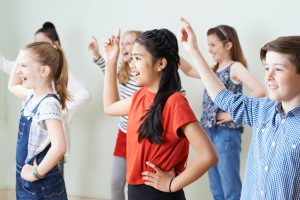 For some people, a good rhythm gets them up and moving. Even better, some students have no problem getting up in front of others to dance or sing. Then there are students who will not dance in front of others, but they would act out a part or character from history in some dramatic fashion. Drama and musically driven students need a venue to explore their talents and aspirations. If a teacher can create curriculum that highlights these learning strategies for students, it is a victory for everyone.
Music can bond a school culture. Students and teachers choose a theme song each year in our school. We play this song at most of our assemblies and in our classrooms routinely. We talk about the theme every week in our classrooms and across our school (NOTE: connected to our PBIS program). Recently, we have started making T-shirts that communicate this theme. Last year we used a hashtag on our shirts: #GotGrit. The school learned what grit looked and felt like through discussion, modeling, and activities. In my school, for the past eight years, we have chosen a popular song that connects to our theme. Here are the past songs and themes:
2011- Taylor Swift - "Mean" - Olweus Connection; Anti-bullying
2012- Phillip Phillips - "Home" - Making our school like our 2nd home
2013- Will.I.AM - "Hall of Fame" - Individual and Team contributions
2014- Pharrell - "Happy" - Be Happy and looking for more happiness
2015 - Katy Perry - "Roar" - Hear us Roar; individual and team contributions
2016- Rachel Platten - "Fight Song" - Perseverance - Ron's Clark's Lion's 19
2017- The Piano Guys - " It's going to be Okay" - Leader in Me
2018 - Elton John - "I Am Still Standing" - Angela Duckworth's Grit and Resilience
2019- Hanson Brothers - "I Was Born" - Each Student's Creative and Unique Abilities through Socio-Emotional Learning
If your school does not do a theme song, you could have a theme song for your classroom. This song could be chosen by your students and used for various reasons to create a strong classroom culture. Here are some examples of how you could use it in your classroom:
- Transitions
- Cleaning procedure
- Start and End the Day
- Work time
- Writing a Daily Reflection
- Time to Compliment Others
Then there's the use of music for crazy school-wide events to bring students and staff together. For example, the past two years before Thanksgiving, we have been dancing to the Gobble Gobble Turkey Woble. Students learned the song in the classroom, then were invited to dance school-wide. Teachers came in early before school started and danced with the students in our before-school day-care program (NOTE: Yes, we recorded it! There was an incentive to get staff members there. We had a full gym!). You can find various songs that can be done school-wide. I have seen many videos of Michael Jackson's, Thriller, danced by all students and staff around Halloween. Don't be afraid to work on culture strictly to build culture only…I recently read at the NAESP summer conference, "Culture Eats Strategy for Lunch."
Teachers who add music, dance, and drama into their curriculum will find students stepping outside of their comfort zone, as well as finding students who you previously didn't know had such talent. The bonus to adding all this into the curriculum is that many students will not realize that, even though they are having fun, they are also learning. This, again, is a win-win for both students and staff.
7 - Simulations, Games, and Quests
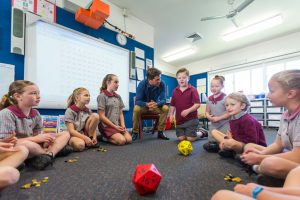 Do you believe video games, and the gaming industry, have forever changed student engagement in the classroom? Whether you believe it or not, engagement levels have changed with students. If you have taught for any amount of time, you know many students are addicted to the fast-paced, exciting, and fun graphics that video games provide. This is obviously hard to match as a teacher, but there are several things we can do to create a game-like atmosphere. Simulations, games, and quests are three instructional strategies that can infuse excitement and engagement into your curriculum.
Simulations help students understand a given topic in much more depth. You may remember vividly the problems you had on the Oregon Trail or learned about geography in the simulation game, Where in the World is Carmen Sandiego? Students are engaged in a simulation of a given curricular topic, like the Revolutionary War. In this simulation, the classroom is split into several groups of people: loyalists, patriots, British Redcoats, and more. Students are put into the role of each of these groups of people during the Revolutionary War time period. Their goal is to survive, as well as earn money and learn how to barter. Each day, the king or queen (teacher) announces the daily news that affects the groups of people, as well as imposing a new tax. Students write, do math, learn history, and more in this simulation. If you do not want to create your own simulation, you can find simulations for almost any topic online, and even find some that are technology-based.
Students love to play games. When connected to the curriculum, students will not even know they are learning! Game-based learning can be a way to get students more invested in the content. Infusing such games into your curriculum supports students' interest in a given topic. Teachers can create their own games, or can find several instructional games online.
Using "old-school" board games with current curricular content can be fun to modify. Taking a game like Monopoly and adding in questions, specific geography, and math for adding money can create a cross-curricular learning experience that students may love. What other board games can be modified or adapted to the curriculum you are teaching?
One of my students' favorite games can be played with a technology device, phone, or remote.Kahoot quizzes can be a fun way for all students to participate and learn about the content. Game-based learning with live audience participation can be a powerful motivator. Forming teams when playing can add a new element to the game. There are several game-based applications online.
Quests, in much the same manner as games or simulations has an end goal for students. They are given an instructional goal, and the student must use their tools in order to achieve the goals of the quest. Simulations may have more strict rules and procedures, whereas quests are more open for the student to solve. Students can choose the tools, materials, and processes in order to complete several tasks to complete the quest. Personally, I believe quests are similar to inquiry-based learning.
One of my favorite quests I taught in fifth grade was on levers and pulleys. Students were given a goal or question: "How can you easily lift Mr. Konen?" Students explored all the materials in the room, completed several tasks to learn more about levers and pulleys, and finally devised a plan to lift Mr. Konen. This quest took several weeks exploring a lever's fulcrum, load, and effort, as well as the three types of pulleys: fixed, compound, and movable. Once they had mastered this material, they were then able to find a solution to the original question of lifting Mr. Konen.
As a teacher, think about your favorite games that you liked growing up. How can you infuse, adapt, and modify them to teach your curriculum? Then step outside your comfort zone and find games that students are excited to play currently. How can you use them with your curriculum? NOTE: If you can devise Fortnite curriculum, you would be a millionaire for sure!
8 - Discussion, Debate, Socratic Seminar, and Kagan Learning Structures
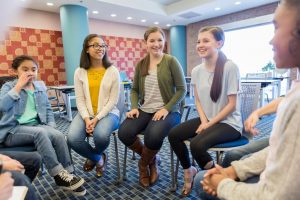 I was always told the person(s) doing the most talking is doing the most learning. If I stand in front of a class and lecture and not let students talk and process, I know I may be the only one learning something. We must find ways for our students to interact with our curriculum. Some of the easiest no-cost strategies are through discussion, debate, and other learning structures.
The ability for a teacher to start a discussion with students that is engaging starts with only a few things: passion, good questions, and engaging curriculum materials.
If you turn on Fox News, CNN, or any other news channels, you will see debate occurring 24 hours a day and seven days a week. People like to debate, and so do students! Setting up a classroom culture that is safe and comfortable enough for students to debate respectfully should be a goal for all teachers. A teacher can set up boundaries, rules, and guidelines for students to follow when debating. A great strategy for debate is to model questions and answers. Through question stems, students get support in asking powerful and respectful questions. Here are a few example question stems from a great article from www.teachthought.com titled, 26 Sentence Stems for Higher-Level Conversation in the Classroom:
- Could you give me your thesis in one sentence?
- Is it your position that…
- To be clear, you're saying that…
- I'm confused when you say Z, Can you elaborate?
- Put another way, you're saying…
- So you're saying that…
- Is it fair to say that you believe…
- I hear you saying that…
In much the same manner, the teacher can model example responses or answers to questions. In fact, teachers should put an enormous amount of effort into listening to their responses. They need to listen to comments and responses in order to uphold the dignity and respect of all students. They continue to model language to avoid bias, hurtful, and disrespectful language. They must correct language when it is disrespectful, like the following response: "You could ask the same question by stating…" or "Another way you could say that is…" Being proactive and using debate in the classroom starts with the teacher setting up a classroom culture that includes positivity, empathy, and kindness.
The Socratic Seminar learning structure has obviously been around since Socrates. What makes it so engaging? At the heart of this strategy is student discussion. Student-led discussion is used to build student ownership of the learning, critical thinking about the content, questioning of each other, and a sense of community within a classroom. Like debate, teachers must spend time specifically teaching protocols and rules for discussion. The teacher is a mere observer when done effectively, and this only happens through intentional planning. A great article from www.edutopia.org titled Socratic Seminars: Building a Culture of Student-Led Discussion states eight main steps in setting up this learning structure in your classroom (NOTE: I paraphrased them below):
- Setting up a safe classroom environment.
- Deciding on the curriculum or academics to be discussed.
- Preparing students to discuss.
- Setting up the classroom for discussion.
- Modeling and direct instruction on how Socratic discussion works.
- Teacher pulling away and providing less guidance as they master the structure.
- Assessing the discussion.
- Reflecting on how to get better.
Another way to infuse energy into stale curriculum is through the use of Kagan Learning structures. They are a way to engage all students in learning. These learning structures support student discussion and talking in fun, creative ways…the students will be working harder than the teacher. By infusing some of these structures, students look forward to getting together to learn.
I believe cooperative learning is valuable for everyone. Much like the strategies mentioned above, debate and the Socratic Method, Kagan Structures all have protocols and guidelines. Explicitly teaching these to students is the key to success. A teacher must practice them, assess their effectiveness in meeting the curricular goals, and lastly reflect on how it could go better next time. Here are five of my favorite Kagan structures, which can be found with further explanation on www.kaganonline.com and in the article titled The Essential 5: A Starting Point for Kagan Cooperative Learning.
- RallyRobin
- Timed Pair Share
- RoundRobin
- RallyCoach
- Stand Up, Hand Up, Pair Up
There are well over 100 learning structures, as well as over 100 different ways to do the simple Think-Pair-Share. Teachers can explore which structures align best with the curriculum, as well as matching the structure with the specific students seated in the classroom. In a master teacher's classroom, they understand when and what learning structures need to occur in the classroom. This is done for both content coverage and classroom management. When intertwined together, the success rate increases!
Continue reading... find the fifth and final installment of Jon Konen's 5-part Wild Card Series here.
Frequently Asked Questions
Can you make curriculum more engaging if your district requires a scripted program?
Often, though, how much room you have varies by curriculum, district, school, and any implementation or accommodation requirements attached to the program. Some programs fix only the scope and sequence. Others specify grouping, pacing, and assessment format as well. Start by finding out what your administration actually requires versus what it merely expects, and team with leadership before you change anything.
What is genius hour?
Genius hour sets aside a fixed block of school time for students to explore topics they choose themselves. It grew out of the 20% time policies used at companies like Google. Most teachers who run it attach a few minimum expectations, then let students earn additional time as their assigned work gets finished.
How much does a classroom transformation cost?
Less than teachers expect. The pirate ship described above came together for under $20. Borrowing costumes, shopping clearance racks after Halloween, and building a stock of cheap fabric and props keeps the cost down, and the first attempt is always the most work.
Do room transformations take time away from teaching the standards?
Not when the theme carries the content. In the classrooms described here, reading, writing, math, science, and social studies for that day or week all ran through the transformation. The theme is the delivery vehicle, not an add-on scheduled around instruction.
What are Kagan structures?
Kagan structures are cooperative learning routines with set protocols, such as RallyRobin, Timed Pair Share, and Stand Up Hand Up Pair Up. There are well over 100 of them. They only work if you teach the protocol explicitly before you expect students to use it.
- You don't need a new curriculum - you need a different delivery. Every strategy here works inside a scope and sequence somebody else wrote.
- Start small and start once - one minor room transformation, one showcase, one new tech-infused project a semester. Competing with Pinterest is how teachers quit after the first attempt.
- Talk to leadership first - what your administration requires and what it permits are often two different things, and you won't know which until you ask.
- Protocols before participation - debate, Socratic seminar, and Kagan structures all fail without explicit instruction in the rules, then practice, then reflection.
- Students should be doing the talking - and the scoring, and the choosing. Self-assessment on a simple 1-2-3 rubric can help students reflect on the quality and completeness of their work.
Several of these strategies lean on training that classroom teachers don't always get in a preparation program, whether that's cooperative learning structures, curriculum design, or reading instruction. If more coursework is on your mind, the programs listed on this page are a place to start looking at what's available to teachers who intend to stay in the classroom while they study.
- AI Tools for Teachers: What Actually Saves You Time - April 11, 2024
- Benefits of Teaching: What the Job Actually Gives Back - September 15, 2023
- How to Choose a Teaching Degree Program: 7 Things to Check - August 15, 2023