
11 Total Participation Techniques That Involve Movement

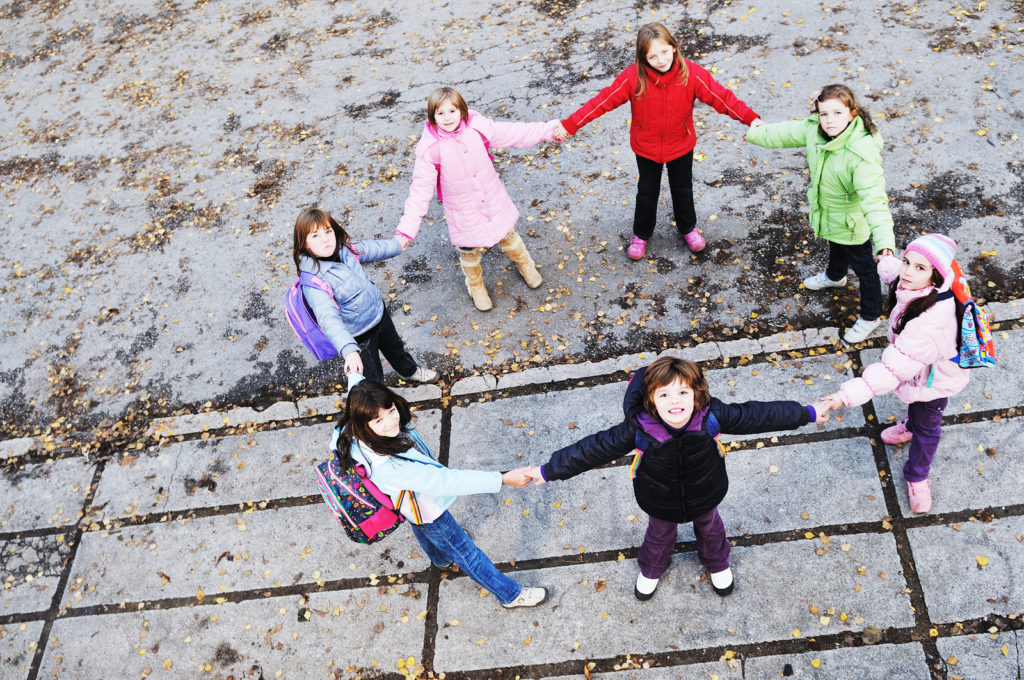
A Total Participation Technique (TPT) is a classroom strategy that engages every student in responding at the same time, rather than one volunteer answering while the rest of the class listens. Movement-based classroom activities can increase physical activity and may improve attention and on-task behavior, although evidence for immediate improvements in cognition or academic performance is mixed.


Jensen writes that "simple biology supports the obvious link between movement and learning" (Jensen, 2005). Jensen explains that oxygen is necessary for brain function and that physical activity influences blood flow (2005). As part of his broader theory of the biological rationale for movement, Jensen also proposed that increased movement contributes to greater cortical mass, more neuronal connections, and gene expression that supports learning and memory. These are Jensen's own theoretical claims, not established outcomes of ordinary classroom movement in children.
Why does this matter? Kids need to interact and process the material presented to them. When they get up and get active, they have more energy to do what needs to be done. I've sat through plenty of teacher workshops where I just took in information for hours, only to find myself daydreaming, making lists, and working hard not to doze off. Brain researcher David Sousa argues that the brain needs oxygen for fuel, and that physical activity can influence cerebral blood flow and other physiological processes associated with brain function, although the relationship between these changes and cognitive performance is complex (Sousa, 2006). Sousa also argues that classroom movement activities can increase physical activity and may improve students' attention or on-task behavior (Sousa, 2006). Using the concepts from Total Participation Techniques by Persida and William Himmele, here are 11 of their movement activities that get students out of their seats, manipulating objects, talking with one another, and processing learning together.
1 - Line Ups and Inside Out Circles
This strategy allows students to get out of their seats to discuss with different classmates. It's a Kagan-inspired technique that randomly pairs students. I like to use it during my Daily 5 reading time, when students interact with their free-choice texts. I put a focus question on the board, such as "Who is the main character in your story?" or "My character is a strong (or weak) main character because…" I have students reflect and jot an answer on sticky notes, or just take a few minutes to formulate their answer alone before we move. Since I have a large class, I line students up in two circles: a smaller inner circle and a slightly larger outer circle, facing each other. They share their thoughts on the question with the person across from them, bringing notes or their book as references, and take turns talking through their answers. This usually leads to more questions about each other's books. Then I ask the outer circle to take two steps to the left until they're in front of a new person, and they discuss the same prompt with that person. As kids move around their circles, I move around the lines, listening to their conversations to see who has a developed sense of character and who needs more work on it. This strategy works best with open-ended prompts that ask students to justify their reasoning. A literal or fact-based question won't get the same results. It works with any subject, and it helps if I spend time thinking through the unit's big ideas before I write the prompts I'll use across the lessons. This helps students learn to converse back and forth and build more detailed answers for the partners listening to them.
2 - Three 3's in a Row
This technique develops listening, summarizing, and critical thinking skills. Students get a template with nine boxes, each holding a question I've prepared. They move around to classmates, listening to their peer "experts" and gathering information. Each student has to summarize what their peer said and write that summary in the corresponding box. The owner of the template is the one who has to write the answer, which is crucial because it forces them to engage with what their peer said rather than just copying it down. If you let others write on the template, the activity turns passive. Students can only use a given peer once per question, so they end up talking to nine different classmates. My job is to walk the room and get a quick read on what the class has learned well. The blank question boxes tell me what's still difficult for my students. After students finish, we share out as a class what they learned. Higher-order questions push them to synthesize, analyze, and evaluate the concepts.
3 - Networking Sessions
This simple activity gets kids talking to classmates they don't usually talk to, which helps build classroom community. I like to use it at the start of the year while I'm building that culture. I prepare up to four prompts or questions and have students prepare their answers first. Then they find someone they haven't spoken to that day to share their answer. I play music while they talk, and when the music stops, they thank their partner and find someone new for the next question. We repeat this through all four questions. During our first science investigation, we used this technique, and students answered: Explain why mass and release position change how a pendulum swings. Why did the swinger's number of swings in 15 seconds decrease when its length changed? What generalizations can you make about pendulums and their length, mass, and release position? And what other pendulums can you think of in the world, and what most affects them: mass, length, or release position?
4 - Categorizing & Sorting
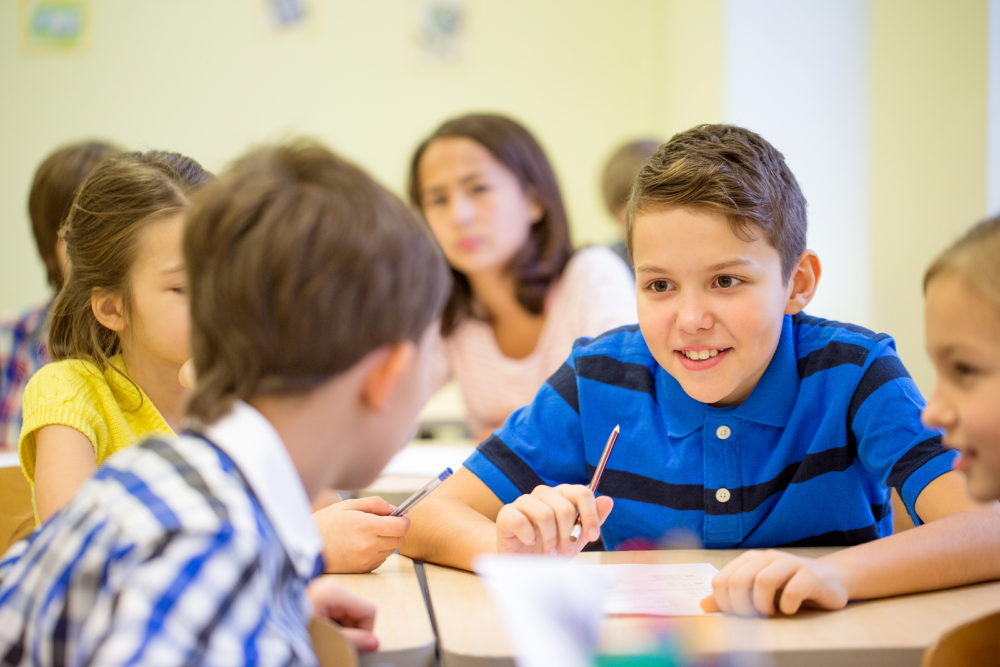
This technique helps students understand the characteristics of concepts that vary, such as geometric shapes, prime and composite numbers, factors, multiples, short and long vowels, and more. It gives students the chance to see how something can be sorted more than one way and still be correct. I've had students sort a pulled shelf of books by genre, and they have to justify why each book landed in its category. When categorizing, I have students generate the category titles themselves as they form their groups. When sorting, I set the category names and traits in advance, and students sort within those piles. Either way, this technique helps students understand the features of the concepts they're studying and focus on the specific traits that matter, while also building their ability to justify their reasoning.
5 - Appointment Agendas
Students make appointments with classmates so they have a variety of partners to talk or work with during lessons. I let them choose their first five partners, then I fill in the rest of the appointments myself. Each person can only appear on an appointment card once. As students walk around to find a partner, they find a slot both have open and write each other's name in it. I keep a copy in their book boxes and one myself. I use these appointments when I want students to share their Quick-Writes or Quick-Draws with a partner. After reading Total Participation Techniques: Making Every Student an Active Learner, by Persida and William Himmele, I now take my appointment share-outs a step further: once pairs share with their specific appointment, I have them join another pair and share again in a small group. Adding to the pairs this way keeps my students sharing more openly and staying more engaged. When I asked them to share whole-group, some students would disengage and wait for others to do the talking. In smaller groups, they were far more likely to keep sharing their responses.
6 - Bounce Cards
These cards give my students something to say when they're stuck, shy, or just need a starter to get the discussion going. When students get into one of their predetermined small groups for a book talk or discussion, they pull out their Bounce Cards for help when they're stuck. I introduce this during the 10 Steps to Independence (Daily 5), where we model the right way and wrong way to do something. I model a discussion with another student, showing the right way and the wrong way, and emphasize that we're bouncing ideas and conversation off each other. Students can Bounce (take an idea and bounce it off their group members), Sum It Up (rephrase what someone else said), or Ask a Question about what a peer said. The more guided practice I do with this technique, the more effective it is once I release control and let students run their own small-group discussions. I model it for the first few weeks of school, then let them decide when it's time to move to the next prompt. I always debrief afterward, since it helps students share what was hard and what went well during these discussions.

7 - Feature Walk
This technique gets students out of their seats to work in small groups. It works well with text features, since students can analyze pictures, diagrams, maps, charts, tables, graphs, and other supports that aid comprehension. I choose four features from the text and make enlarged, page-sized photocopies. With 26 students, I make three sets of the four pictures and put students in predetermined groups of three. I like groups of three because everyone talks and shares. I hang the picture sets around the room, and students move through the room discussing a prompt I give them as they analyze each one. Prompts I've used include: How does this text feature help you understand the topic better? Why might I have chosen this picture as important to focus on today? What message is being conveyed through this picture? Brainstorm who would be affected by the meaning behind this text feature, and how. What's the most important thing about this picture or text feature? I let students reflect individually first, then share with each other. After a few minutes, I ring my chimes, and everyone moves in the same direction to the next picture or text feature. The silent processing minute I give them is critical: it pushes students to think below the surface and develop their thoughts about the feature before they have to talk about it, and I find their answers are stronger and more thoughtful because of it.
8 - Citation Walk
This technique follows the same procedure as the Feature Walk, but focuses on a citation or quotation from the text or resource students are studying. I post these citations around the room, and students move through them as they do in a Feature Walk, discussing how each relates to our topic. I might ask them to figure out why I chose that citation, or what the author really meant by it, or what bigger message it conveys. As with the Feature Walk, it's important to give students time to silently process their answers before they share out.
9 - Mouth It, Air Write It, and Other Individual Response Formats
This technique works especially well with early primary students, who can silently mouth a response by forming the answer on their lips without making any sound. I love using it when students are wound up and having trouble maintaining a quiet learning environment: sounding out cat looks a lot different than sounding out rat, even though the endings match. Students can also air-write the answer, or write it on the floor with a finger, which works well for initial sounds, numbers, or letter formations. My fifth graders whisper answers to math problems to their neighbor after showing me on their whiteboards. Younger students love changing their responses to a whisper instead of speaking out loud during carpet time. Show Me with Your Fingers works well when I'm reviewing for a test or asking multiple-choice questions: if the answer is A, students hold up one finger, two for B, three for C, and so on.
10 - Acting It Out, Role Plays, and Concept Charades
Acting things out or demonstrating comprehension with the body lets students process what they really know about a concept (Himmele, 2017). Kids can draw things in the air, or act out a science concept like how molecules form or what a state of matter looks like. In Total Participation Techniques: Making Every Student an Active Learner, Himmele describes fifth graders practicing motor control by creating a "nervous system game" in which students play messengers, carrying signals along the central nervous system. Science lends itself to acting out this way, and so does vocabulary: words produce images, and adding an action to a word helps it stick in long-term memory. In Zoo Phonics, a kindergarten letter-sound program, hand movements connect to each word. Months later, when I act out the hand motion without a verbal cue, students can still produce the sound or the letter name. In history, students can act out war scenes or artifacts from a period of study. In literacy, they can act out genres like fantasy, nonfiction, poetry, and autobiography. Acting out complex concepts this way gets students out of their seats and using higher-order thinking to decide what motions should represent certain words or ideas. My students get nervous acting out in front of peers, but they do much better in small groups, where it feels like fewer people are watching.
11 - Simulations
This technique builds relevance for students by giving them a scenario they can relate to, then connecting it to an event, say in history, that might otherwise feel distant. This year, we're studying how a bill becomes a law. To make that process meaningful, we set up our own classroom government: students write their own bills and work to get them passed through a "Senate" and "House" and signed into law, using our own principal and our school's real needs as the backdrop for the laws they create. Students tend to become emotionally invested, and when that happens, the connection and relevance drive lasting learning.
Using these techniques to get students up and moving helps them engage in deep, meaningful, lasting learning. Total Participation Techniques give students the chance to demonstrate higher-order thinking through interaction, and I see my students doing that work while having fun.
References
- Himmele, P. & Himmele, W. (2017) Total Participation Techniques: Making Every Student an Active Learner (2nd ed.). Alexandria, VA: ASCD.
- Jensen, E. (2005). Teaching with the brain in mind. (2nd edition). Alexandria, VA: ASCD.
- Sousa, D. A. (2006). How the Brain Learns (3rd ed.). Thousand Oaks, CA: Corwin Press.
Frequently Asked Questions
What is a Total Participation Technique?
A Total Participation Technique (TPT) is a teaching strategy that engages every student in responding at the same time, rather than one volunteer answering while the rest of the class remains passive. Persida and William Himmele developed and popularized the TPT framework in their book Total Participation Techniques, and TPTs range from quick individual response signals to full-group movement activities.
Why add movement to Total Participation Techniques?
Movement-based classroom activities can increase physical activity and may improve students' attention and on-task behavior, though evidence for immediate gains in cognition or academic performance is mixed (Jensen, 2005, and Sousa, 2006). Getting students up and moving also breaks the passive-listening pattern that leads to disengagement, especially during longer lessons.
What grade levels do these movement techniques work for?
Most of these techniques adapt across grade bands. Line Ups and Inside Out Circles, Networking Sessions, and Feature Walks work well from upper elementary through secondary. Mouth It and Air Write It are especially effective with early primary students, while Acting It Out and Simulations can be scaled up in complexity for older students.
Do movement-based techniques work for every subject?
Many of these techniques can be adapted across subjects with an appropriate prompt. Open-ended, opinion- or judgment-based questions work best for discussion-based techniques like Line Ups and Citation Walks. Science and history lend themselves naturally to Acting It Out and Simulations, but Categorizing and Sorting works in math, reading, and science alike.
How do I introduce these techniques without losing classroom management?
Model the technique first, as you would any new classroom routine: walk through the right way and the wrong way before releasing control. Several teachers who use Bounce Cards and Appointment Agendas find that a few weeks of guided practice at the start of the year make the technique run smoothly for the rest of the year.
- Movement supports attention, not just engagement - movement-based activities can increase physical activity and may improve attention and on-task behavior, though evidence for immediate cognitive gains is mixed (Jensen, 2005, and Sousa, 2006).
- The prompt determines success - open-ended, judgment-based questions elicit far more from discussion techniques like Line Ups and Citation Walks than literal, fact-based ones do.
- Ownership prevents passivity - techniques like Three 3's in a Row only work if the template owner writes their own answers. Letting others write turns the activity into a passive one.
- Smaller groups sustain more sharing - students who disengage during whole-group share-outs stay engaged far longer in small-group or paired formats.
- Guided practice comes first - techniques like Bounce Cards and Appointment Agendas need a few weeks of modeling before a teacher can release control and let students run them independently.
Strategies like these are easier to find when you know where teachers are sharing what actually works in their own classrooms. The programs featured here connect you with education resources built by people who've stood in front of a class themselves.

- 11 Strategies to Encourage Students to Own Their Learning - January 19, 2018
- Student Behavior During the Holidays: 5 Potential Stressors - December 21, 2017
- 10 First-Year Teacher Struggles That Catch Veterans Too - November 27, 2017