
Special Education Labels: The 13 IDEA Disability Categories

Special education labels are the IDEA disability categories that schools use when identifying students who need services, and federal regulation defines thirteen of them. An eligibility category is part of determining whether a student qualifies for IDEA services. The student's individual needs then drive the IEP.


We live in a post-modern society where labels are kind of our thing. We're trying to move away from pigeon-holing, stereotyping, or classifying people, but, in my opinion, in our attempt to NOT label people, we are doing exactly that.
Who Am I?
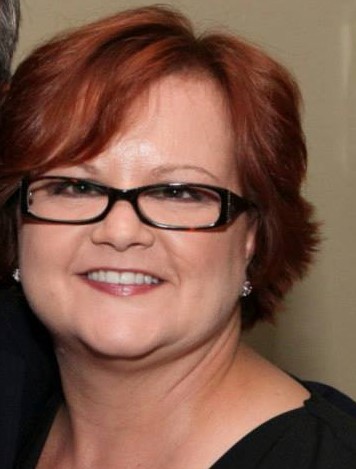
I am a wife, a mother, a grandmother, a Christian, a Special Educator; I have credential abbreviations after the comma following my name. In addition to that, I am a daughter, a granddaughter, a niece, an aunt. I am of Scotch-Irish heritage. I am a Michigander. I am a writer.
I am a friend.
Take a Picture. It Will Last Longer…
For Special Education Teachers nationwide, it is Annual Review season, and I am joined by many who are reviewing goals and poring over student data. We want the child's PLAAFP statement (Present Level of Academic Achievement and Functional Performance) to be information-rich enough that the whole child is accurately depicted. We know their social and family issues as well as their academic challenges, or we do our best to. Set the best goals, create the best lessons, develop happy learners. More labels.
Every day during Annual Review and IEP season, I open a student's file, and I see it, right there, in bold black letters: the student's named disability, a label which, if we're honest, may remain with the child well past their high school years.
Ask any kid who has graduated from high school and ever received Special Education services. They can tell you precisely what their label was and what they dealt with because of it. Their stories vary. Their emotions surface fast.
Some labels given are on-target, naming the student as a child with another health impairment. Yep. Susie Q. has a life-threatening cardiac issue. Yes, there is some cognitive delay, and yes, she's not at grade level, but is that really WHO she is? The cognitive delay isn't noted as part of OHI…she also has significant hearing loss, and vision is becoming problematic as well.
What about Marti? Intellectual disability. She reads at a first-grade level and is in fourth grade, and she's working at about second grade level in Math. She is bright, smart in ways which aren't measured, and really funny. She has heaps of common sense. She cooks with her mom, hunts and fishes with her dad, and plays with and argues with her siblings. She has a bit of a stammer, but only when she is excited about something.
Max is a kid with Down syndrome. He's loving, hilarious, stubborn, and prone to mood swings. He can dress himself, eat for himself, and bathe himself. What his file documents is what he needs right now: close supervision through the school day and support at home, and his team plans around that.
Three different kids. Three different identifying "labels". Each child's needs and challenges are unique.
Disability Designations
The Individuals with Disabilities Education Act is the federal law that makes special education available, and the regulation implementing it defines the disability terms a school can use. Those definitions live at 34 CFR §300.8. Here are the thirteen, in the order the regulation lists them, with what each one actually covers.
| IDEA disability category | What the regulation covers |
|---|---|
| Autism | A developmental disability affecting verbal and nonverbal communication and social interaction, generally evident before age three. |
| Deaf-blindness | Hearing and visual impairments together, whose combined needs can't be met by programs for deafness or blindness alone. |
| Deafness | Hearing loss severe enough that the child can't process language through hearing, with or without amplification. |
| Emotional disturbance | One or more listed characteristics over a long period and to a marked degree. Includes schizophrenia; excludes social maladjustment on its own. |
| Hearing impairment | Hearing loss, permanent or fluctuating, that isn't severe enough to meet the deafness definition. |
| Intellectual disability | Significantly subaverage intellectual functioning with deficits in adaptive behavior, manifested during the developmental period. |
| Multiple disabilities | Concurrent impairments whose combination can't be accommodated in a program for just one of them. Does not include deaf-blindness. |
| Orthopedic impairment | Severe orthopedic impairment from congenital anomaly, disease, or other causes such as cerebral palsy or amputation. |
| Other health impairment | Limited strength, vitality, or alertness from chronic or acute health problems. Named examples include asthma, ADD and ADHD, diabetes, epilepsy, heart conditions, sickle cell anemia, and Tourette syndrome. |
| Specific learning disability | A disorder in basic psychological processes involved in understanding or using language. Named examples include dyslexia, perceptual disabilities, and developmental aphasia. |
| Speech or language impairment | A communication disorder such as stuttering, impaired articulation, a language impairment, or a voice impairment. |
| Traumatic brain injury | Acquired brain injury from external physical force. Excludes congenital or degenerative injuries and birth trauma. |
| Visual impairment including blindness | Vision impairment that persists even with correction. Covers both partial sight and blindness. |
Developmental Delay and State Variation
There's one more term worth knowing about, and it explains why published lists sometimes look different from each other. Section 300.8(b) permits states to apply a developmental delay category to children aged three through nine, or to a subset of that range, for delays in physical, cognitive, communication, social or emotional, or adaptive development. It's an eligibility option states may adopt, separate from the thirteen defined categories, so you'll see it on some lists and not others.
States also use different terminology, while their eligibility rules still have to comply with IDEA. If you're checking a student's file against a list, check your state's eligibility rules alongside the federal definitions.
What Special Education Labels Actually Do
Here's the part that gets lost in the argument about whether labels are fair: the label is an eligibility finding, not an instructional plan.
Under IDEA, a category on its own doesn't qualify anyone. The regulation's definition of a child with a disability requires that the child be evaluated as having one of the disabilities and, by reason of that disability, need special education and related services. Many of the individual category definitions in §300.8(c) also carry their own language about the disability adversely affecting educational performance. Either way, the practical upshot is the same: a diagnosis without an educational impact doesn't make a child eligible, which is why a student can have a documented medical condition and still not have an IEP.
What the category does not do is prescribe services. Nothing in the regulation ties a category to a particular set of supports. The IEP team writes the plan from the individual child's needs, which means two students carrying the same label can have almost nothing in common on paper. That distinction matters for the argument Candace makes further down: the deficit-model thinking she describes comes from treating the category as the plan, not from the category existing.
A Note on How We Say It
Person-first language puts the student ahead of the category: a student with autism. Identity-first language reverses it: an autistic student. Preferences vary by individual and by community, and identity-first is widely preferred within some disability communities, including by many autistic and Deaf people. When you can, follow the person's stated preference. What holds either way is keeping eligibility categories where they belong, describing the supports rather than the student.
The Benefits of a Named Designation
Having polled "my" public, my vast circle of friends, family, and colleagues, responses were pretty much split right down the middle, with half saying labels are unnecessary and the other half saying they're helpful.
In my experience, parents of Special Needs kids are generally open about the fact they ONLY want their children to be treated fairly, with dignity, and to have some form of social life. My husband and I are parents of an adult-aged person with Down syndrome. We get it. He has all the physical attributes as well as the character traits of being happy, funny, and stubborn. Yeah, he has Down syndrome. We know…but does it matter if he does or doesn't have a label?
If a kid like Marti has no obvious disabilities apart from cognitive issues, does she really need to have the identifier in her file? Or could she just be noted as a learner with significant deficits? That's still a label. Teachers need to know what to do. We need to read a file and have a handle on the needs of students in our care.
A Case Against Labels
To check myself and see if it was only me who thought labels weren't a good thing, I reached out to a former colleague. My Really Smart Friend Candace sees both sides. She has been teaching for about 10 years, and she and her family have been engaged with the Special Needs community at the local, state, and national level for most of her life.
"I have never been a fan of labeling because I believe that categorizing abilities goes hand in hand with labeling. This tends to cause some educators to approach students from a deficit model, whether they intend to or not. Now, I do understand the point of labeling in terms of being able to understand what needs a student may have based on a larger diagnosis. In an ideal world, the diagnosis would come along with recommendations or a checklist to support the learner. Picture this -- in addition to the IEP or 504 Plan (if the student has one), the educator is given a checklist/quick tips sheet which notes key supports to put into place for the learner and also provides the strengths of the learner. I think those pieces are more important than the traditional label, and that's where I'd love to see the conversation vs. a focus on the challenges or generalizing all learners with these varying abilities."
Nailed it.
We Don't Need No Stinkin' Label….Do We?
…and then I spoke with my Really Smart Friend, Sandra.
"My dislike of the labeling system is rooted in a place where my own child, a child with Dyslexia, was seen as 'slow.' He couldn't shake it no matter how hard he worked … He now thrives as a young man working as a cabinetmaker who also does leatherwork and other amazing and beautiful crafts as a side gig. His educational career would have been better served if those who were his teachers understood what Dyslexia IS rather than seeing him as a kid with a label and washing their hands of his academic acquisition. It's like they said, 'Oh. He's Dyslexic. We can stop trying to teach him to read. He'll never get it.'"
But one of my former parents made her case FOR labels:
"No one likes labels, right? I mean, unless someone is calling us a millionaire or a model, but that's not our case. However, my kid's disabilities are many. He's got Cerebral Palsy; he can't talk. He can barely walk. He's on the Autism Spectrum. If my kid didn't come with a file full of labels, how will it be known how to assess him? How will the teacher know what his issues are and how they may potentially impact his learning? How will she be able to determine or understand his learning style? It's not like anyone calls him John the Cerebral Palsy Non-Verbal Autistic Kid. If they do, we don't want to know them. But labels do matter for us. Let's be honest, when he is an adult, he is going to require financial support from the government. He has to have labels that will qualify him for that support. The government is slow to change, so even if we remove labels or alter the labeling system in an extraordinary way in the academic setting, the government will be 30 years behind. Honestly, we just want John to be happy. Fighting a fight about labels is a non-starter for us."
You Can't Always Get What You Want But Get What You Need
If a Special Education Teacher or seasoned general education Teacher has been around long enough, they will have seen a Response to Intervention team place a child in Special Education when perhaps there could have been more steps taken. It just happens, right or wrong.
These teachers may also have seen a child who desperately needs a particular service only gain access to it after being identified as being special needs, NOT because they necessarily needed to be, but because the child may not have been able to obtain the "needed" service by any other means. In this case, the label matters.
Who Lives Behind the Label?
I have contemplated this issue for months, and I just want people to be identified accurately. I don't want people to be labeled. If a person uses a wheelchair, they're so much more than The Person In the Wheelchair. My friend's daughter is a college graduate, an Accountant, a daughter, an aunt, a book-lover, a travel geek, a foodie. Yes, she has Spina Bifida, and she requires the use of a wheelchair, but she is anything BUT "wheelchair bound"!
Don't Judge a Book By Its Cover
The fact of the matter remains, however, that if people are going to receive services and government-provided healthcare and financial support, they have to have a documented label. The system is what it is: flawed in some ways, supportive in many others. As Educators of children with Special Needs, we need to always remain mindful that our kids are SO MUCH MORE than what the labels listed in their IEPs say. Our job is to help them write their own story, not to read them the one in the file.
Frequently Asked Questions
What are the 13 special education labels under IDEA?
The definitions section of the federal regulation, 34 CFR §300.8(c), defines thirteen disability terms: autism, deaf-blindness, deafness, emotional disturbance, hearing impairment, intellectual disability, multiple disabilities, orthopedic impairment, other health impairment, specific learning disability, speech or language impairment, traumatic brain injury, and visual impairment including blindness. Blindness is not a standalone category. It sits inside visual impairment.
Does a special education label follow a student into college?
An IEP doesn't transfer to a college or university. Postsecondary institutions operate under Section 504 and the ADA rather than IDEA's IEP system, so the student has to identify themselves to the disability services office and provide documentation to receive accommodations. That shift catches families off guard, because nobody at the institution carries a responsibility to seek the student out and evaluate them.
Can a student qualify under more than one category?
Yes. A student may meet criteria associated with more than one disability, and multiple disabilities is its own category for cases where the combination can't be served by a program addressing just one impairment. State and local procedures for documenting eligibility categories can vary. However a category ends up recorded, it doesn't cap the services a student receives.
Is a medical diagnosis enough to qualify a child for special education?
Not by itself. The child has to meet IDEA's eligibility criteria and, because of the disability, need special education and related services. A student can have a documented condition, receive accommodations under a 504 plan, and still not be eligible for an IEP.
- Thirteen defined terms - 34 CFR §300.8(c) defines thirteen disability categories, and blindness on its own is not one of them.
- Eligibility, not instruction - a category is part of qualifying a student for services, and the IEP team decides what those services actually are.
- A diagnosis alone isn't enough - the child must meet IDEA's eligibility criteria and, because of the disability, need special education and related services.
- Terminology varies by state - states may use different names and may apply the developmental-delay category IDEA permits, so check state eligibility rules alongside the federal definitions.
Reading files like Marti's and Max's well is a trained skill, and the coursework that builds it sits inside special education licensure and endorsement programs. The programs listed on this page include options aimed at an initial special education credential and options that add an endorsement to a license you already hold, though credential requirements are set state by state and worth checking against your own.
- The Pros and Cons of Being a Principal: An Honest Look - July 29, 2021
- Special Needs Prom: How One Student Led His School’s Grand March - April 20, 2021
- Behavior Management Training for Teachers: What to Ask For - October 9, 2020