
Working with Paraprofessionals in Special Education: A Teacher’s Guide
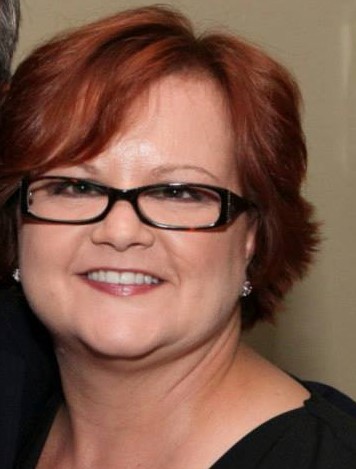

Working with paraprofessionals in special education starts with clear, written role expectations, not assumptions. Set expectations early, communicate directly rather than through gossip, and remember that the classroom's final call is yours. A veteran special education teacher shares what she learned managing a team of aides across three different roles in public education.


I have, on more than one occasion, been told I am bossy. It is a term assigned to me that has never really bothered me.
I've also been called four-eyes, ugly, chicken legs, fatso, a b****, mean, stupid, and loads of others.
Over time, one begins to believe the words one hears. Or, as in my case, they realize certain truths: People can be petty and mean. Some people are just plain dishonest.
On the flip side, I have been called kind, creative, smart, funny, compassionate, loving, a lifesaver, and many other things.
I prefer to believe the Flip Side.
Over time, one begins to believe the words they hear. Or, as in my case, they realize certain truths: people are just pleasant, grateful, and gracious. Some people are just downright delightful.
Are they telling us what we WANT to hear? Are they telling us the truth?

Dubious Beginnings May Mean a Successful Career
I love organization. Knowing where things are and being able to go grab something without having to stop and think makes my heart happy. Laundry baskets full of clean clothes not put away, pots left on the stove, unwashed countertops, clutter in the pantry, chaos in the closet: it all makes my flesh crawl.
Even as a kid on the playground in elementary school, I could not stand disorganization. When people wanted to play Dodgeball, I was covertly coordinating team selections during class before we ever got on the playground. This made sense: get them organized during class time so there is more actual playing time. Duh. Maximizing recess time is the goal for most kids, especially when something fun and engaging (for most kids) is happening once the school's back doors fling open and kids rush out. Besides, I didn't understand Math most of the time, anyway.
Assuming the role of teacher too far before my time, observing the playground could, and would, send me to the brink of a pre-teen meltdown as well. When kids were blatantly misbehaving, I wasn't going to run and tattle on them. Instead, I reminded them of the rules and why they needed to be followed.
Turns out, most of my now-50-something peers didn't care.
We all knew the rules. It was the 70's. People knew the rules, but they didn't always follow them. It was my self-appointed mission, as a kid of eight to ten years old, to ensure everyone followed them.
Hilarious. Like that worked out very well!
My role as self-appointed Playground Patrol came to a natural conclusion as it became clear that if you can't beat 'em, you may as well join 'em. While this did not always sit well with my soul or psyche, I did my part to not make the teachers' days any longer than they already were. I was taught to follow the rules, and for the most part, I did.
Fast-forward from 1970-something to 2000-something. The plate on my door read "State and Federal Funding Coordinator." Emblazoned just above those words was my name.
I had become a professional Rule Follower and Rule Implementer.
Now I could finally say, "You betcha, knowing the rules matters!"
Full circle, baby!

What's Your Handle, Good Buddy?
Being called bossy was never really that big of a deal to me. I figured if I was bossy, then others needed to do as I said. But after many failed attempts at elementary school classroom bossy-pants-style leadership, I learned a truth: one must not coerce. One must convince.
There you go. There's your nugget for today.
People need to understand WHY the rules are the rules.
As a special education teacher, I am responsible for educating children with special needs. For some students, the needs are cognitive. For others, they are physical.
Every student has a different learning plan. Multiply the number of learning plans times the number of subjects times the number of students; well, there's just not enough of me to do it all. Factor in formal and informal assessments, paperwork, planning, teaching, and all the other components of our day; well, some help is needed.
Enter the paraprofessionals and aides. This is where working with paraprofessionals in special education actually starts: someone else in the room, sharing the load.
In Steps the Angels
Call them what you want; I see them as winged angels. These sweet gypsies of the hallways glide in and out of our classrooms, moving between accepting directions from the classroom teacher, supporting students with personal care needs, and overseeing the room while I attend meetings. They assist in all ways possible to make the day great for our students.
In my classroom, these people are valued deeply. They make the day flow more easily. They are four extra hands to help me achieve the goals set forth in each student's IEP: the paperwork means nothing if there's nobody in the room to help carry it out day to day.
They are fun. The kids love and respect them…and so do I. Most especially, they are wonderful at their jobs.
My parapro and aide came to me pre-assigned by district leadership. My self-contained classroom was created later in the year when the numbers for the original self-contained classroom were nudging the maximum allowed under applicable state or district rules. Anticipating growth in the district's Special Education Department, The Powers That Be had the foresight to expand to two classrooms. On the special day when I met my new class, I also met my new co-workers.
I was nervous. They were skeptical. Then, like Kismet, we clicked.

WhoDat?
As our days quickly became a smooth-running routine, it was easy to see that we were each equipped with the skills needed to make the days come alive and help the kids thrive. Where one of us was not as strong, the other radiated confidence and know-how. Some kids gravitated more toward one of the adults than the other, and we didn't mind. Kids need to find security at school. Whichever of us made a child feel comfortable and happy, the others were pleased and prepared to support in any way.
With this free-flowing lovefest in our classroom, the ladies respected my position as the leader.
That was me. Bossy Pants.
See? It's not always a bad thing.
How do I know that? They told me so because we're open and honest with each other, even when it might hurt a bit.
Everyone Just Needs to Play Fair!
Before arriving in the newly created classroom and this district, the gig as State and Federal Funding Coordinator gave way to a role in building administration.
Holding staff responsible for following the rules was not difficult. The assembled team of teachers and support staff was phenomenal and hard-working, dedicated to the children in our 750-student building. They were also very committed to their professional learning community.

Late nights planning instruction around data, group text messages discussing strategies and interventions, early mornings for before-school meetings to create or locate materials to meet the needs of learners… THIS is what teaching and learning is all about.
When team members had differences of opinion, they were addressed. Because people are people, occasionally feelings got hurt. But there was always a firm understanding that everyone had one primary focus: the students.
My leadership style had been polished over the years, refined to a place where I knew I was responsible for what others did. With that in mind, it seemed logical to surround myself with those who were "experts" in a specific area. Some were fantastic at disaggregating data. Some were amazing at looking at the results to create a student-focused plan for their individual students. Some were great with behavior. Everyone had a polished gem to add to our students' crowns of success.
We worked together. Everyone's input mattered. Everyone was a stakeholder: parents, students, teachers and staff, community members.
Our ship was sailing on smooth waters…and one day, the winds of change moved me from one place to another.

The Grass Is Always Greener
No, it's not. It's just a different varietal.
When relocation became necessary, I had to decide where to apply for work.
As someone not from the area, knowing where things were happy was more a matter of "Let's see how it goes."
But this we know: there are districts that are perceived as wonderful. They enjoy a great reputation. Their test scores are solid. Their staff appears to be happy. Their published pay scale is larger than their area's average. Their staff arrives at the contracted time. They depart at the contracted time's end. Very few emails fly over the weekend.
It's plausible BLISS.
You settle in for a great year in your new classroom. You smile, you thank people for their support, guidance, help, and you MEAN it. You invite their input and feedback. You share that you have an area of strength you'd love to contribute, making you a potential asset to the team.
You share that you have an area where you need some support, making yourself vulnerable and in need of support from your team.
You hope to be the Yin to your team's Yang.

Conflict…Resolution?
But then it happens. It seems like it always (okay, often) happens… the gossip, conflicts, and rumor-generation. The frustration.
No drama.
The pursuit of that simple concept seems to be a true-blue snipe hunt. A unicorn sighting.
WHAT IS MY POINT in providing all this so far?
As special education teachers, you will more than likely have a paraprofessional and/or aide in your room.
Teachers generally direct paraprofessionals' instructional work in the classroom, subject to state law, district policy, job descriptions, and administrative supervision.
You have to create the atmosphere and environment you want to work in.
Drama has no place in the adult plane of the school setting. There is simply too much work to be done every day.
Here is my word to you-as someone who has been in the mix for quite some time-if you don't set the tone and the pace for your setting, keeping focused and on-task all day, boredom will slip in.
The friend of drama is gossip. In my experience, gossip is rooted in boredom. As the teacher, keep your classroom team focused and moving. In doing so, drama and gossip don't have time to take root.
I Don't Want To Adult Today
You're in charge, but remember, it is a team effort. It is your responsibility to structure the day for your team with well-written lesson plans. You create their routine; you are to make sure they have all the tools and training to do what you're asking them to do. You are to ensure they understand all the expectations.
Be sure your team understands their specific role.
I can hear some folks right now saying, "But I don't want to be anyone's boss. I just want to teach."
Surprise! You're in charge.
Deal.

Fine. I'll Deal. But What Do They Need to Know?
Paraprofessionals are subject to guidelines and directives imposed by most states. Arkansas is one example. As of this writing, the Arkansas Department of Education and Secondary Education's Title I paraprofessional page describes covered instructional-support duties as including tutoring under specified conditions, classroom-management assistance, computer-lab assistance, and library or media-center instructional support. These are Arkansas's current Title I requirements, not a national standard, and your own state or district may define the role differently.
Another district provides concise examples of the expectations for paraprofessionals, summarized as follows:
- The teacher is your supervisor
- Have positive communication with your teacher
- For grievances, follow district procedures
- Discuss concerns about the teacher or their practice directly with the teacher at the right time in the right place
- Follow consistent behavior management routines/policies as set by the district
- Be a positive representation of the school
- Know policies, etc.
- Do only that for which you are trained or qualified, per federal program requirements plus state and local rules
- Discuss student information only with authorized school personnel who have a legitimate educational interest, consistent with FERPA and district policy
- Responsibility for the classroom is ultimately that of the classroom teacher
- Do your part to be sure student needs/best interests are being met
- Discuss a child's progress only with authorized school personnel who have a legitimate educational interest
- Be mindful of where your conversations are being held
- Do not engage in discrimination of students' race, creed, etc.
- Be a positive example
A parent needs to know their child's team of special education providers is in synchrony to best support their child. In order to be great at what you do, you have to tune out the peripheral activities that occur in every school setting. I promise you, there will be so much going on around your hallways and in your building that you will need to learn to tune it all out. Some call it negative energy. Some call it bad behavior. No matter, just don't engage.
My hope for fledgling special education teachers, as well as general education teachers, is that you seek FIRST to educate. Doing so with your classroom team of paraprofessionals and aides in step with you will make the students' school year wonderful.
But the very MINUTE you allow the "junk" created by others to get inside your head: that is the very minute you lose sight of what is most important. You lose sight of why you chose this profession. You lose sight of educating children.
Your purpose is no longer at the forefront. It takes second place to the intrinsic need many people have to know what is being said about them or what is rumored to be said about them.
That crap does not matter. Your students matter.
Be the bossy pants. Take ownership of your classroom. Control what is intended for you to control. Disallow the rest of the stuff that makes your days longer or sadder.

Don't allow joy thieves to have control. Build connections with your parapros and aides. Be kind to them. You're in this together.
Reach out to other teachers on social media for ideas, tips, and techniques to make your room brighter, happier, and better. Work hard to build your pedagogy. Stay focused.
As the Bishop of Geneva, Saint Francis de Sales, once said, "Bloom where you are planted."
If your district is great, bloom.
If you're hoping for greener pastures one day, bloom.
You are well-trained. You are committed. You are passionate about children. You have been training for this for so many years.
Be courageous.
Be bossy.

Frequently Asked Questions
What's the biggest mistake new special education teachers make with paraprofessionals?
Assuming shared understanding instead of writing it down. A verbal "here's how we do things" gets forgotten or remembered differently by each person in the room. Put role expectations, daily routines, and behavior-management procedures in writing on day one, and revisit them out loud so nothing is left to guesswork.
Who has final authority in the classroom, the teacher or the paraprofessional?
Typically, the teacher directs instructional work in the classroom, but supervisory authority and reporting structures vary by state, district, and position. Leading a team doesn't require a formal title. It requires setting the tone and owning the decisions.
How does a paraprofessional's role connect to a student's IEP?
Paraprofessionals may help implement accommodations, supports, and services identified in a student's IEP, as assigned and under appropriate supervision, including reinforcing instruction, supporting personal care needs, and assisting with large-group activities while the teacher works one-on-one elsewhere. The IEP identifies the student's goals, services, accommodations, and supports. Paraprofessionals may help implement assigned supports throughout the school day.
How should a teacher handle gossip or conflict on a classroom team?
Address it directly and quickly. Gossip tends to fill the space that boredom or unclear expectations leave open. Keeping a team focused on concrete tasks and addressing disagreements as they come up rather than letting them sit keeps drama from taking root.
Do paraprofessional expectations vary by state or district?
Yes. Some states publish specific duty lists (Arkansas's is one example), and individual districts often add their own handbooks covering communication norms, grievance procedures, and behavior-management policy. Check your own state department of education and district handbook rather than assuming the rules are the same everywhere.
- Put expectations in writing - verbal instructions get forgotten or misremembered; a written routine doesn't.
- Supervision runs through the teacher - many paraprofessional roles operate under a teacher's instructional supervision, but exact responsibilities and reporting structures vary by state and district.
- Tie duties to the IEP - paraprofessionals often help implement IEP accommodations day-to-day, under the teacher's supervision, not just as extra hands.
- Address conflict directly - gossip fills the space left by unclear expectations and unaddressed disagreements.
- Check your own state and district rules - paraprofessional duties and reporting structures aren't identical everywhere.
Leading a classroom team doesn't stop being part of the job once you've earned your license. Depending on the state and career path, some teachers pursue additional endorsements, certifications, or administrative credentials. The special education programs listed here are worth a look if that's a direction you've been considering.
- The Pros and Cons of Being a Principal: An Honest Look - July 29, 2021
- Special Needs Prom: How One Student Led His School’s Grand March - April 20, 2021
- Behavior Management Training for Teachers: What to Ask For - October 9, 2020