Recent Posts by Mary McLaughlin

What Frustrates Teachers Most About the IEP Process

Young boy sitting with his hands covering his mouth, looking away
The most frustrating part of the IEP process, for the special education teachers I asked, isn't the paperwork itself. It's the breakdown between the people responsible for it: missing records from a previous district, parents who don't attend, goals nobody can measure, and team members who never show up to the meeting. [xyz_feat_school] I got…
Read more

When Special Education Teachers Gets Sick

During the course of my career, I have been sneezed on, coughed on, vomited on, spit on, pulled on, tugged on, cried on, been in the presence of seizures, copious amounts of blood, and even a heart attack. Insulin pumps don’t scare me, neither do tracheotomies. What really scares me the most is the potential…
Read more

Teacher Safety in Special Education: What Districts Owe You

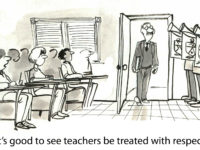
Cartoon: trumpeters announce a teacher's arrival. Caption: "It's good to see teachers be treated with respect."
Teacher safety is not only about lockdowns and building security. For teachers working with students who have significant behavioral needs, the daily risk is being bitten, hit, or injured by a child in crisis. The protection that actually holds up is a written safety plan built into the student's IEP. [xyz_feat_school] Back in the stone…
Read more

How to Write IEP Goals: A Teacher’s Guide to Measurable Goals

Parent and young child lying on the floor reading a picture book together
IDEA requires IEP goals to be measurable, and a widely used way to get there is to name four things: the condition, the specific skill, the criterion for success, and the timeframe. Anchor all four to baseline data. "Billy will solve two-digit addition problems with 80% accuracy across three trials" works. "Billy will improve math…
Read more

Parent Participation in IEP Meetings: What IDEA Requires

A child walks between two adults, holding both their hands, on a sidewalk beside a quiet road
IDEA includes one or both parents as required members of the IEP team, and 34 CFR §300.322 places responsibility on the public agency to take steps to ensure parents are present or have an opportunity to participate. That means adequate notice, a mutually agreed-on time and place, and conference calls when neither parent can attend.…
Read more

Engaging Special Education Students: What Actually Works

Young student and adult working through picture cards at a low table in a colorful early childhood classroom
Engaging special education students starts by treating disengagement as information, not defiance. Give students more than one way to take content in, more than one way to show what they know, and a say in their own goals. Hands, eyes, movement, and choice do more than a worksheet ever will. [xyz_feat_school] Horrified. Saddened. Frustrated. Those…
Read more

When a New Student Joins Your Special Education Classroom

Smiling elementary-age student holds a hand-lettered Back To School sign outdoors
When a new student in a special education classroom arrives after the year has started, begin with the paperwork and the people: read the IEP, meet with your special education director, and brief your paraprofessional. Then build the relationship. Federal law also obligates the district to provide comparable services right away. [xyz_feat_school] School started for…
Read more

To Grudge, or Not to Grudge, That Is the Question

mother and young daughter standing apart, both with arms crossed after a disagreement
One approach to letting go of a grudge is to name what happened, separate the incident from your interpretation of it, and avoid repeatedly dwelling on that interpretation. For teachers, that means treating a student's bad day as one moment, not a verdict, and giving yourself the same grace you'd give a colleague who is…
Read more

10+ Tips to Prepare for Parent-Teacher Conferences

Our school’s parent-teacher conferences were last night. The expected, and desired, rate of attendance is always 100% so we can share the great things our class and individual students are doing, and also discuss the things we need to discuss…and boy, sometimes those can be challenging conversations! If you’re new to the teaching profession, you…
Read more

Supporting Transient Students With Special Needs

Smiling young student resting her chin in her hands while lying on the grass outdoors
Supporting transient students starts with protecting the one thing you control: the routine inside your classroom. U.S. public schools identified about 1.55 million children and youth experiencing homelessness in 2023-24, and about one in five of them receives special education services. Predictable structure, a reliable meal, and a familiar seat steady a child whose home…
Read more

Recent Comments by Mary McLaughlin

No comments by Mary McLaughlin yet.